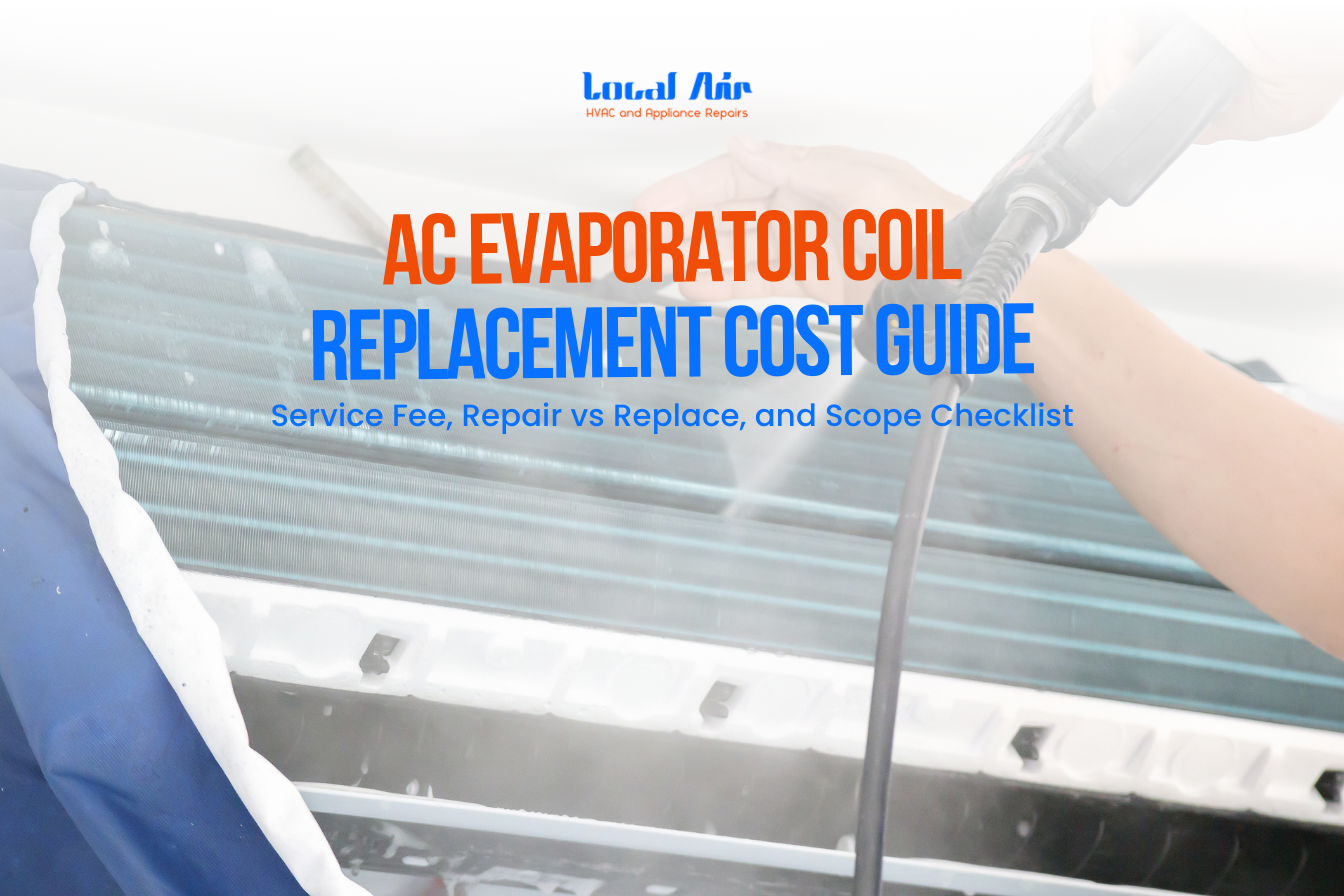
Dirty, clogged HVAC filters can increase your system’s energy use, and restricted airflow can contribute to dirt buildup on the evaporator coil, cutting cooling performance right when Florida heat demands the most.
In Palm Beach County, that often turns into the same stressful moment: the AC runs longer, rooms cool unevenly, the bill climbs, and a technician mentions a coil issue. If you’re now searching AC coil replacement cost service fee, this guide is for you.
We’ll break down what the service fee usually covers, what drives the total evaporator coil replacement cost, and how to compare quotes so you don’t pay for surprises later.
Quick Summary:
Service fee vs total cost: The ac coil replacement cost service fee is typically the diagnosis/dispatch step — the replacement total depends on scope.
What drives your quote most: Coil compatibility/size and labor time (especially tight attic/closet installs) usually move the price the most.
Palm Beach County variables: Humidity, drain line condition, refrigerant handling, and peak-season timing can change the final number fast.
Repair vs replace decision: Coil replacement makes sense on a newer, otherwise stable system; full replacement is often smarter when repairs are stacking.
Avoid surprise add-ons: Only approve quotes that are itemized and include post-repair checks so you don’t pay twice.
What an “AC Coil Replacement Service Fee” Actually Means
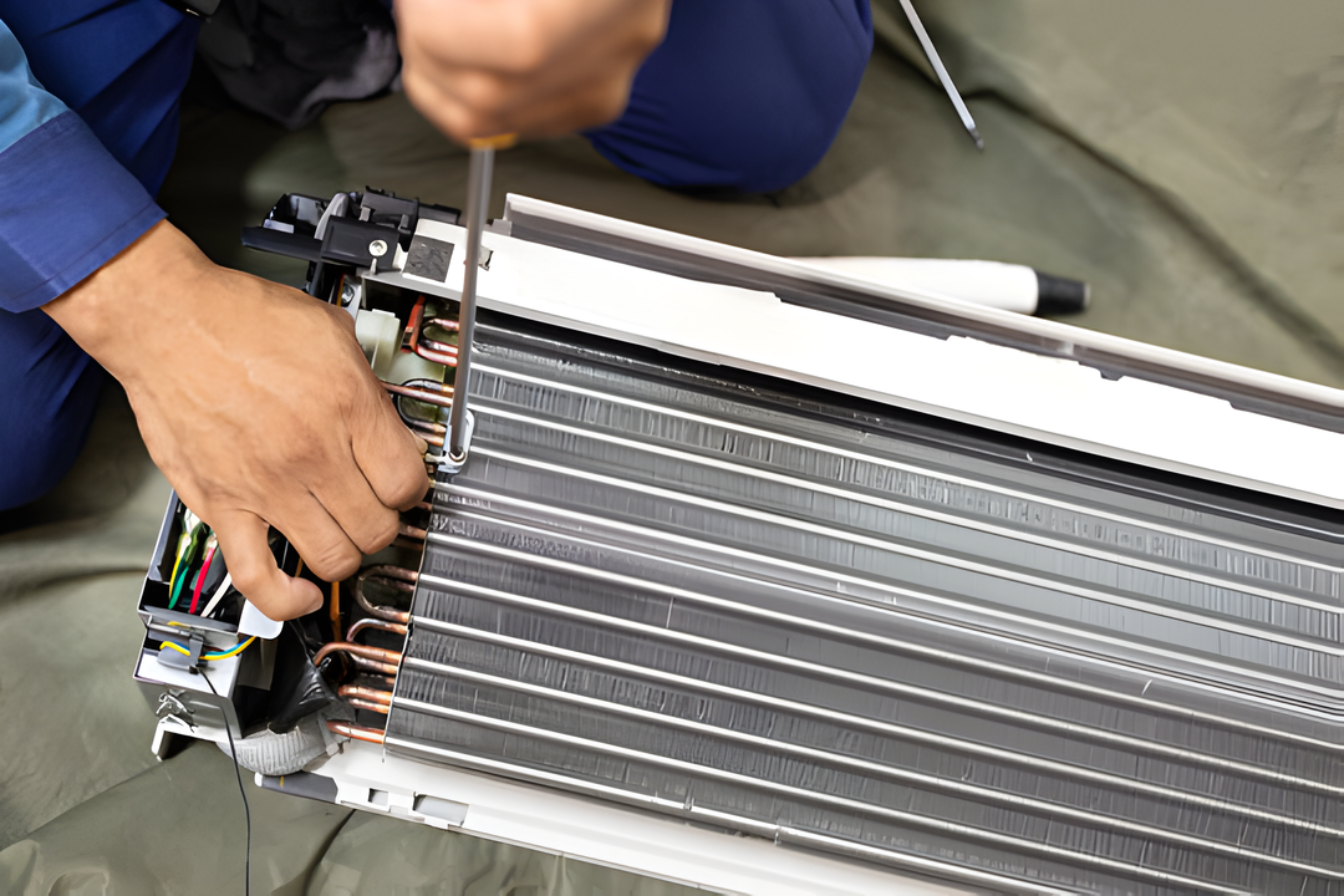
An AC coil replacement service fee is usually the paid diagnostic visit that happens before any coil work is approved. It covers a technician coming out, inspecting the system, identifying what’s failing (coil leak vs airflow vs drain issue), and giving you a repair recommendation.
It’s not the same thing as the coil replacement price; think of it as the “figure out the real problem” cost.
Common fee types you may see on a quote/invoice
Service call / trip fee: The base charge for dispatch + arrival.
Diagnostic fee: Time spent testing and narrowing down the cause (airflow checks, temperature split, visual coil inspection, basic electrical checks).
Leak evaluation fee: If a refrigerant leak is suspected, some companies bill separately for deeper leak checks.
After-hours / emergency fee: Higher dispatch cost for nights, weekends, or peak-heat emergencies.
Maintenance visit fee: If you’re on a tune-up/maintenance service, diagnostics may be partially included (varies by plan).
Estimate vs diagnosis: Some companies offer a “free estimate” for replacements, but true diagnosis (especially for leaks) is often paid.
What often costs extra (and can change the final total)
Refrigerant-related work (recovery, recharge, weighing in refrigerant)
Parts beyond the coil (TXV/metering device, drain pan/float switch if needed)
Access-related labor (tight attic/closet installs, extra time to reach the air handler)
Repairs tied to the root cause (airflow issues, clogged drain line contributing to icing)
With the service fee clarified, the next step is understanding the full picture.
Average AC Evaporator Coil Replacement Cost
Most homeowner totals are driven by:
(1) the coil itself and (2) labor time/complexity, not just “the part.”
HVAC mechanics/installers have a median annual wage of around $59,810 (May 2024) and a mean hourly wage of about $28.66 nationally. Your billed rate will be higher than wages because it includes overhead, insurance, vehicles, tools, and warranty risk.
Parts vs. labor breakdown (what you’re paying for)
Cost bucket | What it covers | How it’s typically priced |
Service call / diagnostic fee | Dispatch + initial inspection/testing to confirm coil vs airflow/drain/refrigerant issue | Flat fee (contractor-set; quote-based) |
Evaporator coil (the part) | The indoor coil that absorbs heat from indoor air | Part price varies by exact model/tonnage/compatibility |
Labor (remove/replace + braze/fit + commissioning checks) | Time to access air handler, swap coil, reconnect lines, verify performance | Often billed as labor hours or bundled into a flat “installed” price |
Refrigerant handling (if required) | Recovery and recharge when the system has lost charge due to leak | Materials + labor (quote-based) |
Related “while you’re in there” items (sometimes needed) | Metering device (TXV), drain pan/float switch, drain line work, insulation/seal fixes | Line-item add-ons |
Quality-control / verification | Confirm airflow/temp performance and stable operation after repair | Included in reputable installs |
With the baseline costs in mind, let’s get into what actually shifts your number up or down in Palm Beach County.
9 Factors That Change Your Quote in Palm Beach County
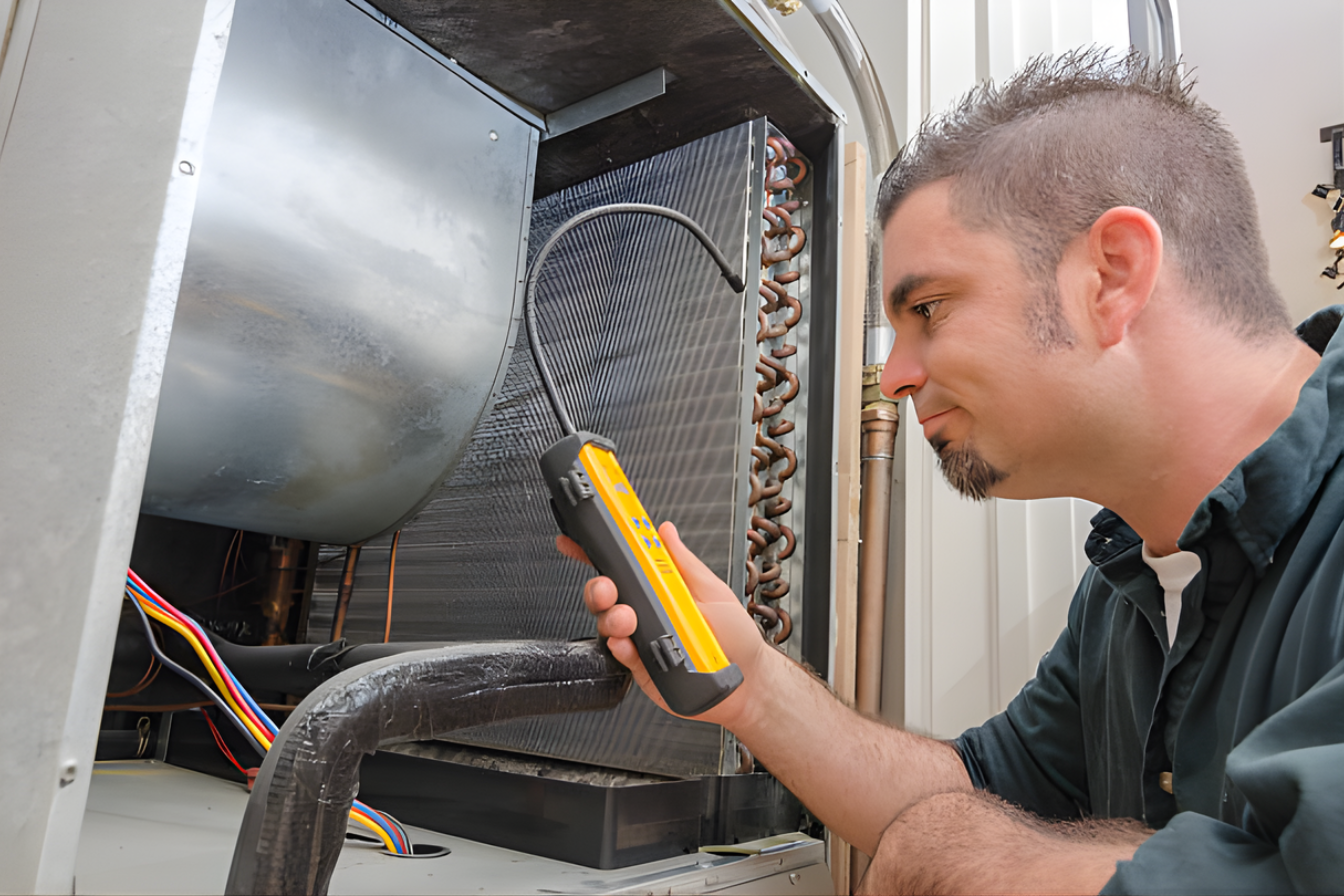
In Palm Beach County, evaporator coil pricing varies because contractors are quoting the total scope (access, refrigerant handling, verification), not just a part in a box. Any job that opens the refrigerant circuit also has to follow federal refrigerant-handling rules (including the prohibition on venting).
System size + coil compatibility (tonnage/match): The coil must be correctly matched to your air handler/outdoor unit and capacity.
Air handler access (attic/closet/tight installs): Hard-to-reach installs increase labor time quickly.
Airflow condition (filters/return restrictions/dirty components): Restricted airflow reduces efficiency and can contribute to dirt buildup on the evaporator coil.
Refrigerant scope (recover, repair, recharge, verify): Leak-related jobs often require recovery and proper recharge; venting is prohibited.
How the leak is confirmed (basic vs deeper verification): More thorough confirmation and post-repair checks add time (and cost) but reduce repeat failures.
Humidity-driven add-on work (drain line attention/IAQ options): High humidity increases mold risk; addressing moisture sources and contamination-sensitive areas can be part of a lasting fix.
Related parts that may be required (metering device/TXV, drain pan/float switch): If these are failing, coil-only replacement may not stop icing, leaks, or shutdowns.
Timing (peak-heat, weekend, emergency dispatch): After-hours and high-demand periods often carry higher dispatch/labor charges.
Commissioning + documentation included (or not): Better quotes include verification steps to confirm the system is operating correctly after work.
Once you understand what’s driving your quote, the next decision is bigger than price: should you replace the evaporator coil, or is it time to replace the whole AC system?
Replace the Evaporator Coil or Replace the Whole AC?
When your evaporator coil is leaking or failing, the cheapest option isn’t always the best long-term option, especially in South Florida, where AC runs hard for most of the year. The right call depends on system age, how many major repairs you’ve already done, warranty status, and whether the rest of the system is still in good shape.
Use the table below to make a clean, practical decision before you approve a big invoice.
If this sounds like you… | Usually better to replace the coil | Usually better to replace the whole AC |
System age | Under ~8–10 years and otherwise reliable | ~12–15+ years, or multiple issues stacking |
Repair history | First major repair; no pattern of breakdowns | You’ve had repeat expensive repairs (not just minor maintenance) |
Warranty status | Coil may be under parts warranty (you pay mostly labor) | Out of warranty and the repair is a large % of a new system |
Root cause | Clear one-time failure (e.g., confirmed coil leak) and airflow/drain issues can be corrected | Bigger system problems (chronic humidity issues, recurring leaks, compressor/outdoor unit concerns) |
Performance today | Cooling was generally strong before this failure | Uneven cooling, long run times, persistent comfort complaints even before the coil issue |
Efficiency + bills | Bills are stable and performance was acceptable | Bills rising and performance declining year over year |
Compatibility | Coil can be properly matched to the existing system without “workarounds” | Matching is messy/limited, or existing components are near end-of-life |
Timeline + risk tolerance | You want the fastest “back to cooling” path with lower upfront cost | You want to reduce the chance of the next major failure and prefer a longer reset |
Best outcome you want | “Fix this failure and stabilize the system” | “Stop the repair cycle and reset reliability” |
Practical rule for homeowners:
If the system is older, out of warranty, and already showing performance issues, replacing the whole system often prevents a second big repair soon after. If it’s newer, otherwise stable, and the coil failure is isolated, coil replacement can be the smarter spend.
After you’ve made the repair vs replacement call, this is how you protect your investment: a professional coil replacement scope checklist.
What a Professional Coil Replacement Service Should Include (Scope Checklist)
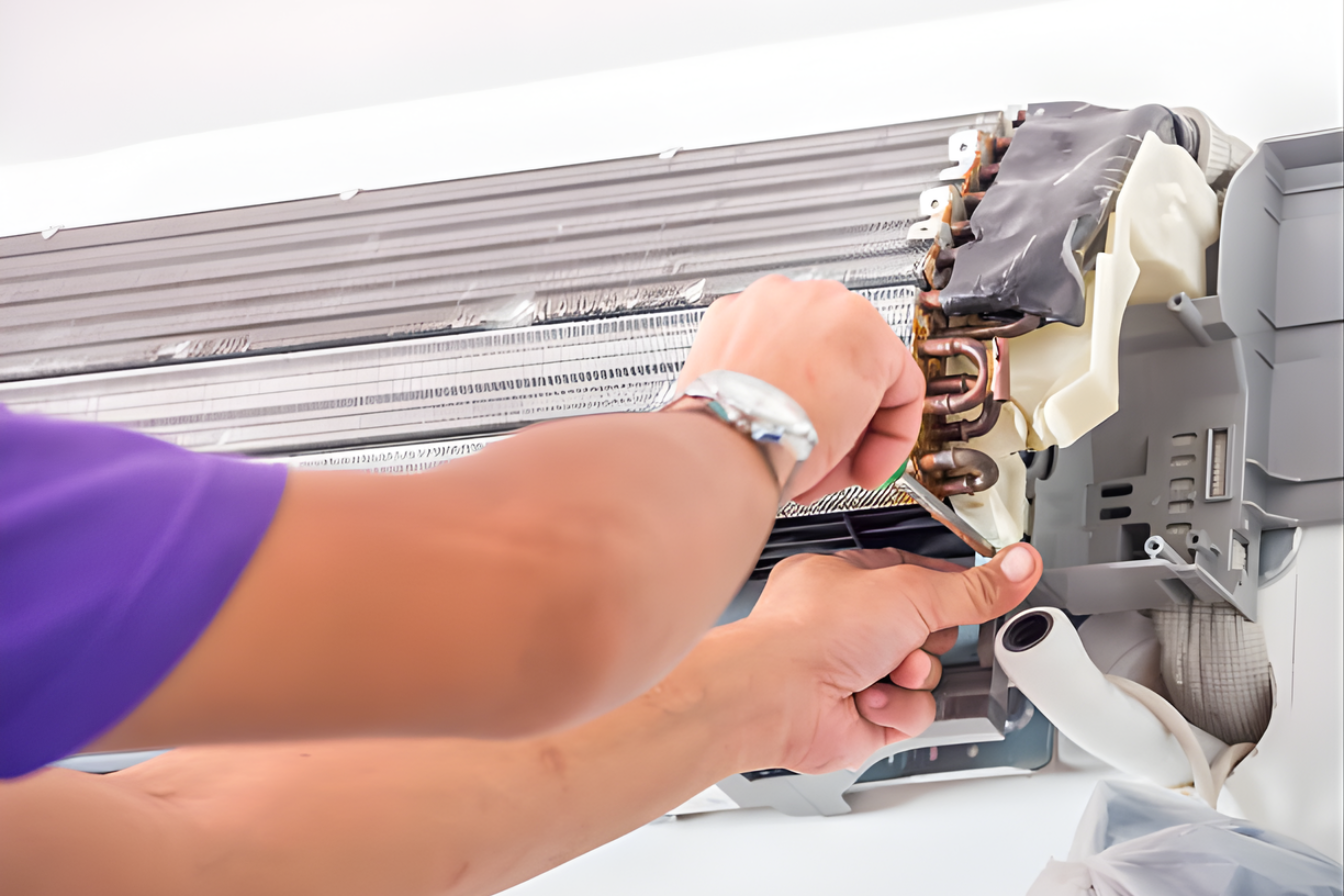
A proper coil replacement isn’t just swapping a part; it’s making sure the new coil runs efficiently, drains correctly, and doesn’t fail again from the same root cause. Use this skim-friendly checklist to sanity-check any quote before you approve it.
Documented diagnosis confirming the evaporator coil is the failure point
Clear explanation of why the coil failed (leak, corrosion, icing/airflow restriction, contamination)
Correct coil selection matched to the system’s capacity and compatibility
Proper refrigerant handling and compliance (no venting during service)
Correct recharge/charge verification after installation (not just “topping off”)
Airflow and performance verification after the repair
Drain line and condensate management check to prevent icing/overflow
Inspection of drain pan and safety shutoff components tied to water protection
Proper sealing/insulation restored around the coil area to prevent sweating and moisture issues
Itemized quote that separates service fee, parts, labor, refrigerant, and any add-ons
Written warranty clarity (what’s covered, for how long, and what conditions apply)
With the checklist in hand, the next step is choosing the right local service partner.
How Local Air HVAC Helps Palm Beach County Homeowners Avoid Repeat Coil Problems
Evaporator coil issues usually don’t start with “the coil”; they start with airflow restrictions, moisture drainage problems, and buildup inside the system that quietly reduce performance until you’re forced into a big repair.
Local Air HVAC focuses on fixing the immediate problem and the conditions that commonly cause repeat coil failures, so your cooling stays stable in South Florida’s humidity.
Services include:
AC system tune-ups: Preventative tune-ups that help catch airflow and performance issues early, before they turn into coil stress and breakdowns.
Drain line flush/extractions: Clears clogs and drainage issues that can trigger water backup, shutdowns, and repeat moisture problems around the coil area.
Condenser & evaporator coil cleaning: Targets buildup that reduces heat transfer and forces the system to work harder than it should.
UV light installation: Helps reduce microbial growth inside the unit, supporting cleaner internal surfaces and better indoor air conditions.
Duct cleaning: Removes accumulated dust/debris from ductwork to support cleaner airflow through the system.
Dryer vent cleaning: Improves dryer airflow efficiency and reduces fire risk from clogged vents, a common home safety issue.
Areas served: West Palm Beach, Wellington, Royal Palm Beach, Lake Worth Beach, Delray Beach, Manalapan, Palm Beach Gardens, and Boca Raton.
Conclusion
Coil quotes often feel inconsistent because homeowners mix up the AC coil replacement cost service fee with the full repair scope, then get hit with add-ons or repeat leaks later. Before you approve anything, separate diagnosis from replacement, confirm warranty and refrigerant details, and insist on written line items with post-repair verification.
If you want it handled cleanly the first time, Local Air HVAC provides coil diagnosis, replacement, coil cleaning, drain line service, and IAQ upgrades for long-term reliability in South Florida’s humidity.
Book service today to get a clear quote and cooling you can trust.
FAQs
1. Does the AC coil replacement cost service fee get waived if I approve the repair?
It’s credited; sometimes it’s separate. Ask before dispatch: “Will today’s service fee be applied to the repair total if I move forward?”
2. Why do some companies push same-day coil replacement without proving a leak?
Because “low refrigerant” is quick to spot, but it doesn’t confirm that the coil is the problem. Ask what specifically confirmed the coil versus airflow, icing, or drain issues.
3. If my AC still cools, should I worry about a slow coil leak?
Yes, slow leaks often become repeat service fees and repeat refrigerant charges. Fixing the leak once is usually cheaper than paying for multiple visits.
4. Can a coil replacement cause new problems like water leaks or weak airflow?
It can if drainage and airflow aren’t checked after install. Ask if they’ll verify the drain flow and cooling performance before closing the job.
5. I already paid an ac coil replacement cost service fee, what if I don’t trust the quote?
Request an itemized estimate with the coil model listed, then get a second opinion using the same system details and symptoms so you can compare scope, not just price.