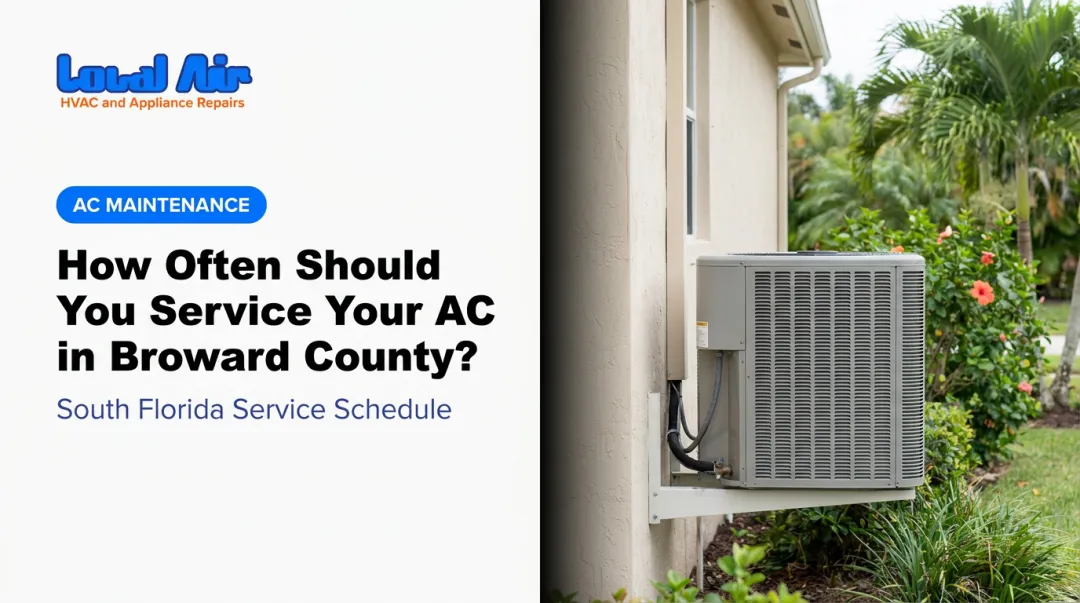
Skipping or mistiming AC service in South Florida's heat and humidity leads to predictable outcomes: higher bills, avoidable breakdowns, and a system that gives out years before it should. This guide covers the standard service frequency, what pushes that number higher, the warning signs that override your schedule, and what deferred maintenance actually costs.
Key Takeaways
- Florida homeowners should service AC units twice per year — spring and fall
- Factors like system age, pets, coastal proximity, and continuous operation can push frequency higher
- Spring is the most critical window — book before summer heat demand peaks
- Skipping service trades a low-cost tune-up for a high-cost emergency repair
- Musty smells, weak airflow, short cycling, or sudden bill spikes mean call now, not next season
How Often Should AC Units Be Serviced: The General Rule
The industry baseline is once per year minimum. Carrier recommends annual professional HVAC maintenance to keep systems operating efficiently and safely. Trane and Lennox both recommend spring as the optimal timing — before the cooling season adds load to the system. In Florida, once yearly isn't enough.
Lennox specifically notes that homeowners in warmer climates should consider servicing systems twice a year. In Palm Beach County, where cooling season stretches from March through November and systems run at near-full capacity for months at a time, twice-yearly service is the standard — not a premium add-on.
Why Florida's Climate Changes the Equation
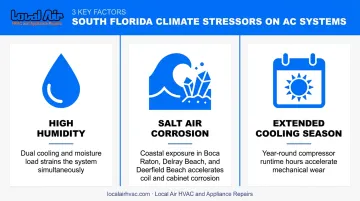
Three environmental factors accelerate wear on South Florida AC systems:
- High humidity forces systems to work harder to lower both air temperature and moisture levels simultaneously
- Salt air in coastal communities like Boca Raton, Delray Beach, and Boynton Beach accelerates corrosion on outdoor condenser units and refrigerant lines
- Extended cooling seasons mean compressors, coils, and drain lines log far more runtime hours than systems in temperate climates
The Florida Solar Energy Center recommends maintaining indoor relative humidity between 45%–55%. When humidity climbs above 60% in an air-conditioned home for extended periods, it's a signal the system isn't performing as it should — which is exactly the kind of issue a biannual service visit catches early.
When to Schedule Service in Florida
- Spring visit: Late February or March — before peak cooling demand and before HVAC companies hit peak scheduling demand
- Fall visit: October — to assess wear from summer operation and catch anything that developed over months of heavy use
How Maintenance Affects Your Warranty
Most manufacturer warranties require systems to be maintained under normal use and exclude failures caused by improper maintenance. Lennox states that many manufacturer warranties require proof of regular professional maintenance to remain valid. Keeping dated service records is documentation you may need if a warranty claim ever comes up.
Professional Service vs. Homeowner Tasks
These aren't interchangeable. Each covers distinct responsibilities:
Licensed technician tasks (require certification and specialized tools):
- Checks refrigerant levels and system pressures
- Cleans evaporator and condenser coils
- Inspects electrical connections and tests components
Homeowner tasks (monthly, between professional visits):
- Checks and replaces air filters
- Clears debris from around the outdoor condenser unit
Both matter — but neither replaces the other.
How Service Frequency Varies by Your Situation
The twice-yearly baseline works for most households. Several factors push that frequency higher.
Based on System Age
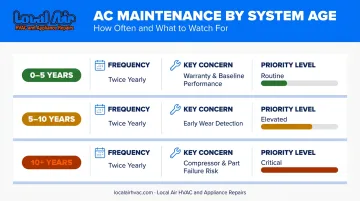
| System Age | Recommended Frequency | Key Concern |
|---|---|---|
| 0–5 years | Twice yearly | Keeps warranty intact; establishes performance baseline |
| 5–10 years | Twice yearly | Catches early wear before it compounds |
| 10+ years | Twice yearly, minimum | Compressor fatigue and part wear increase failure risk sharply |
Carrier and Trane both put typical AC lifespan at 15–20 years — but that expectation assumes regular maintenance was performed. ENERGY STAR recommends considering replacement once a unit exceeds 10 years, particularly if comfort issues, humidity problems, or rising energy bills accompany the age.
Based on Household Factors
Certain households put above-average stress on AC systems and should prioritize twice-yearly visits plus mid-season filter inspections:
- Pet owners should check filters every 30 days — dander clogs coils faster than most people expect (Carrier's guidance in multi-pet homes)
- Households with allergy or respiratory concerns benefit from more frequent filter changes, per Lennox recommendations
- Units running continuously at low setpoints accumulate significantly more compressor hours per year
Florida's Climate and Coastal Conditions
Coastal proximity matters. The University of Florida IFAS identifies moisture, oxygen, and salt as primary contributors to corrosion — conditions present throughout Palm Beach County. Carrier engineers coastal-specific AC equipment to address salt-air corrosion on condenser fins and refrigerant lines.
Beyond corrosion, Florida's humidity accelerates drain line clogs and promotes mold growth in drain pans. Homes closer to the coast generally need more frequent coil and fin inspections than those further inland.
Residential vs. Commercial Systems
Commercial systems in offices, retail spaces, or multi-unit buildings run longer daily hours and serve higher occupancy than residential units. ASHRAE/ACCA Standard 180-2018 establishes that commercial HVAC inspection frequency is task- and equipment-specific, with intervals ranging from weekly to annual depending on the system and component. For most light-commercial systems, at least three visits per year is standard.
Local Air HVAC and Appliance Repairs serves both residential and commercial customers throughout Palm Beach County, with maintenance programs tailored to each property type — whether a single-family home or a small retail space.
Warning Signs Your AC Needs Service Now — Not Next Season
These signals override your regular schedule. If you notice any of them, call a technician immediately.
Performance red flags:
- Warm or weak airflow from vents
- Short cycling (the system turns on and off repeatedly without completing a full cooling cycle)
- Rooms that won't reach the set temperature despite extended runtime
- Noticeably longer run times to achieve the same cooling that used to happen faster
Sensory warning signs:
- A musty or moldy smell almost always points to drain line backup or mold growth in the air handler
- A burning or electrical odor is a safety issue — turn the system off immediately and call a technician
- Rattling, grinding, or banging means loose or failing mechanical components that won't resolve on their own
Financial red flag:
A sudden unexplained spike in electricity bills — without any change in usage habits — typically signals efficiency loss. Replacing a dirty, clogged filter alone can cut AC energy consumption by 5%–15%, according to the U.S. Department of Energy. A tune-up can diagnose and correct what's driving the increase.
Local Air's technicians regularly diagnose issues like low airflow, refrigerant leaks, short cycling, and high energy bills across the South Palm Beach County area. These are recurring problems in Florida's climate, not outliers.
What Happens When You Skip or Delay AC Servicing
Deferred maintenance doesn't just delay costs — it compounds them.
A Florida Solar Energy Center study on residential AC systems found:
- 5.2% median performance degradation per year in systems studied
- 15%–20% performance loss associated with indoor coil fouling alone
- 44% of tested systems had improper airflow
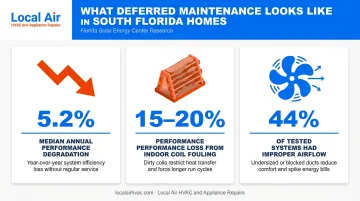
These aren't edge cases. They're what gradual neglect looks like in South Florida homes.
The Compressor Risk
A dirty evaporator coil reduces the system's ability to absorb heat. The compressor compensates by working harder and longer. Sustained compressor stress is the most common path to complete system failure — and compressor replacement is among the most expensive HVAC repairs, often approaching the cost of a full system replacement on older units.
The Drain Line Problem
A clogged condensate drain is a minor fix during a routine visit. Left unaddressed, the DOE warns that a blocked drain can trigger equipment shutdown or overflow into ceilings and walls. A $10 drain flush during a service visit can prevent thousands in water damage repairs.
The Air Quality Dimension
The EPA is clear that dirt and moisture in HVAC systems must be controlled to prevent mold growth. Neglected systems in Florida's humidity accumulate dust, mold spores, and allergens that circulate through living spaces. Unchecked moisture in drain pans and coils creates exactly the conditions mold needs to establish itself — a direct risk to the health of everyone breathing that air.
Best Practices for Maintaining Your AC Service Schedule in Palm Beach
Schedule Strategically
Book your spring visit in late February or March. By May, HVAC companies across Palm Beach County are managing peak demand, and scheduling windows tighten considerably. Getting ahead of that rush means you also get service before the heaviest cooling load of the year.
Fall visits should happen in October — after summer operation has run its course but before temperatures normalize and the need feels less urgent.
Keep a Maintenance Log
Document each service visit with:
- Date of service
- What was inspected, cleaned, or replaced
- Any technician recommendations or flagged items
This log matters for warranty documentation and helps identify patterns over time. If refrigerant needs topping up every year, that's a signal of a slow leak worth addressing — not just a routine top-off. An EPA-certified technician can diagnose the source and fix it properly.
Between-Visit Homeowner Habits
Three things make a real difference between professional visits:
- Check and replace air filters every 1–3 months — monthly if you have pets or allergy sufferers in the home.
- Keep the outdoor condenser unit clear — remove debris, vegetation, and anything blocking airflow around the unit
- Listen and observe — unusual sounds, new smells, or gradual changes in cooling performance are early signals. Catching them early means a service call, not an emergency
Frequently Asked Questions
How often should air conditioning units be serviced in Boynton Beach?
The standard for Boynton Beach and the greater Palm Beach area is twice per year — spring and fall. Year-round heat, high humidity, and coastal salt air exposure put significantly more wear on AC systems here than in cooler climates, making biannual service the practical minimum, not a premium option.
What is the $5,000 rule for air conditioning?
Carrier defines this as a repair-vs-replace guideline: multiply the repair cost by the unit's age in years. If the result exceeds $5,000, replacement is generally the wiser investment. It's a rule of thumb rather than a guarantee, but it gives you a concrete starting point when weighing repair costs on an aging system.
What is the 20 rule for air conditioning?
The 20-year rule suggests that once a unit approaches 20 years of age, replacement should be strongly considered rather than continued repair. Both Carrier and Trane put typical AC lifespan at 15–20 years with regular maintenance, and at that point efficiency has declined significantly and parts become harder to source.
Does a brand-new AC unit still need professional servicing?
Yes. New systems still require annual or biannual professional visits to maintain manufacturer warranty validity, verify that installation matches design specifications, and establish a documented baseline — which is valuable if any warranty claims arise later.
What does a professional AC service visit typically include?
A standard tune-up covers cleaning evaporator and condenser coils, checking refrigerant levels, inspecting and tightening electrical connections, clearing the condensate drain line, and testing system pressures and thermostat accuracy.
Can I do anything between professional service visits to maintain my AC?
Check and replace filters every one to three months — monthly if you have pets or allergies. Keep the area around the outdoor unit clear of debris. Monitor for unusual sounds, new smells, or gradual changes in cooling performance, and report them early before they grow into larger repairs.