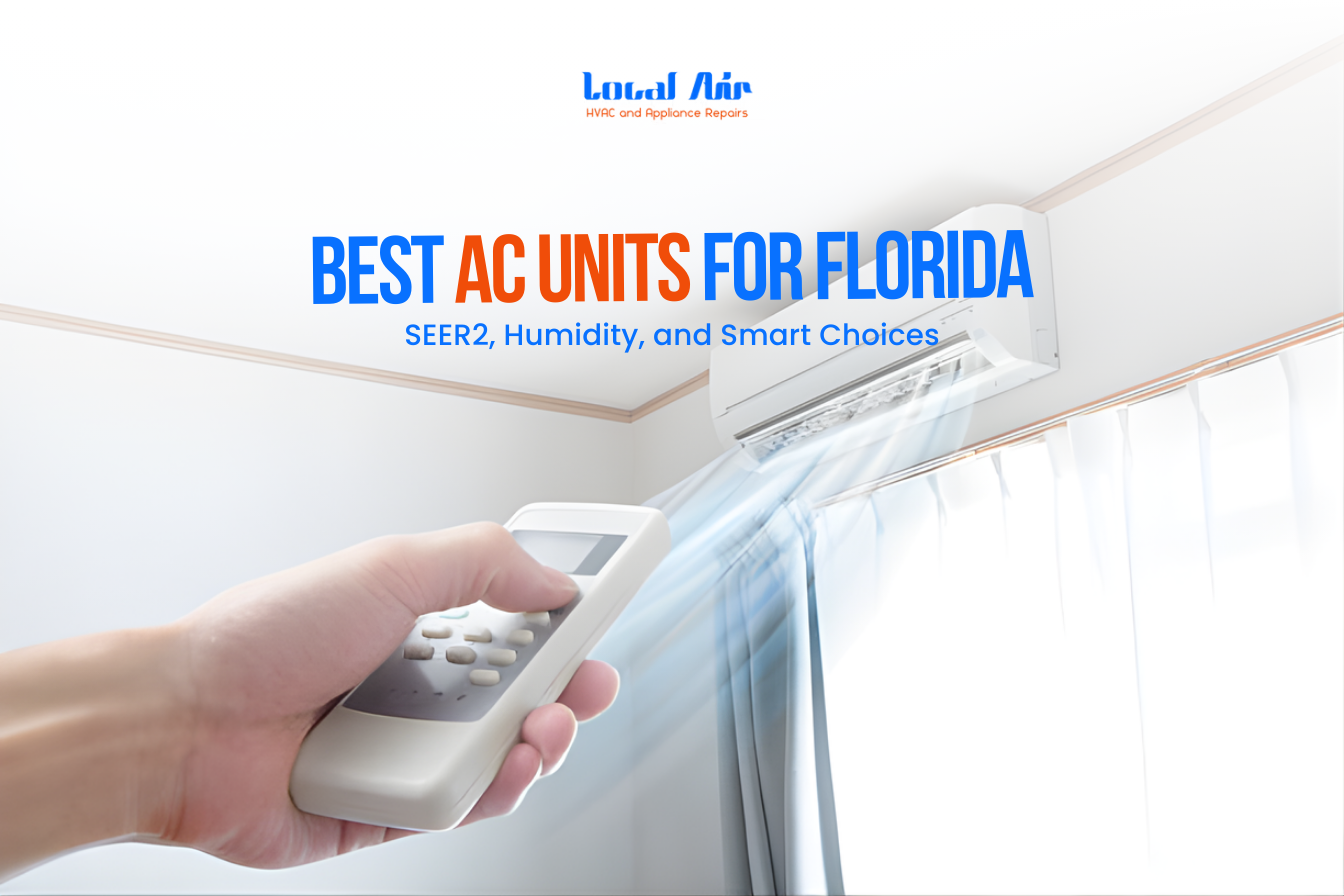
Air conditioning isn’t just a comfort upgrade in Florida; it’s a year-round operating cost. The U.S. Department of Energy notes that air conditioners use about 12% of the electricity in U.S. households, which is why the “wrong” system choice can quietly punish you every month.
In Palm Beach County’s long cooling season and high humidity, the best AC units for Florida are the ones that don’t just drop the temperature; they control moisture, run efficiently, and stay reliable when your system is working hardest.
This guide breaks down the best-fit AC options for Florida homes and small businesses, what features actually matter for humidity, and the install factors that decide whether you’ll get steady comfort or constant callbacks and rising bills.
Quick Take:
Florida “best” = humidity control + correct sizing — The right unit keeps you cool and dry without short-cycling.
SEER2 minimums vs smart targets — Meet Florida rules first, then choose an efficiency tier your ducts/airflow can actually support.
Pick the right system type for your home — Central AC, heat pump, ductless, or packaged units. Each fits different layouts and comfort problems.
Use the Florida features checklist before you buy — Prioritize variable capacity, moisture-safe drainage, airflow control, and IAQ readiness.
Repair vs replace with a clear matrix — Avoid guesswork by deciding based on age, breakdown pattern, humidity performance, and repair cost.
What “Best AC Units for Florida” Actually Means
In Florida, “best” isn’t the brand with the flashiest brochure; it’s the system that can cool and dehumidify reliably through a long, humid season without spiking your power bill or short-cycling itself to an early replacement.
The U.S. Department of Energy explicitly warns that an oversized air conditioner won’t remove humidity well, which is a big deal in hot-humid climates like South Florida.
If you’re shopping for the best AC units for Florida, look for these qualities:
Correct sizing (humidity-first, not “bigger is better”): Right-sized equipment runs long enough to pull moisture out instead of stopping at the thermostat.
Meets (or beats) Southeast minimum efficiency: In the Southeast, split-system AC minimums are based on SEER2 (e.g., 14.3 SEER2 under 45k BTU).
Strong dehumidification performance: Florida comfort depends on moisture removal; options like enhanced dehumidification designs can materially improve comfort.
Variable-capacity operation: Systems designed to modulate capacity (instead of only “on/off”) help maintain steadier comfort and can support better part-load control.
Ductwork compatibility and airflow tolerance: The “best unit” still fails if real-world airflow/static pressure is poor; choose equipment that can handle proper airflow targets.
Moisture-safe design details: Reliable condensate management (drainage, pans, shutoffs) matters in humid climates where water is constantly being pulled from the air.
Indoor air quality readiness: Florida homes often battle odors/microbial growth; pick a setup that can pair well with IAQ measures like coil-focused UV.
Efficiency you can actually realize: High ratings only pay off when the system is properly sized and installed; otherwise, you “buy efficiency” but don’t feel it.
Serviceability and long-term reliability: In a market where AC runs hard, easy maintenance access and consistent tune-ups matter as much as the spec sheet.
Florida’s efficiency rules set the minimum SEER2 you’re allowed to install, but your “smart target” should be the rating that actually pays off after humidity control, sizing, and duct conditions are accounted for.
Florida Efficiency Rules: SEER2 Minimums vs Smart Targets
Florida homeowners don’t just need “a high-efficiency unit”; they need efficiency that holds up in real installs, with real duct resistance and real humidity load. That’s why SEER2 matters: it’s the updated seasonal efficiency rating built from the DOE’s newer Appendix M1 test procedure (the one intended to better reflect field conditions vs older lab assumptions).
For Florida (Southeast region), the law sets a minimum SEER2 you can install. But the “smart target” is the level that actually pays back after sizing, airflow, and duct condition are addressed.
Target tier | Best for | SEER2 target (Florida/Southeast context) | What you get |
Good (meets the rules) | Tight budgets, newer ducts, basic replacement | 14.3 SEER2 minimum for split systems < 45,000 BTU/h (and 13.8 SEER2 for ≥ 45,000 BTU/h) | Legal compliance + baseline efficiency |
Better (sweet spot for many homes) | Most Florida homeowners who care about bills + comfort | ENERGY STAR level: ≥ 15.2 SEER2 for certified central AC split systems | Better seasonal efficiency without chasing extremes |
Best (only when the house can support it) | Long-term owners, high run-time homes, bill-sensitive buyers | Tax-credit threshold (where applicable): ≥ 17.0 SEER2 for split-system central AC (eligibility depends on meeting additional metrics too) | Highest efficiency potential + possible incentive alignment |
In Florida, it’s usually smarter to move from the minimum → ENERGY STAR tier than to chase the maximum SEER2 on paper, unless your ducts, airflow, and sizing are confirmed to support it.
Florida homes don’t all need the same “best” system. The right choice depends on whether you have ducts, how your home handles humidity, and how you use spaces day to day.
The 4 AC System Types That Make Sense in Florida
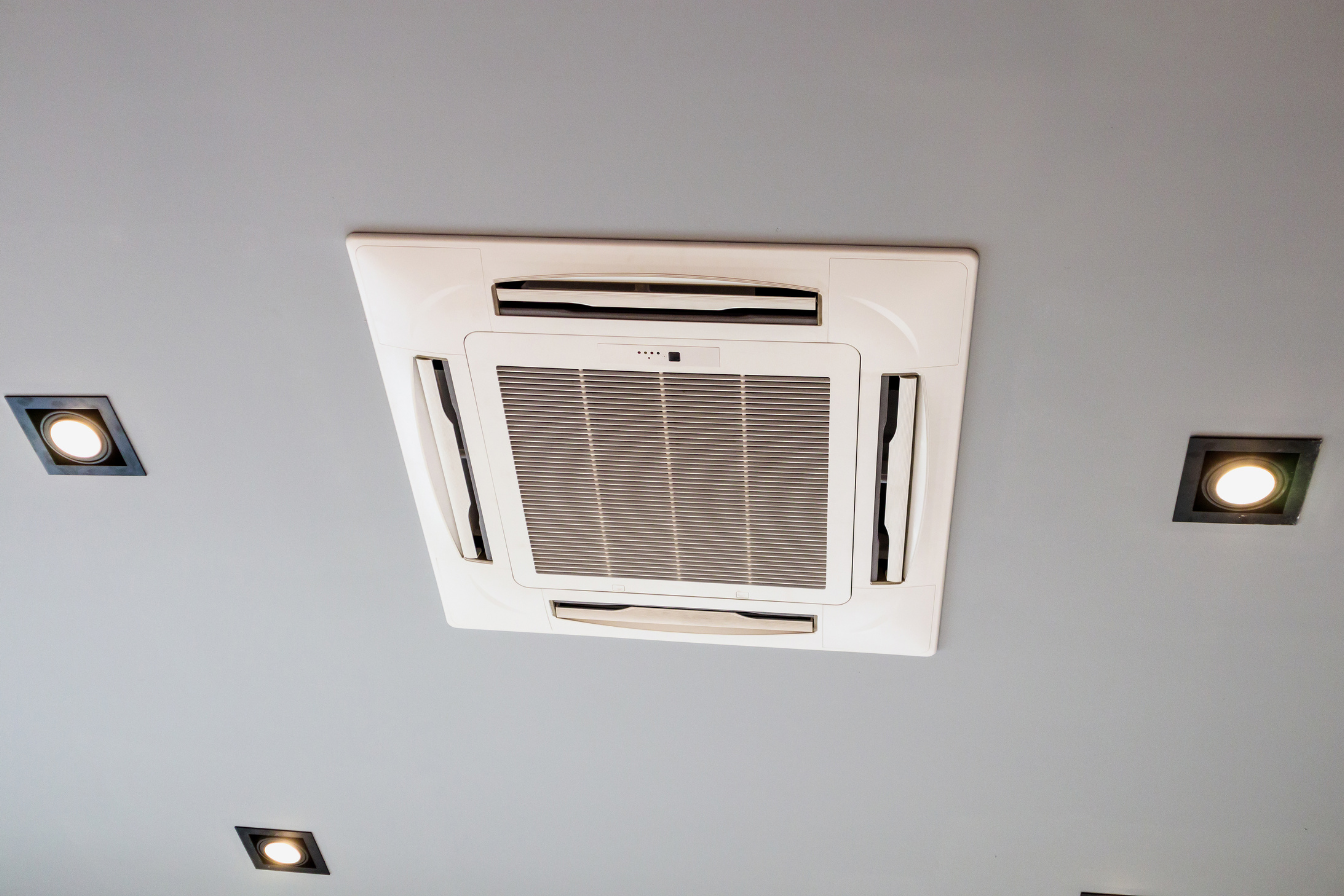
The goal is simple: pick the system type that fits your layout and comfort problems, then choose features that actually perform in a hot-humid climate (especially dehumidification and proper sizing).
1. Central Split-System AC
Most Florida homes with existing ductwork use a split system (indoor air handler + outdoor condenser). It’s the most straightforward way to cool the whole house consistently.
Best for: Ducted single-family homes and condos needing whole-home cooling.
What to look for:
Correct sizing for humidity control (oversizing can worsen indoor humidity).
Blower/controls that support steady airflow (comfort depends on real airflow through ducts).
Setup that can be tuned for dehumidification (especially important in hot-humid climates).
2. Heat Pumps
Heat pumps are very common in warmer climates because they cool like an AC and also provide heating when needed. Many models include variable-speed components that can improve comfort and efficiency.
Best for: Florida homeowners who want efficient cooling plus mild-winter heating.
What to look for:
ENERGY STAR®-level efficiency and strong cooling performance (SEER2 matters most in warm climates).
Variable-speed blowers/controls for better comfort and part-load operation.
Humidity performance under low-load conditions (moisture control is the real Florida test).
3. Ductless Mini-Splits
Mini-splits are compact and designed for zoning (cooling specific rooms/areas). They’re often a strong solution when ducts are limited or when certain rooms never cool evenly.
Best for: Additions, older homes with duct limitations, hot rooms, garages converted to living space, zoning needs.
What to look for:
ENERGY STAR® models to lock in real efficiency.
Zoning capability (separate thermostats/indoor heads for better control).
Right capacity per zone (still needs proper sizing—small zones can be overpowered too).
4. Packaged Units
A packaged unit puts the key components in one cabinet, typically on a slab or roof, which can simplify certain installs compared to split systems.
Best for: Properties where an all-in-one outdoor cabinet fits the layout or where indoor space is limited.
What to look for:
Fit for placement and service access (roof/slab installs need easy maintenance access).
Integrated heating option if needed (some packaged setups include heat pump or heat).
Humidity-minded sizing and airflow setup (the system type doesn’t replace good design).
If you want the best AC units for Florida, don’t start with the logo on the outdoor unit. Start with the features that keep your home dry, efficient, and stable in a hot-humid climate.
Florida-Specific Features Checklist
Florida comfort isn’t just “cold air.” It’s moisture control + steady performance through long run seasons. Use this quick checklist to shortlist equipment and avoid the common trap of paying for efficiency ratings that your home can’t actually realize.
Humidity control capability: Look for settings/features designed to improve moisture removal in hot-humid conditions.
Right-sizing support (not oversizing): Oversized systems can reduce humidity removal and feel clammy.
Variable-speed or multi-stage operation: More consistent comfort at part-load and better control than simple on/off cycling.
High-quality blower and airflow control: Real comfort depends on proper airflow through the system, not just equipment efficiency.
SEER2 that matches your home’s reality: A higher SEER2 can be worth it, but only if ducts/airflow and installation quality support it.
Moisture-safe condensate management: Reliable drainage, safe shutoffs, and clean water handling matter when the system is constantly pulling moisture from air.
IAQ readiness (filters/UV compatibility): Florida homes often deal with odor and microbial concerns; equipment should pair cleanly with IAQ add-ons.
Duct condition check (if you’re ducted): Leaks or restrictions can wipe out performance gains and create uneven cooling.
Serviceability and maintenance access: In Florida, easy maintenance access reduces breakdown risk when the system is under constant load.
If you’re in Palm Beach County, Local Air HVAC can inspect your current setup (including airflow and humidity issues) and recommend the right combination of repair, maintenance, duct cleaning, or UV options so you get comfort that holds up through Florida’s peak season.
Repair vs Replace: A Florida Decision Guide
In Florida, a weak AC isn’t just annoying; it can turn into high bills, sticky rooms, and emergency breakdowns right when you need cooling most. Use this quick decision matrix to choose the smarter next step, then confirm with a proper diagnosis and sizing/airflow check (a “new unit” won’t fix bad ducts or wrong sizing).
What you’re seeing | Likely cause | Best move |
System is under ~10 years, and breakdowns are rare | Normal wear on a part (capacitor, contactor, fan motor, sensor) | Repair + tune-up |
Cooling is inconsistent from room to room | Airflow/duct issues, dirty coils, imbalance | Diagnose airflow + fix ducts/maintenance |
Home feels clammy even when “cold.” | Oversizing, short cycling, poor dehumidification setup | Diagnose sizing + controls; replace if wrong-size/old |
Bills rising year-over-year with the same usage | Efficiency drop, refrigerant/airflow issues, aging system | Start with a diagnostic; replace if efficiency is failing |
Multiple repairs in the last 12–18 months | End-of-life wear or chronic system issues | Replace (after confirming ducts/airflow) |
Major component failure on an older system | Compressor/coil failure, severe leakage, costly repair | Replace |
System is 12–15+ years and struggles in peak heat | Age + efficiency decline + wear | Replace |
You’re selling the home soon | ROI and buyer confidence matter | Case-by-case: repair if stable; replace if failing |
Indoor air quality concerns (dust, odors, mold worry) | Duct buildup, moisture, microbial growth | Fix moisture + add IAQ services |
If you’re in Palm Beach County, Local Air HVAC can run a diagnostic, check airflow/humidity drivers, and tell you plainly whether you should repair now or replace with the right-sized system.
How Local Air HVAC Helps Florida Homeowners Choose the Right AC Setup
Local Air HVAC helps Florida homeowners get reliable cooling and cleaner indoor air by focusing on the fixes that actually move the needle in a hot, humid climate: restore performance fast, prevent breakdowns, and reduce humidity-driven IAQ issues, without pushing unnecessary work.
Services are quote-based after a technician evaluates your system and recommends the right next step.
Air Conditioning Repair & Maintenance: Diagnose cooling problems, repair failed components, and keep systems dependable with tune-ups and preventative service.
System Tune-Ups: Proactive checks to catch wear early and keep performance stable before peak heat hits.
Drain Line Flush / Extractions: Clear drain line issues that can trigger water leaks, shutdowns, and humidity-related headaches.
Condenser & Evaporator Coil Cleaning: Coil cleaning to restore airflow and efficiency when systems start struggling in Florida conditions.
Duct Cleaning: Remove built-up dust/debris from ductwork to support airflow and indoor air quality.
Dryer Vent Cleaning: Clean venting to reduce lint blockage risk, improve dryer airflow, and support safer operation (especially in high-use homes).
UV Light Installation: Install UV lights in/near HVAC components to help manage mold/bacteria and odors where moisture can feed growth.
Residential and light commercial support across Palm Beach County areas like West Palm Beach, Wellington, Royal Palm Beach, Lake Worth Beach, Delray Beach, Manalapan, Palm Beach Gardens, and Boca Raton.
Conclusion
Many Florida homeowners buy a “high SEER” system and still feel sticky, see higher bills, and deal with breakdowns, because sizing, airflow, duct condition, and humidity control weren’t handled upfront. The fix is to define your home scenario and prioritize dehumidification plus install quality before chasing efficiency tiers or the best AC units for Florida on paper.
Local Air HVAC can evaluate your current setup, recommend the right path (repair, maintenance, upgrades, duct cleaning, UV), and help you get reliable comfort that holds up through Florida’s long cooling season.
FAQs
1. Do the best AC units for Florida need a dedicated dehumidifier too?
Sometimes, if your home stays clammy even with a properly sized system, a whole-home dehumidifier can stabilize comfort.
2. Why does my AC smell musty only when it first turns on?
That “dirty sock” smell often points to moisture/microbial buildup near the coil or drain area and needs a targeted inspection.
3. Is it normal for my AC to run almost all day in summer, or is something wrong?
Long runtimes can be normal in extreme heat, but if indoor humidity stays high or rooms don’t reach the setpoint, it’s worth a performance check.
4. Can palm trees, hedges, or a screened enclosure around the outdoor unit reduce cooling performance?
Yes, restricted airflow or recirculating hot air can raise operating stress and reduce efficiency, even if the unit is “high-rated.”
5. Why do my allergies get worse at home even after changing the AC filter regularly?
Filters help, but duct buildup, moisture issues, or a clogged dryer vent adding lint/dust to the home can still impact air quality.