Introduction
When your air conditioner stops working in Florida's brutal heat and suffocating humidity, it's more than an inconvenience—it's an emergency. With temperatures regularly exceeding 90°F and humidity making it feel even worse, a failed AC system can make your home unbearable within hours.
AC failures are common in Florida due to relentless wear from year-round operation, maintenance gaps, and environmental stress from heat, humidity, and salt air. The good news? Most problems are fixable with the right approach.
This guide explains the most common AC issues and walks you through step-by-step troubleshooting. You'll learn when to repair versus replace and when professional help is essential.
Key Takeaways
- Dirty filters, refrigerant leaks, thermostat malfunctions, and frozen coils cause most AC failures
- Filter changes and debris removal are DIY-friendly
- Refrigerant and electrical work require licensed technicians
- Use the $5,000 Rule: multiply unit age by repair cost—if over $5,000, replace
- EPA certification is legally required for refrigerant work (fines up to $44,539/day)
What Is an Air Conditioner?
An air conditioner removes heat and humidity from indoor air and expels it outside. This cooling happens through refrigerant circulating in a continuous cycle through your system's key components:
- Evaporator coil (indoor unit) absorbs heat from your home
- Compressor pressurizes refrigerant to move heat efficiently
- Condenser coil (outdoor unit) releases heat outside
- Expansion valve reduces pressure to restart the cycle
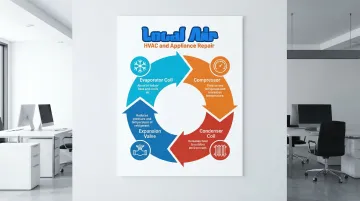
Understanding these components matters because in Florida's extreme climate, AC systems degrade faster than national averages. The typical lifespan in Florida is 10-15 years, compared to 15-20 years elsewhere, due to continuous operation, high humidity, and coastal salt air that corrodes components. This punishing environment makes regular maintenance and timely repairs essential to avoid complete system failure during peak heat.
Common Problems With Your AC
In Palm Beach's intense heat and humidity, AC systems face relentless stress. Most failures follow six predictable patterns that you can identify with a few simple checks. Recognizing these symptoms helps you decide whether it's a quick DIY fix or time to call a professional.
Dirty or Clogged Air Filter
Watch for weak airflow from vents, warm air instead of cold, unexpected system shutdowns, and higher energy bills.
Dust, pollen, and debris accumulation blocks airflow, forcing your system to work harder and potentially overheat. Clogged filters reduce efficiency by 5-15% and are a leading cause of system failure. This is the easiest issue to fix yourself—just replace the filter monthly during cooling season.
Low Refrigerant or Refrigerant Leak
Key warning signs include:
- AC blowing warm air
- Ice buildup on refrigerant lines
- Hissing or bubbling sounds
- System runs continuously but can't cool
Refrigerant doesn't "run out"—if levels are low, there's a leak in the lines or the system was improperly charged during installation. This requires EPA-certified technicians to locate the leak, repair it, and recharge the system properly.
Thermostat Malfunctions
Your thermostat might be the culprit if the AC won't turn on, cycles on and off rapidly (short cycling), shows inaccurate temperatures, or has a blank display.
Common causes include dead batteries, incorrect settings, or poor sensor placement near heat sources like lamps or direct sunlight. Check batteries and settings first—if those don't solve it, faulty wiring may need professional attention.
Electrical Issues (Tripped Breaker, Faulty Capacitor, Wiring Problems)
Electrical problems show up as:
- AC won't start at all
- Clicking sounds without operation
- Breaker trips repeatedly
- Fan won't spin
The issue typically traces to worn capacitors (which store energy to start motors), loose wiring, or circuit overload from aging components. Power surges during Florida thunderstorms accelerate capacitor failure. These repairs require an HVAC technician with electrical expertise.
Frozen Evaporator Coils
You'll notice ice buildup on the indoor unit, poor cooling performance, and water leaks around the system.
This happens when restricted airflow—from dirty filters, low refrigerant, or blocked return vents—prevents proper heat absorption. Moisture then freezes on the coils. Turn off the system to let ice melt, check your filter, and ensure vents aren't blocked. If freezing persists, call for refrigerant testing.
Failed Compressor or Condenser Issues
The most serious failures involve the outdoor unit not running, loud grinding or squealing noises, no cold air production, or complete system shutdown.
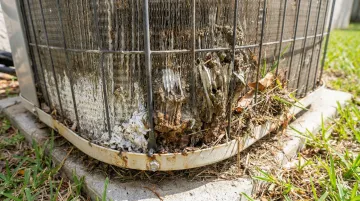
Compressor motor failure from age or overheating is the typical culprit, along with dirty condenser coils that can't release heat effectively. In Palm Beach's climate, outdoor units accumulate salt residue and debris that accelerate wear. If you're experiencing these symptoms, contact Local Air HVAC—compressor replacement often requires evaluating whether repair or full system replacement makes financial sense.
Why AC Units Fail (Root Causes)
Florida's climate puts extreme stress on AC systems. High temperatures force compressors to work harder to reject heat, while constant humidity means evaporator coils run continuously to remove moisture.
This leads to longer run times and accelerated wear. Near year-round operation significantly shortens equipment lifespan compared to systems in milder climates.
Key failure contributors include:
- Lack of preventive maintenance — Dirty filters and coils force systems to work harder, stressing components
- Improper installation — Incorrect refrigerant charge or poor ductwork design causes premature failure
- Refrigerant leaks — Coastal salt air accelerates corrosion of refrigerant lines
- Electrical component aging — Heat and humidity degrade capacitors, contactors, and wiring faster
When these issues go unaddressed, the consequences compound quickly:
- Energy bills climb as efficiency drops and the system works harder to maintain temperature
- Complete system failure during peak heat requires emergency repairs
- Emergency service calls often exceed $2,000
- Safety hazards including electrical fires and refrigerant exposure
How to Fix Your AC (Step-by-Step)
Attempting random fixes wastes time and money. Worse, you may damage your system or void warranties.
This systematic process helps you identify the issue, isolate the root cause, and apply the right fix.
Step 1: Identify the Exact Problem With Your AC
Check for visible symptoms:
- AC won't turn on at all
- Blowing warm air instead of cold
- Unusual noises (grinding, squealing, clicking)
- Water leaking around the unit
- Cycling on and off frequently
Note when the problem occurs:
- At startup only?
- During continuous operation?
- After running for several hours?
Document performance issues:
- Weak airflow from vents
- Ice buildup on indoor or outdoor components
- Strange smells (burning, musty)
- Thermostat not responding or displaying errors
Step 2: Confirm the Root Cause Category
Determine whether your issue is:
- Mechanical (fan, compressor, coils)
- Electrical (breaker, capacitor, wiring)
- Refrigerant-related (leak, low charge)
- Control/settings (thermostat, sensors)
Rule out simple external factors first:
- Check thermostat settings and replace batteries
- Confirm circuit breaker is on (reset only once)
- Inspect air filter for clogs
- Ensure outdoor unit isn't blocked by debris, furniture, or vegetation
Critical: Don't fix symptoms without confirming the root cause.
Replacing a filter won't fix a refrigerant leak. Resetting the breaker won't solve a failing capacitor.
Step 3: Fix Your AC Based on the Identified Problem
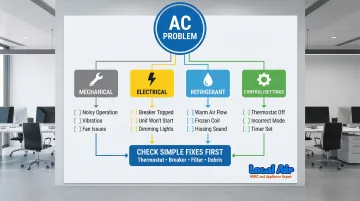
The right fix depends entirely on what's wrong. Attempting the wrong repair can damage your system or create safety hazards.
Use this guide to determine whether your issue is DIY-friendly or requires professional help.
If Your AC Has a Simple Mechanical or Airflow Issue (DIY-Friendly)
Safe DIY fixes:
- Replace dirty or clogged air filter immediately
- Clear debris, leaves, and grass from around outdoor condenser unit
- Ensure all vents and registers inside your home are open and unblocked
- Inspect condensate drain line for clogs and clear with a vinegar/water solution if accessible
If Your AC Has an Electrical, Refrigerant, or Compressor Issue (Professional Required)
DO NOT attempt DIY fixes for:
- Refrigerant leaks (ice on lines, hissing sounds, warm air)
- Electrical failures (tripped breaker that won't stay reset, clicking sounds, no power)
- Compressor issues (outdoor unit not running, loud mechanical noises)
Why professional help is mandatory:
EPA regulations require certification for refrigerant work, with violations carrying fines up to $44,539 per day. Improper refrigerant handling is illegal and dangerous.
Electrical work carries risk of shock or fire without proper training and tools. Contact a licensed HVAC technician immediately if you suspect these issues.
If you're in Palm Beach, Florida, Local Air HVAC and Appliance Repairs maintains EPA Universal Certification and has over 20 years of experience handling complex AC repairs.
Step 4: Test and Verify the Fix
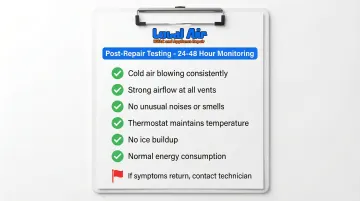
After any repair (DIY or professional), run your AC under normal conditions and monitor for 24-48 hours.
Check that:
- Cold air blows consistently
- Airflow is strong at all vents
- No unusual noises or smells occur
- Thermostat maintains set temperature
- Ice buildup doesn't return
- Energy consumption appears normal
Watch for recurrence: If symptoms return, you may not have addressed the root cause fully. Contact your technician for follow-up diagnosis.
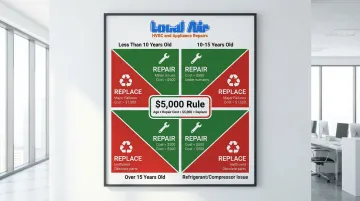
When Should You Fix vs Replace Your AC?
The repair versus replace decision depends on age, repair cost, efficiency, and long-term reliability. Making the wrong choice can cost thousands in wasted repairs or premature replacement.
Scenario 1: AC is Less Than 10 Years Old
Fix if:
- Minor issues like clogged filters, thermostat problems, or capacitor replacement ($150-$350)
- System has been well-maintained with regular service
Replace if:
- Major component failures (compressor or condenser) costing $1,350-$2,300+
- Repair cost exceeds $1,500-$2,000
Scenario 2: AC is 10-15 Years Old
At this age, replacement often makes more financial sense.
Fix if:
- Repair is minor (under $500)
- System has been well-maintained with regular service
Replace if:
- Facing expensive repairs or frequent breakdowns
- Energy bills rising significantly
- Newer systems are 20-40% more efficient, offsetting replacement cost through lower operating expenses
Scenario 3: AC is Over 15 Years Old
Fix only for:
- Very minor, low-cost repairs (under $300) to buy time until replacement
Replace in most cases:
- Older systems use outdated refrigerants like R-22 (now banned for new production)
- Significantly less efficient than modern units
- Parts increasingly expensive or unavailable
Scenario 4: Refrigerant Leak or Compressor Failure
Fix if:
- System is under 8 years old and otherwise in good condition
- Refrigerant leak is minor and repairable
Replace if:
- Compressor replacement costs $1,350-$2,300+
- System is over 10 years old (replacement provides better long-term value)
Quick Decision Tool: The $5,000 Rule
Multiply your unit's age by the repair cost. If the result exceeds $5,000, replace the unit.
Example: 12-year-old unit × $600 repair = $7,200 — Result: Replace
When you're facing this decision in the Palm Beach area, getting a professional assessment helps you understand your system's actual condition and make the choice that fits your budget and long-term needs.
Common Mistakes to Avoid When Fixing Your AC
Even minor AC issues can become costly problems when approached incorrectly. Knowing what not to do protects both your system and your wallet.
Common mistakes include:
- Constantly refilling refrigerant without fixing the leak wastes money and harms the environment
- Attempting refrigerant or electrical work without EPA certification risks injury, system damage, and legal penalties
- Skipping basic safety steps like turning off power at the breaker before inspecting components
- Installing cheap or incompatible replacement parts that fail quickly and void warranties
If you're dealing with refrigerant leaks, electrical issues, or complex repairs, Local Air HVAC and Appliance Repairs offers EPA-certified technicians with over 20 years of experience serving Palm Beach and surrounding areas.
Preventive Measures to Avoid Future AC Issues
Florida's heat and humidity put year-round stress on AC systems. Regular maintenance prevents costly breakdowns when you need cooling most.
Essential maintenance actions:
- Replace air filters every 1-2 months — More often if you have pets or allergies. In Florida's peak summer, filters may need monthly replacement
- Schedule professional maintenance twice yearly — Spring and fall tune-ups catch small issues before they become expensive repairs
- Keep outdoor condenser unit clear — Trim vegetation to maintain 2 feet of clearance and remove debris monthly
- Monitor thermostat performance — Replace batteries annually or upgrade to a programmable model
- Address small problems immediately — Unusual noises or weak airflow signal developing issues
Local Air HVAC and Appliance Repairs offers comprehensive maintenance plans tailored to Florida's demanding climate. With over 20 years of experience serving Palm Beach and surrounding areas, our EPA-certified technicians identify potential problems before they cause system failures.
Conclusion
Most AC problems in Florida are fixable if addressed early, but getting the right diagnosis matters to avoid wasted time and money.
While some fixes like filter replacement and debris removal are DIY-friendly, refrigerant work, electrical repairs, and compressor issues require professional expertise for safety and legal compliance.
Knowing when to repair versus replace based on age, cost, and efficiency helps you make smart financial decisions that keep your home comfortable without overspending.
When you need professional help, Local Air HVAC and Appliance Repairs brings EPA Universal Certification and 20+ years of experience to every job in Palm Beach, Florida. Call 561-331-7633 for same-day diagnostics and repairs backed by our customer satisfaction guarantee.
Frequently Asked Questions
Why did my AC stop working all of a sudden?
Common causes include tripped breakers, thermostat issues, clogged filters, refrigerant leaks, or blown capacitors. Start with simple checks (thermostat, filter, breaker) before calling a professional for diagnosis.
How do I know if my AC needs repair or replacement?
Consider age (10+ years suggests replacement), repair cost (if over 50% of replacement cost), and breakdown frequency. Use the $5,000 Rule: multiply unit age by repair cost—results over $5,000 indicate replacement is more cost-effective.
Can I fix my AC myself or should I call a professional?
Replacing filters, clearing debris, and resetting breakers are DIY-friendly. Refrigerant work, electrical repairs, and compressor issues require an EPA-certified HVAC technician—DIY refrigerant work can result in fines up to $44,539 per day.
How often should I change my AC filter in Florida?
Change your filter every 1-2 months in Florida due to high humidity, pollen, and constant AC use. If you have pets or allergies, check monthly and replace when dirty. Dirty filters are the #1 cause of AC problems and can reduce efficiency by 5-15%.
What should I do if my AC is blowing warm air?
Check thermostat settings, replace the air filter, and confirm the outdoor unit is running. If the problem persists, call a professional—warm air usually indicates refrigerant leaks or compressor failure.
How can I prevent my AC from breaking down in Florida's heat?
Schedule professional maintenance twice yearly (spring and fall), change filters monthly during peak season, keep the outdoor unit clear of debris and vegetation, and address small issues immediately before they become expensive emergencies. Preventive care extends lifespan and maintains efficiency.