If you live or run a small business in South Florida, seeing an AC leaking water can be stressful. Your system runs almost year-round, and what seems normal in humid weather may point to blocked drains, restricted airflow, or internal wear that increases energy costs and disrupts cooling. In fact, Florida recorded over 37,000 HVAC mechanics and installers in 2023, reflecting how often systems require service in the state’s demanding climate.
Addressing the issue early helps protect your property, reduce avoidable repairs, and maintain steady cooling when you need it most. With a clear understanding of the causes and timely professional support suited to your home or small business, you can stop minor leaks from turning into costly problems.
In this guide, we’ll explore how AC systems handle moisture, why leaks happen so often in Florida homes, and what you can do to fix the problem early.
Key Takeaways:
AC systems naturally produce condensation, but leaks occur when water escapes from the drain pan or lines, causing puddles, damp spots, or stains.
Common causes of water leaks include clogged drain lines, dirty air filters, frozen coils, cracked drain pans, low refrigerant, improper installation, and duct or humidity issues.
Simple fixes involve checking filters regularly, clearing drain lines, thawing frozen coils, repairing drain pans, managing humidity, and scheduling routine maintenance.
Catching leaks early and calling an expert can prevent damage, keep your AC running efficiently, and extend its lifespan in Florida’s humid climate.
How an AC Produces Water and When It Becomes a Leak?
Your air conditioner cools indoor air by moving warm air over cold evaporator coils inside the unit. As the air cools, moisture in the air condenses on these coils, similar to how water forms on a cold glass on a hot day. This water should drip into a drain pan and exit through a condensate drain line.
In Florida’s high humidity, this condensation process happens more intensely. However, normal condensation is different from a leak. A leak occurs when water escapes in places it shouldn’t, like inside your home, around the indoor air handler, or on floors and ceilings.
Signs that your AC is leaking water:
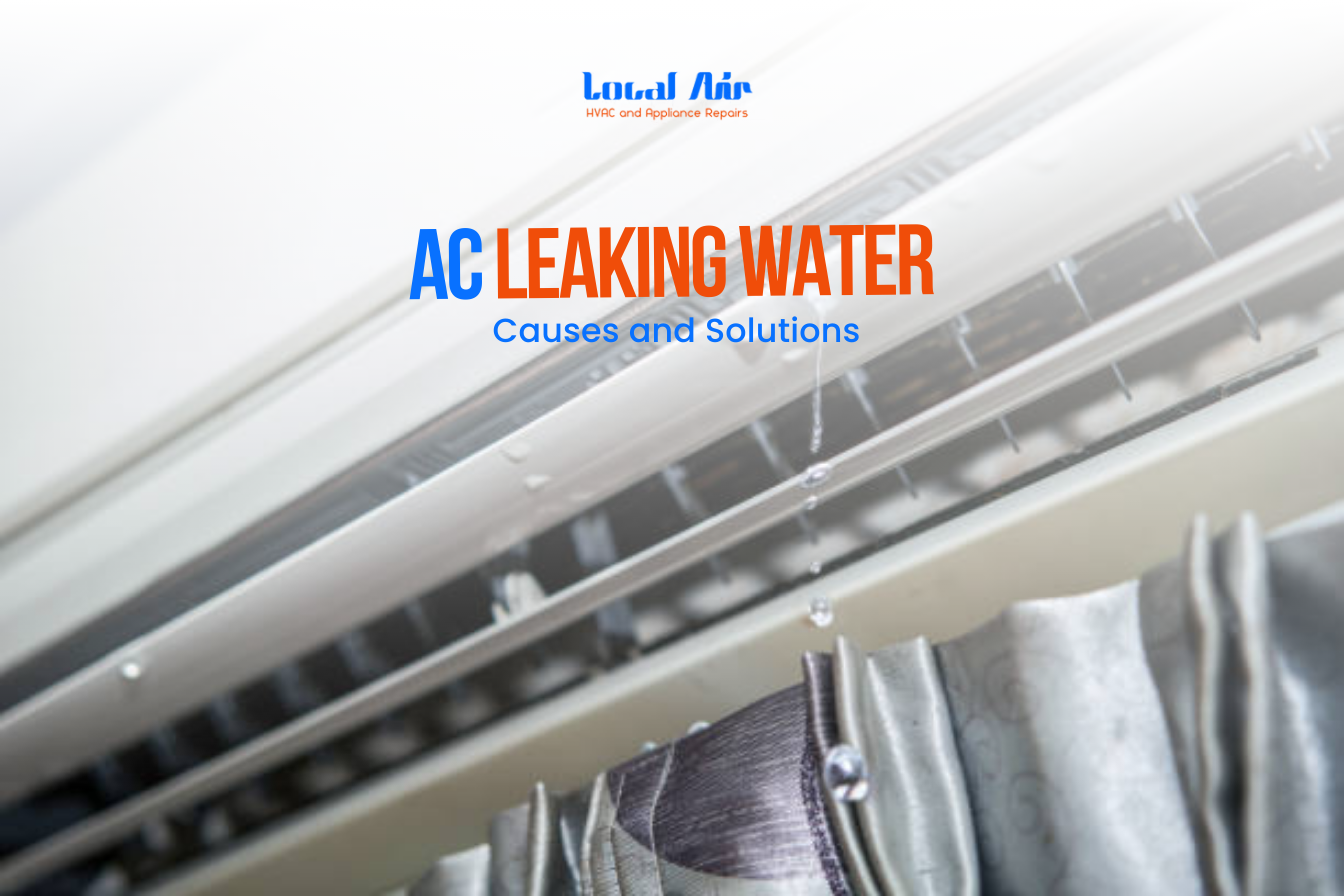
Puddles or water near the unit: Water collecting around the indoor unit or vent points indicates drainage problems.
Damp spots on floors or walls: Persistent moisture indicates a leak that needs attention.
Water stains on ceilings or walls: Can develop if the leak is above or near the ceiling, often from ducted systems.
Dripping during operation or after shutdown: Indicates the condensate system isn’t handling water properly.
Noticing any of these signs means your AC needs attention. This usually indicates a problem with the drainage system or another component of your AC.
Common Causes of AC Water Leaks
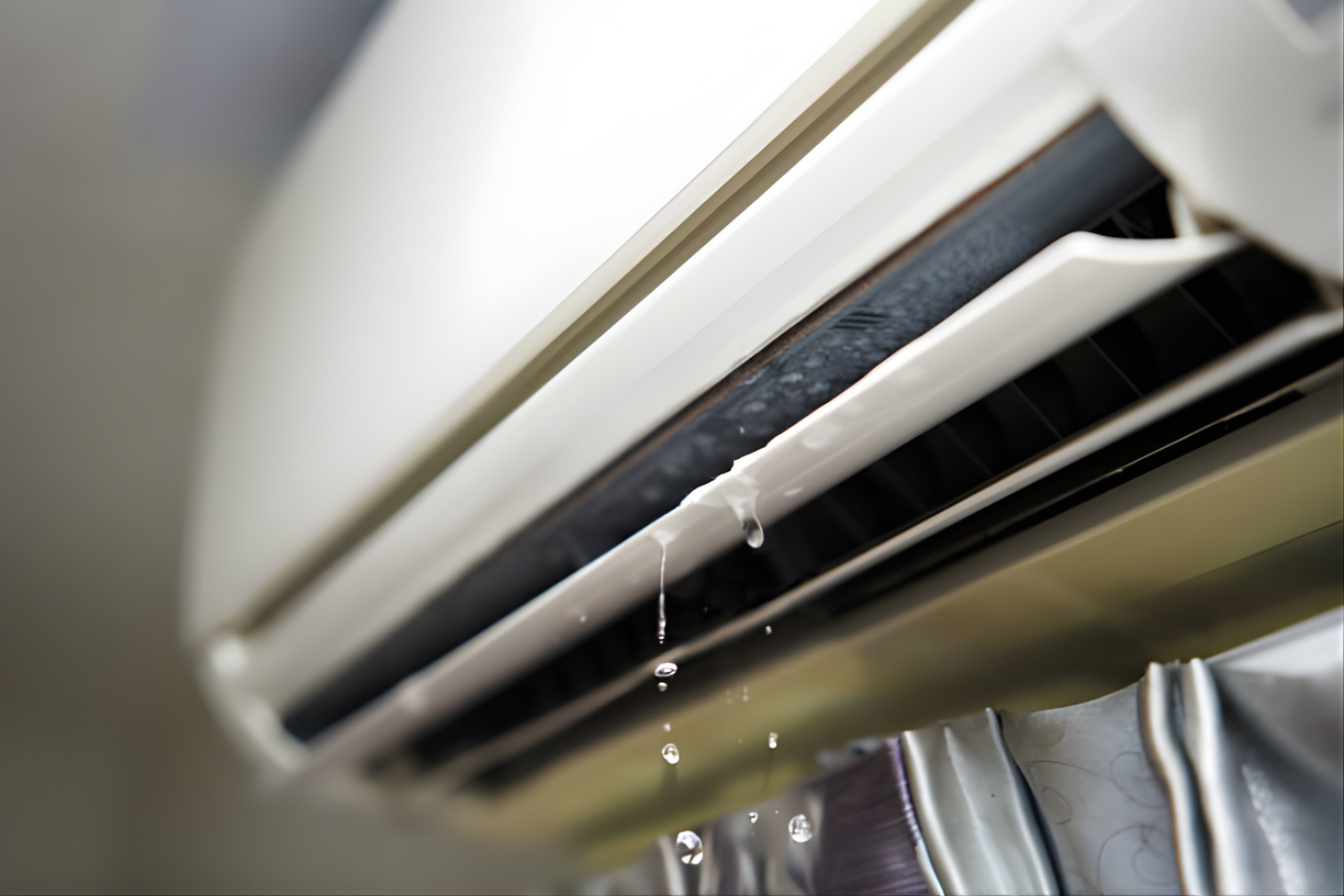
Figuring out why your AC is leaking water helps you know what you can fix yourself and what a trained HVAC professional should handle.
Here’s a breakdown of the most frequent causes experienced by Florida homeowners and small property owners.
Clogged Condensate Drain Line
A blocked drain line is one of the main reasons ACs leak water in Florida. Over time, dust, dirt, algae, and mold build up inside the line.
Signs to watch for
Water pooling near the indoor unit
Musty odors when the AC runs
Dripping near ceilings or walls
Homes near coastal areas like West Palm Beach and Boca Raton often experience this issue because humidity encourages faster microbial growth.
Dirty or Blocked Air Filter
If you don’t replace air filters regularly, they restrict airflow across the evaporator coil. When airflow drops, the coil can freeze.
What homeowners often notice:
Weak airflow from vents
Uneven cooling
Higher energy bills
Changing your filters regularly reduces strain on the system and lowers the chance of water leaks.
Cracked or rusted drain pan
Drain pans collect condensation before it enters the drain line. Over time, they can crack, rust, or shift out of alignment.
When the pan fails:
Water drips directly into cabinets, ceilings, or floors
Leaks may appear only during long cooling cycles
Damage often spreads before the issue is noticed
Many Florida homes with systems older than 8–10 years experience this problem.
Low Refrigerant Levels
Low refrigerant can create pressure imbalances that freeze the coil. Like airflow problems, frozen coils produce extra water when they thaw.
This issue often shows up with:
Reduced cooling
Longer run times
Rising energy bills
Water leaks here are usually a sign of a deeper mechanical problem.
Improper Installation or Poor Unit Leveling
AC systems must be level to allow water to drain correctly. If the unit shifts or was installed incorrectly, water may collect on one side of the drain pan.
This can result in:
Slow, persistent leaks
Water damage near the air handler
Uneven drainage, even with a clear drain line
This is more common in garages, closets, or older retrofits.
Disconnected or Damaged Drain Line
Sometimes the drain line becomes loose, cracked, or disconnected. This lets water escape before reaching the proper drainage point.
This issue often appears after:
Home renovations
Previous AC repairs
Long periods without inspection
Even a tiny gap can lead to slow but steady water leaks.
Ductwork Issues and Excess Humidity
Leaking or poorly insulated ducts allow humid air to enter the system, which increases condensation inside the unit and ducts. In Florida, duct issues often go unnoticed until moisture damage becomes visible.
Possible signs:
Damp insulation near vents
Condensation on duct surfaces
Musty indoor smells
Fixing duct problems reduces excess moisture and keeps your indoor air healthier.
Practical Solutions to Fix AC Water Leaks
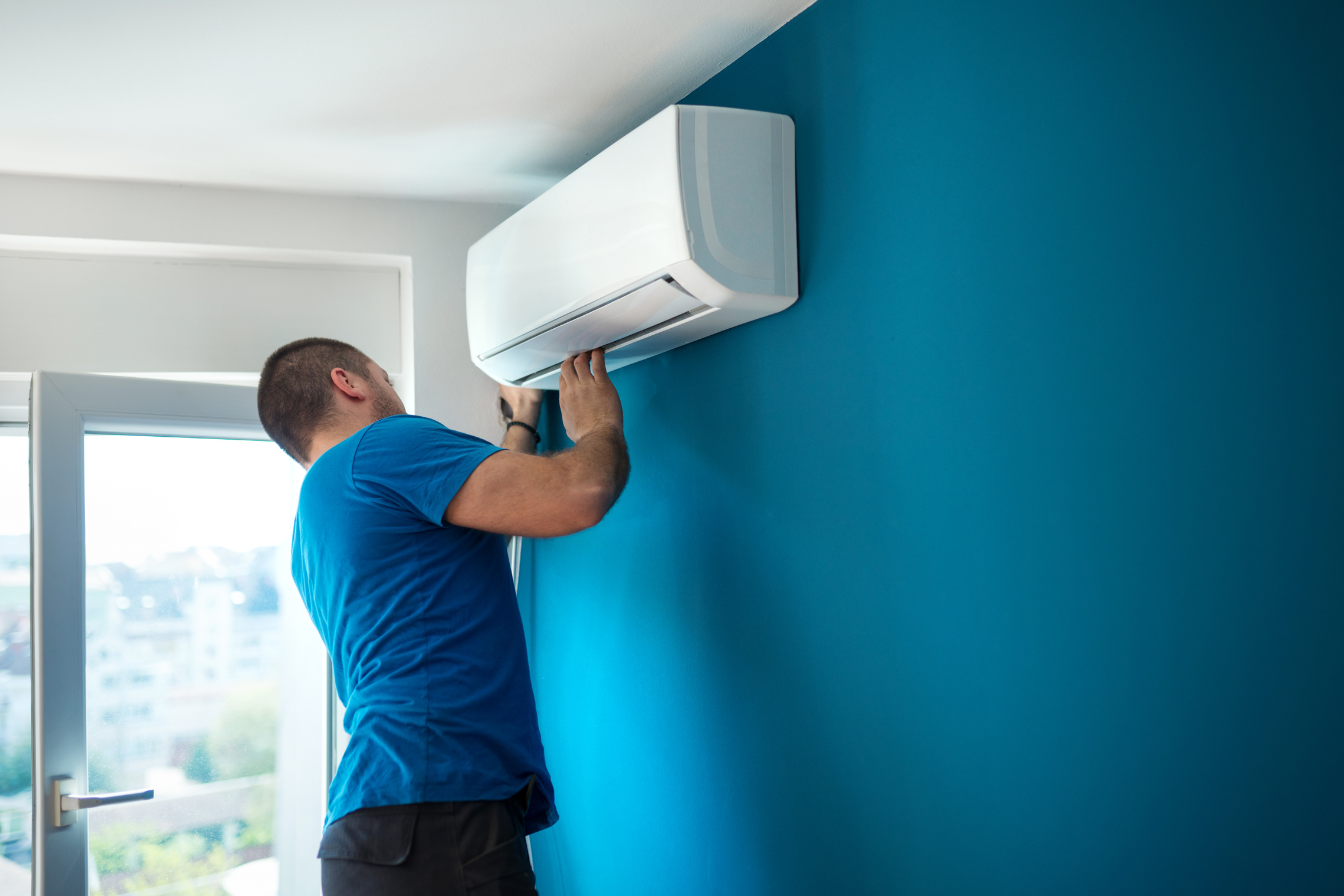
Addressing an AC water leak early can help reduce repair costs and prevent damage to your home. Some solutions focus on prevention, while others require professional attention for safety and accuracy.
Check and Replace Air Filters Regularly
This is one of the easiest steps you can take as a homeowner. Clean filters help maintain proper airflow and lower the chances of coil freezing.
Best practices include:
Checking filters every 30–60 days
Replacing filters more often during peak summer months
Using filters recommended for your system type
Regular filter care helps control moisture and keeps your AC cooling properly.
Clear the Condensate Drain Line
Keeping the drain line clear allows water to flow out the way it should. This is especially important in Florida’s humid climate.
Helpful maintenance steps:
Using a wet/dry vacuum at the outdoor drain termination to remove debris,
Pouring a diluted vinegar solution down the line to clear algae build-up,
Flushing the line with clean water after removing the blockage.
These steps work well for minor clogs. However, they are typically temporary fixes. If the blockage is deep inside the line or keeps coming back, professional cleaning is the safer option.
Address Frozen Coil Issues Early
If you notice reduced airflow, ice on refrigerant lines, or warm air from vents, turn the system off and allow it to thaw.
After thawing:
Check filters and airflow
Avoid restarting the system immediately
Seek professional inspection if freezing returns
Repeated freezing usually signals a bigger issue within the system.
Repair or Replace Damaged Drain Pans
If water appears directly under the indoor unit, the drain pan may be cracked or corroded. Temporary patches often don’t last in humid conditions.
A technician can:
Confirm the source of the leak
Replace damaged components safely
Restore proper water collection
This prevents hidden water damage and protects your home over time.
Improve Humidity Control
Managing indoor humidity helps reduce excess condensation inside your AC system.
Helpful improvements:
Sealing duct leaks
Using UV lights to limit microbial growth
Keeping vents clear and unobstructed
Better humidity control improves comfort and keeps your system in good shape.
Schedule Routine Maintenance
Preventive maintenance is one of the most effective ways to reduce AC water leaking issues in Florida homes.
During maintenance visits, technicians can:
Clean drain lines and pans
Inspect coils and refrigerant levels
Identify early signs of moisture problems
This helps keep your AC running smoothly and reduces the risk of emergency repairs.
How Local Air HVAC Can Help Resolve AC Water Leaks?
Local Air HVAC serves homeowners and light commercial clients across Palm Beach County and surrounding Florida cities. Our technicians bring fast, local expertise to diagnose and address water leaks from your AC system.
Here’s how we can assist you:
Expert Leak Diagnosis in Palm Beach County: Technicians inspect drainage paths, condensate lines, and internal components to find the exact cause of water leaks rather than guessing.
Drain Line Flushing and Extraction: Professional drain flushes help remove clogs, algae, and buildup that often block water flow and turn normal condensation into a leak.
Thorough Condensate System Checks: They assess the drain pan, lines, and connections to ensure water moves out of your AC properly, helping prevent unwanted pooling or overflow.
Coil Cleaning Services: Cleaning condenser and evaporator coils improves water flow and reduces the risk of ice buildup that can thaw and cause drips or leaks.
Indoor Air Quality Support (UV Light Installation): Installing UV lights helps reduce microbial growth inside HVAC systems that can contribute to clogs and leak‑related smells or health concerns.
Routine System Tune‑Ups: Scheduled maintenance catches minor issues early, helping prevent conditions that lead to water leaks, such as airflow restrictions or blocked drainage.
Residential & Light Commercial Service Range: Local Air HVAC serves homes, offices, clinics, and retail spaces across Palm Beach, Wellington, Royal Palm Beach, Lake Worth Beach, Delray Beach, Manalapan, Palm Beach Gardens, and Boca Raton.
EPA‑Certified Technicians with Local Expertise: With over 20 years of serving Palm Beach County, their team blends practical experience and local climate insights to diagnose humidity‑related water issues accurately.
Customer‑First Response and Clear Advice: They provide practical guidance on next steps, helping you understand what the leak means, what solutions are available, and what you can expect from service.
Our service model focuses on long-term reliability and comfort, helping you avoid repeated issues and unexpected breakdowns during Florida’s intense summer season.
Conclusion
AC water leaks are never something to ignore, especially in Florida’s humid climate. While AC systems naturally produce condensation, visible leaks often signal blocked drainage, airflow problems, or aging components that need attention. Left unaddressed, even small leaks can lead to mold growth, higher energy costs, and damage to your home or business.
Early detection, routine maintenance, and professional inspection play a key role in preventing these issues. By understanding how your AC manages moisture and acting quickly when leaks appear, you can protect your comfort and avoid costly repairs.
If you’re dealing with AC water leaks or want help identifying potential risks before they escalate, Local Air HVAC provides trusted, local support tailored to Palm Beach County homes and light commercial properties. Contact us today.
FAQs
How do I know if a frozen evaporator coil is causing my AC leak?
A frozen evaporator coil often causes water to drip as it thaws. Signs include reduced cooling, unusual ice buildup on the coil, hissing sounds, and condensation around the indoor unit. If ice forms regularly, it may indicate airflow or refrigerant issues.
Is improper installation a common reason for AC leaking water?
Yes, improper installation can lead to AC water leaks. Misaligned or poorly connected drain lines, incorrect refrigerant levels, or an uneven unit can prevent proper condensation drainage, causing water to pool or drip inside your home.
Can high humidity cause my air conditioner to leak water?
High humidity can contribute to AC water leaks because excess moisture overloads the system’s drain capacity. If the condensate drain or pan can’t handle the humidity, water may overflow, causing leaks inside or around your unit.
What are the signs of a rusted or damaged AC drain pan?
A rusted or damaged drain pan often shows visible corrosion, standing water, or frequent leaks. You may also notice a musty smell, water stains near the AC, or water pooling around the indoor unit, indicating the pan can no longer channel condensation properly.
How can I temporarily stop my AC from leaking water?
Temporarily, you can turn off the AC, clear the drain line with a vacuum or pipe cleaner, or use a bucket under the leak. Ensure the pan is level and remove excess water. These steps reduce immediate damage, but professional repair is recommended for a lasting fix.