The good news: the vast majority of these fires are preventable. You don't need expensive equipment or major renovations. Most dryer fires trace back to skipped maintenance and a handful of bad habits that are easy to correct once you know what to look for.
This guide covers exactly that — the mechanics behind dryer fires, the specific habits and setup requirements that prevent them, and the warning signs that your dryer may already be at risk.
Key Takeaways
- Clean the lint filter after every single load — lint accumulation is the leading cause of dryer fires
- Replace plastic or foil accordion-style ducts with rigid or semi-rigid metal ductwork
- Schedule professional dryer vent cleaning at least once a year
- Never run the dryer while you're asleep or away from home
- Air-dry clothing stained with gasoline or cooking oils before putting them in the dryer
How Dryer Fires Start and Why They're So Common
Dryer fires start in one of two ways: lint blocking airflow until heat reaches ignition temperature, or mechanical and electrical faults within the unit itself. The first cause is far more common.
According to the U.S. Fire Administration, failure to clean was the leading contributing factor in 31% of residential dryer fires from 2018 to 2020. The NFPA's figure for the 2014–2018 period puts it at 32%. The numbers shift slightly by dataset, but the conclusion is consistent — most dryer fires happen because the dryer wasn't cleaned.
Why Restricted Airflow Is Self-Reinforcing
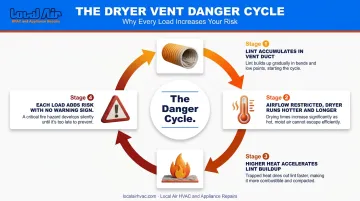
Lint blockage is particularly dangerous because the problem compounds itself with every load:
- Lint accumulates in the vent duct, reducing airflow
- The dryer compensates by running hotter and longer
- Higher heat accelerates further lint buildup
- Each subsequent load adds risk — with no obvious warning sign until the situation is already serious
Both electric and gas dryers carry fire risk. Gas models carry an additional concern: improper venting can allow combustion byproducts to back up into the home rather than exhaust outside. This is why gas dryers must always vent to the exterior through a properly maintained duct — never into a wall cavity, crawlspace, or garage.
Dryer Fire Prevention Safety Guidelines
Effective dryer fire prevention spans four areas: daily habits, physical setup and ductwork, operational discipline, and laundry handling. A gap in any one of them can undermine everything else.
Lint Filter and Interior Cleaning
Clean the lint screen before or after every single load — not weekly, not when it looks full. Both USFA and NFPA guidance are explicit on this point. A CPSC consumer survey found that while 96% of respondents reported cleaning the lint filter, only 68% cleaned it after every load. That gap matters.
One less obvious issue: fabric softener leaves a residue on the filter that restricts airflow even when the screen looks clean. To check, hold the filter under running water — if water pools rather than passing through, residue has built up. Rinse it periodically with warm, soapy water to clear the coating.
The lint filter doesn't catch everything. Lint also accumulates inside the dryer chassis — around the drum housing and heating elements — where no filter can reach.
Signs it's time for a professional interior cleaning:
- Clothes take longer than one cycle to dry
- The dryer exterior feels unusually hot
- You notice a burning smell during a cycle
- It's been more than a year since the last professional service
The CPSC recommends having a qualified technician periodically clean the interior of the dryer cabinet to address this buildup.
Dryer Duct and Venting Safety
Plastic and foil accordion-style ducts are a documented fire risk. Their ridged interiors trap lint readily, and they tend to sag over time, creating low points where lint pools. The 2021 International Residential Code requires dryer exhaust ducts to have a smooth interior finish and be constructed of metal — rigid or corrugated semi-rigid metal duct only.
When assembling duct joints, use clamps or foil tape — not sheet-metal screws. Protruding screw tips catch lint inside the duct and defeat the purpose of switching to metal in the first place.
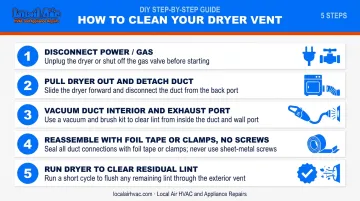
Annual vent cleaning steps (DIY):
- Disconnect the dryer from power (and shut the gas valve on gas models)
- Pull the dryer away from the wall and disconnect the duct
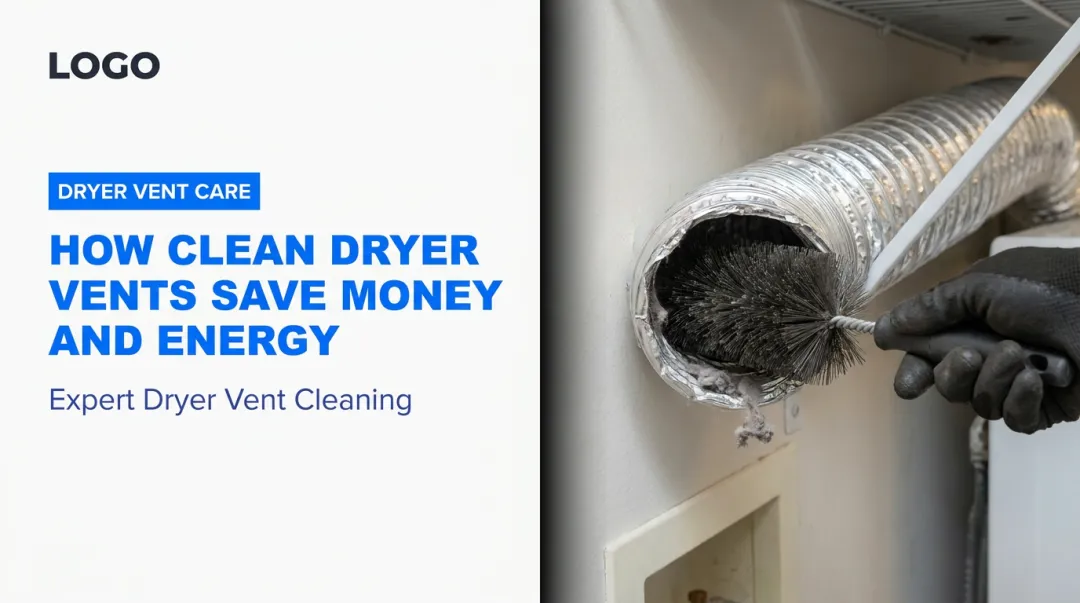
- Vacuum the duct interior and dryer exhaust port as far as you can reach
- Reassemble joints with foil tape or clamps — no screws
- Run the dryer briefly to push residual lint out through the exterior vent
For Palm Beach-area homeowners who'd rather have a professional handle this, Local Air HVAC and Appliance Repair provides dryer vent cleaning for both residential and commercial properties throughout South Palm Beach County. They've served the area for over 20 years and can reach sections of the vent run that aren't accessible from the dryer end.
The exterior vent cap is just as important as the duct itself. Check it on the same schedule:
Outdoor vent maintenance checklist:
- Confirm exhaust air is visibly escaping while the dryer runs
- Check that the exterior damper flap opens and closes freely
- Clear any bird nests, leaves, or debris from around the duct cover — a real concern given Florida's year-round warm climate and active wildlife
- Never cover the exhaust opening with wire mesh or fabric screens — the IRC prohibits this because screens accumulate lint and block airflow
Safe Operating Habits
The NFPA advises turning the dryer off when you leave home or go to bed. If a fire starts while someone is awake and present, there's a real chance it gets caught and contained. The same fire in an unoccupied or sleeping home has far less chance of early detection.
Load management habits that reduce risk:
- Don't overload the dryer — trapped heat extends cycle times and raises internal temperatures
- Match the heat setting to the fabric type; excessive heat over a long cycle is a compounding risk factor
- Use cycles with a built-in cool-down period for heavier loads
- Keep at least 36 inches of clear space around the dryer — no cardboard boxes, laundry piles, or other combustibles nearby
- Install working smoke detectors in or adjacent to the laundry area
Handling Chemical-Stained Laundry
Clothing or rags contaminated with gasoline, cooking oils, finishing oils, or cleaning solvents must not go directly into the dryer. Residual volatile chemicals can ignite from the heating element even at low heat settings.
The CPSC has specifically documented this risk with vegetable oil-soiled cloths — oil residue can survive a wash cycle and still cause ignition when heated.
The recommended approach:
- Wash stained items more than once before machine drying
- Air-dry them completely when possible
- If the dryer must be used, select the lowest heat setting with a cool-down cycle
- Don't leave chemically stained items sitting in the drum or piled in a laundry basket after the cycle ends — spontaneous combustion is still possible once the cycle finishes
Warning Signs Your Dryer Could Be a Fire Hazard
These symptoms don't always mean a fire is imminent, but each one indicates a problem that needs attention before the dryer runs again:
- Clothes still damp after a normal cycle — typically signals restricted airflow from a clogged vent or duct
- Exterior of the dryer unusually hot to the touch — suggests heat that should be exhausting is building inside the unit
- Burning smell during or after a cycle — could indicate lint burning near the heating element
- Laundry room noticeably warm while the dryer runs — often means exhaust heat is not leaving the building efficiently
- Exterior vent damper not opening during operation — indicates a blockage somewhere in the duct run
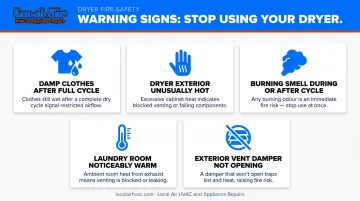
Any one of these signs warrants stopping use immediately. Each cycle run with compromised airflow accelerates lint accumulation and raises ignition risk — the problem compounds the longer you wait.
If you're seeing these symptoms in Palm Beach County or the surrounding South Florida area, Local Air HVAC and Appliance Repairs can inspect and clean the full vent run — including sections inside the wall that a DIY cleaning can't reach.
Common Dryer Fire Safety Mistakes to Avoid
Most dryer fires don't happen because of equipment failure. They happen because of habits — small oversights that compound over time. These four mistakes show up repeatedly in fire incident reports.
- Cleaning the lint filter only when it looks full. Lint buildup isn't always visible. A thin layer from a single load can restrict airflow in a duct that's already partially clogged. Clean it before every load.
- Keeping a plastic or foil duct because it was already installed. A CPSC consumer survey found 42% of vented dryer owners were using flexible accordion foil ducts, and another 16% used white plastic. Installed doesn't mean safe — rigid or semi-rigid metal duct is required regardless of what came before.
- Skipping duct cleaning because the dryer still runs. Partial blockages reduce airflow without obvious symptoms. Clothes may still dry — just slowly, with heat building toward a dangerous threshold each load.
- Running the dryer while asleep or away from home. The NFPA specifically advises against this. A fire that starts in an occupied, awake home can be caught quickly. The same fire in an empty or sleeping home is among the most dangerous residential fire scenarios.
Conclusion
Dryer fire prevention comes down to a consistent combination of small habits practiced regularly:
- Clean the lint filter after every load
- Maintain properly configured metal ductwork
- Run the dryer only when someone is awake and home
- Recognize warning signs before they become serious problems
Treat dryer maintenance as a scheduled routine rather than something you address when the machine stops working. Annual professional vent cleaning, periodic filter washing, and attentive daily habits are all it takes to keep this common household hazard from becoming a serious one.
Palm Beach-area homeowners and property managers can reach Local Air HVAC and Appliance Repair at 561-331-7633 to schedule dryer vent cleaning for residential or commercial properties across South Palm Beach County.
Frequently Asked Questions
How do I prevent my dryer from catching fire?
Clean the lint filter after every load, use rigid or semi-rigid metal ductwork (not plastic or foil), schedule professional vent cleaning annually, and never run the dryer while you're asleep or away from home. These four habits address the vast majority of documented dryer fire causes.
What is the most common cause of dryer fires?
Failure to clean — specifically lint accumulation blocking airflow — accounts for roughly 31–32% of residential dryer fires according to USFA and NFPA data. Lint buildup restricts airflow, causes heat to build inside the machine, and eventually reaches ignition temperature.
Can a dryer fire start after the cycle ends?
In most cases, dryer fires occur during operation. However, clothing soiled with cooking oils or other flammable substances can smolder or combust after the cycle ends due to residual heat. Don't leave chemically stained laundry in the drum or piled in a basket after drying.
How often should I clean my dryer vent?
At minimum, once per year for a typical household. Larger families or commercial properties with heavy dryer use may need more frequent service. A professional technician can inspect the full vent run — including wall sections you can't reach from the dryer end — and recommend the right schedule.
What are the warning signs that my dryer is a fire hazard?
Watch for these signs: clothes not drying fully in a normal cycle, the dryer exterior unusually hot to the touch, a burning or musty smell during operation, or the laundry room feeling noticeably warm. Any of these points to a potential blockage or mechanical issue — stop using the dryer until it's inspected.
Is it safe to run the dryer at night or when I'm away?
No. The NFPA specifically advises against running a dryer while asleep or away from home, because an undetected fire dramatically increases the risk of serious injury or total property loss. Always complete dryer cycles while an adult is awake and present.