The appliance itself usually isn't to blame. According to the NFPA's most current dryer fire data, failure to clean is the leading cause, responsible for 32% of dryer fires. Mechanical failure accounts for 27%. The math is clear: most dryer fires are a maintenance problem, not a manufacturing defect.
This guide covers how dryer vent fires actually start, the safety precautions that matter most, and the mistakes that turn a manageable hazard into a serious threat.
Key Takeaways
- Lint buildup in dryer vents is the #1 cause of dryer fires — cleaning is the most effective prevention
- Clean the lint screen after every load; schedule a full professional vent cleaning at least once a year
- Warning signs of a clogged vent: longer drying times, clothes or dryer hot to the touch, burning smell
- Only rigid metal ducts meet current building codes; flexible plastic or foil ducts are a fire hazard
- DIY cleaning only reaches surface lint — professional tools clear blockages deeper in the duct
Why Dryer Vents Are a Serious Fire Hazard
How a Dryer Fire Actually Starts
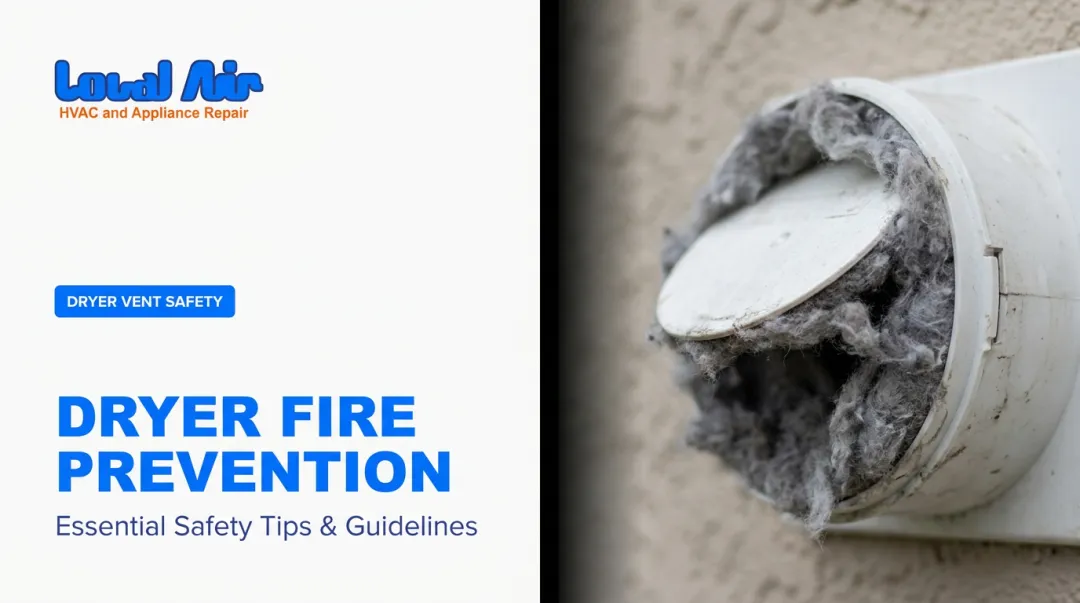
The sequence is straightforward. Lint accumulates inside the exhaust duct over months of normal use. As it builds up, airflow slows. The dryer works harder, temperatures climb, and a mechanical spark — or simply sustained overheating — can ignite the trapped lint. Because the duct runs through concealed wall spaces, the fire travels quickly along a path that's nearly impossible to see or suppress without opening walls.
What makes lint so dangerous is its physical nature. It's composed of fine, dry fibers shed from cotton, polyester, and other fabrics during drying. It's extremely lightweight, bone dry, and ignites at relatively low temperatures. Outdoor survival guides routinely recommend dryer lint as a fire starter — its ignition point is that low.
The lint screen doesn't solve this problem on its own. According to the CPSC, lint begins accumulating inside the dryer chassis and ductwork from the very first use, even when the screen is cleaned regularly.
The screen captures some lint per cycle — not all of it. The rest passes into the exhaust duct, clings to duct walls and bends, and builds up invisibly over time.
The Numbers Behind the Risk
That buildup has real consequences. NFPA data shows what's actually behind residential dryer fires:
| Cause | Share of Dryer Fires |
|---|---|
| Failure to clean | 32% |
| Mechanical failure | 27% |
| Electrical failure | 16% |
| Heat source too close to combustibles | 6% |
| Equipment left unattended | 3% |
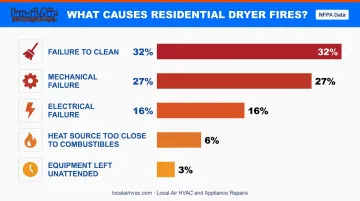
The U.S. Fire Administration corroborates this, reporting that failure to clean accounted for 31% of residential dryer fires from 2018–2020. The consistent finding across both agencies: behavior and maintenance are the key variables, not the appliance brand or age.
Safety Guidelines for Dryer Vent Cleaning
Safe dryer vent operation depends on three things working together: correct duct installation, disciplined daily habits, and periodic deep cleaning. Gaps in any one area increase fire risk.
Routine Precautions
- Clean the lint screen before or after every single load. Even partial clogging slows airflow and accelerates lint accumulation deeper in the duct.
- Never run the dryer while asleep or away from home. A burning smell or unusual heat can only be acted on if someone is present to notice it.
- Disconnect power before any cleaning or maintenance. For gas dryers, shut off the gas supply too. This applies regardless of how minor the task seems.
Duct Material and Installation Requirements
Current building code (2024 IRC Section M1502) is specific about what's acceptable:
- Rigid metal duct only — smooth interior, minimum 28-gauge. Flexible plastic and foil accordion-style ducts are no longer code-compliant.
- Maximum run length is 35 feet from the dryer to the exterior outlet. Each 90-degree bend reduces that allowance by 5 feet.
- The duct must exit the building with a backdraft damper and no screen at the termination point — screens trap lint and block exhaust.
- Transition ducts must be a single length, listed to UL 2158A, no longer than 8 feet, and cannot be concealed within walls.
Whirlpool's installation specs explicitly prohibit flexible plastic venting as a fire hazard that kinks and sags. Samsung's guidance identifies thin foil flexible duct as a direct cause of serious blockage. Swapping non-compliant ducting for rigid metal is a one-time fix.
Warning Signs Your Dryer Vent Is Unsafe
These are the signals that the duct is no longer expelling heat and moisture efficiently:
- Clothes taking more than one full cycle to dry
- Laundry feels unusually hot at the end of a cycle
- The dryer exterior runs noticeably warm or hot to the touch
- A burning or musty smell during or after a drying cycle
- Visible moisture, humidity, or condensation near the dryer
Each sign points to compounding heat buildup. Left unaddressed, the system moves closer to fire conditions with every load.
If your vent hasn't been professionally cleaned within the past 12 months, or any of these signs are present, a full inspection is the right next step. For homeowners in the Palm Beach area, Local Air HVAC and Appliance Repairs provides professional dryer vent cleaning that clears lint blockages from the full duct run, including the deeper sections a lint screen never reaches. They serve Boca Raton and the surrounding South Palm Beach County area. Reach them at 561-331-7633.
Environmental Considerations in South Florida
South Florida's humidity creates a problem that drier climates mostly avoid. When damp air mixes with lint inside the duct, it forms clumps that are harder to expel — and creates conditions where mold can develop alongside the fire hazard.
Laundry room ventilation compounds the issue. The 2024 IRC (M1502.6) requires makeup air (fresh replacement air from outside) for dryer installations exhausting more than 200 cfm. Small, sealed laundry rooms that don't meet this requirement reduce exhaust flow and accelerate lint accumulation inside the duct.
Common Safety Mistakes to Avoid
1. Treating the lint screen as the complete solution The screen captures only a portion of lint per cycle. The rest enters the ductwork and accumulates in bends and concealed sections. Cleaning the screen is necessary, but it doesn't clear the duct.
2. Keeping non-compliant duct materials Flexible foil and white vinyl transition ducts collapse over time, restricting airflow. Their coatings accelerate flame spread if lint ignites. Replacing them with rigid metal or UL 2158A-listed semi-rigid duct eliminates the hazard permanently.
3. Dismissing early warning signs "It's just running a little slow" is how dangerous lint buildup goes unaddressed for months. Longer drying times and excess heat are not normal dryer behavior — they're early indicators of a blocked duct.
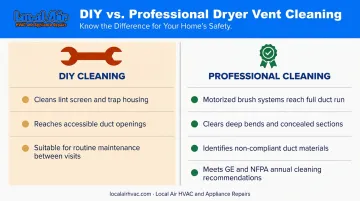
4. Skipping annual professional cleaning DIY vacuuming of the lint trap housing addresses accessible lint. It cannot reach deep bends or the full duct run. Professional cleaning uses specialized tools (motorized brush systems, compressed air equipment) to clear the entire exhaust path. GE recommends inspecting and cleaning dryer exhaust ducting at least once a year — heavy lint accumulation is a documented fire hazard.
5. Running the dryer unattended Leaving the dryer running overnight or while away eliminates the only early-warning system available: a person noticing a smell, unusual heat, or visible smoke. The NFPA data shows equipment left unattended accounts for 3% of dryer fires — a preventable share.
Conclusion
Dryer vent fire safety comes down to three things done consistently: cleaning the lint screen after every load, maintaining code-compliant rigid metal ductwork, and scheduling annual professional cleaning. These aren't separate tasks — they reinforce each other, and a gap in any one area increases the cumulative risk.
Annual professional cleaning isn't optional maintenance — put it on the calendar like any other safety task and get it done. For homeowners across South Palm Beach County, Local Air HVAC and Appliance Repairs brings over 20 years of experience, EPA Universal Certification, and a 2024 recognition as Best Appliance Repair in Royal Palm Beach to every dryer vent cleaning job. Call 561-331-7633 to schedule your cleaning and keep your home operating safely.
Frequently Asked Questions
How often do you need to clean a dryer vent to prevent a fire?
The NFPA recommends cleaning the vent pipe at least once a year. Households with heavier dryer use — large families or frequent loads — may need cleaning every six months. If clothes are taking longer than normal to dry, that's a sign cleaning is overdue regardless of the last service date.
What percentage of house fires are caused by dryer vents?
Dryers are involved in 15,000–16,000 home fires per year according to NFPA data. Failure to clean the vent is the leading cause, accounting for approximately 31–32% of those fires — making it a maintenance problem, not a product defect.
What is the NFPA code for dryer vents?
Dryer vent installation requirements are primarily governed by IRC Section M1502, covering duct material (rigid metal), maximum run length (35 feet), and termination standards. NFPA 211 addresses chimneys and solid-fuel venting rather than dryer exhaust specifically. Requirements can vary by municipality, so confirm local code before installing or modifying any duct run.
Do you have to be certified to clean dryer vents?
Certification isn't universally required by law, but it matters. The CSIA's Certified Dryer Exhaust Technician (CDET) is the only nationally recognized credential for this work, and certified technicians can spot installation problems — like non-compliant duct materials — that basic lint removal won't address.
Can I clean my dryer vent myself, or should I hire a professional?
DIY cleaning — vacuuming the lint trap housing and accessible duct openings — is useful for routine maintenance between professional visits. It cannot substitute for annual professional cleaning, which uses specialized tools to reach deep bends and the full duct run where dangerous accumulations develop.
What are the warning signs that my dryer vent needs cleaning?
The main indicators: clothes requiring multiple cycles to dry fully, the dryer or laundry feeling excessively hot, a burning or musty odor during operation, and humidity or condensation near the dryer. Any one of these warrants a professional inspection — don't wait for all four to appear before scheduling service.