](https://file-host.link/website/localairhvac-np4f9s/assets/blog-images/6bfb4584-ed21-4c18-aa57-494ba8e25323/1780332053725001_8ce955ab198f4c369b4c81d4828a58b7/360.webp)
It's a reasonable question—and a surprisingly common one. Both services involve ducts, both involve vacuums, and both show up on the same home maintenance checklist. But they target entirely different systems, prevent entirely different problems, and operate on completely different timelines.
Mixing them up can mean neglecting a real fire hazard or spending money on a service your home doesn't need yet. Here's what actually separates these two services—and how to decide which one your home needs right now.
Key Takeaways
- Dryer vent cleaning removes lint from the exhaust duct behind your dryer—its primary goal is fire prevention and appliance efficiency
- Air duct cleaning targets dust, allergens, and debris inside your HVAC ductwork to improve indoor air quality and system performance
- These services use different equipment, target different systems, and solve different problems
- Most homes need dryer vent cleaning at least once a year; air duct cleaning frequency depends on visible contamination and household conditions
- Many homeowners need both—just on different schedules
Dryer Vent Cleaning vs. Air Duct Cleaning: At a Glance
Here's a quick side-by-side comparison of how these two services differ.
| Dryer Vent Cleaning | Air Duct Cleaning | |
|---|---|---|
| Primary Purpose | Fire prevention, appliance efficiency | Indoor air quality, HVAC performance |
| System Cleaned | Dryer exhaust duct (dryer to exterior vent) | Entire HVAC duct system + components |
| Main Hazard Addressed | Lint buildup → fire and heat damage | Dust, mold spores, allergens → poor air quality |
| Recommended Frequency | At least once per year | When visibly contaminated; inspect regularly |
| Typical Cost Range | $102–$188 (avg. ~$139–$145) | $271–$1,000+ depending on system size |
| Primary Tools | Vent brushes, high-powered vacuum | Negative-pressure vacuum (HEPA), agitation tools |
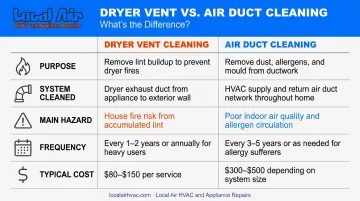
Both services protect different systems in your home. They're complementary, not interchangeable.
What Is Dryer Vent Cleaning?
Dryer vent cleaning is the removal of lint, debris, and blockages from the exhaust duct that runs from the back of your dryer to the exterior vent opening. Every load of laundry pushes lint-laden air through this duct. Over time, that lint sticks to duct walls, accumulates at bends, and restricts airflow—sometimes dramatically.
Why does that matter? Lint is highly flammable. According to NFPA research on home dryer fires, failure to clean is the leading cause of dryer fires, accounting for 33% of approximately 14,630 home dryer fires per year—resulting in an estimated $222 million in direct property damage annually.
The CPSC separately confirms the mechanism: lint in the dryer or exhaust duct blocks airflow, causes excessive heat buildup, and can result in a fire.
What the Cleaning Process Looks Like
A professional dryer vent cleaning typically involves:
- Disconnecting the dryer from the duct and power source
- Inserting vent brushes or flexible rods into the duct to dislodge lint from walls and bends
- Extracting debris with a high-powered vacuum
- Cleaning the lint trap area and duct connection point
- Running a test cycle to confirm restored airflow
Key Benefits
- Reduces fire risk significantly—lint is the top fuel source in dryer fires
- Restores drying performance—clothes that stay damp point directly to a restricted exhaust
- Extends appliance lifespan by preventing the motor from overworking
- Lower energy consumption—a dryer working against a restricted exhaust runs longer per load
Local Air's dryer vent cleaning service covers all of this for Palm Beach-area homeowners—from clearing the blockage to verifying airflow is fully restored before the job is done.
Warning Signs Your Dryer Vent Needs Cleaning
- Clothes still damp after a full cycle
- Dryer or laundry room feels unusually hot during operation
- Burning smell while the dryer is running
- Visible lint accumulating around the exterior vent flap
- Drying times getting noticeably longer over weeks
If any of these apply, don't wait for your next scheduled cleaning. NFPA recommends professional dryer vent cleaning at least once per year—and high-volume laundry households should consider every 6–8 months.
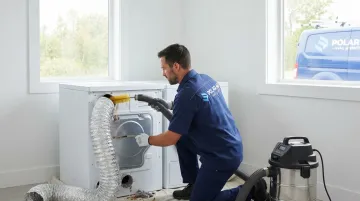
When to Schedule Dryer Vent Cleaning
Common scenarios that call for this service:
- Annual maintenance for any household with a dryer
- After moving into a new or previously occupied home
- When the duct runs a long distance or has multiple bends (more lint accumulation points)
- After noticing any of the performance warning signs above
What Is Air Duct Cleaning?
Air duct cleaning is the professional cleaning of your home's forced-air HVAC duct system—supply and return ducts, registers, grilles, and often components like the blower motor, evaporator coil, and drain pan. These surfaces accumulate dust, pet dander, mold spores, and other airborne particles that recirculate through your home every time the system runs.
The EPA notes that Americans spend approximately 90% of their time indoors, and concentrations of some indoor pollutants run 2–5 times higher than outdoor levels. Your duct system is a primary vehicle for those pollutants.
The Cleaning Process
NADCA's source-removal standard—the industry benchmark—describes the process as:
- A high-powered negative-pressure vacuum attaches near the air handler, creating suction throughout the entire duct system
- Agitation tools (brushes, compressed-air whips, or air nozzles) dislodge debris from duct walls
- Loosened contaminants are collected through the vacuum system — HEPA filtration is required if the vacuum exhausts indoors
- The blower motor assembly and evaporator coil are cleaned as part of the full system service
According to NADCA research with the University of Colorado, routine HVAC cleaning has been shown to reduce fan and blower energy consumption by 41–60% and improve supply airflow by 10–46% in moderately aged buildings.
When Air Duct Cleaning Is Necessary
The EPA recommends cleaning when ducts show:
- Substantial visible mold growth inside ducts or on system components
- Vermin infestation (rodents or insects) in ductwork
- Significant debris or dust being discharged from vents into living spaces
Beyond those triggers, cleaning timing depends on household conditions. Homes with pets, smokers, recent renovations, or confirmed mold are strong candidates for more frequent cleaning.
You don't always need a formal inspection to know something's off. These signs often indicate it's time to have your ducts evaluated:
Warning Signs to Watch For
- Visible dust blowing from registers when the system starts
- Musty or stale odors when the AC or heat runs
- Worsening allergy or asthma symptoms that improve when you leave home
- Visible mold near registers or inside duct openings
- Rapid dust accumulation on furniture after cleaning
Florida Context: Humidity and Mold
In South Florida's climate, the mold risk deserves specific attention. The Florida Department of Health recommends keeping indoor humidity below 60% to prevent mold growth—and the CDC sets an even tighter target of 50%. When HVAC systems run constantly in humid conditions (which they do in Palm Beach), moisture can enter ductwork, creating conditions where mold can establish itself.
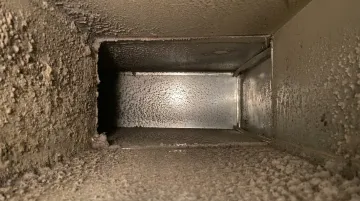
Florida's humidity accelerates mold and dust accumulation inside ducts far faster than in drier climates. Local Air's duct cleaning service addresses this directly — periodic inspection is one of the most practical steps South Florida homeowners can take to protect both their air quality and their HVAC system.
Which Service Does Your Home Actually Need?
These services are not interchangeable—and for most homeowners, the answer isn't one or the other. It's usually both, on different schedules.
Quick Decision Guide
Schedule dryer vent cleaning if:
- It's been more than a year since the last cleaning
- Your dryer is underperforming (long cycles, excessive heat, burning smell)
- You do high-volume laundry (multiple loads daily)
- You've just moved into a home with no cleaning records
Schedule air duct cleaning if:
- You see visible dust or debris coming from vents
- There's a musty odor when the HVAC system runs
- Household members have worsening indoor allergies or respiratory issues
- You've recently completed a renovation that generated dust and debris
- There's visible mold near registers or in the air handler
Schedule both if:
- You're doing a full home maintenance refresh
- You're moving into a previously occupied home
- Neither service has been done in several years
Cost to Expect
- Dryer vent cleaning: Most homeowners pay between $102–$188, with a national average around $139–$145 (per Bob Vila and HomeAdvisor)
- Air duct cleaning: Ranges more widely—$271–$509 on the lower end (Angi's average) to $450–$1,000+ for larger systems (per EPA and This Old House)
In South Florida, where HVAC systems run year-round and humidity accelerates lint and debris buildup, both services often need to happen more frequently than national guidelines suggest. Dryer vent cleaning is relatively affordable given what's at stake; air duct cleaning costs more because it covers a larger, more complex system with more access points to clean.
Conclusion
Both services protect different parts of your home, but the cost of skipping them is the same: problems that compound quietly until they become expensive. Neglecting either one risks:
- Lint-clogged vents that raise dryer fire risk
- Higher energy bills from a system working harder than it should
- Degraded indoor air quality affecting your family's health
- Premature HVAC failure from dirty, restricted ductwork
If you're in Palm Beach County and unsure which service your home needs—or you know you're overdue for both—Local Air HVAC and Appliance Repairs has been serving the area for over 20 years with an EPA-certified team and a customer satisfaction guarantee. Call 561-331-7633 to schedule a service assessment.
Frequently Asked Questions
Is duct cleaning the same as dryer vent cleaning?
No—these are entirely different services. Dryer vent cleaning targets the exhaust line behind your dryer to remove lint and prevent fires. Air duct cleaning targets your HVAC system's ductwork to remove dust, allergens, and potential mold that affect the air you breathe indoors.
What's the average cost to clean out a dryer vent?
Most homeowners pay between $102 and $188, with the national average around $139–$145. Cost varies based on duct length, accessibility, vent location, and whether any repairs are needed alongside the cleaning.
What are signs that your dryer vent is clogged?
The most common indicators: clothes not fully drying after one cycle, the dryer or laundry room getting unusually hot during operation, a burning smell while the dryer runs, or visible lint buildup around the exterior vent flap.
How often should I schedule dryer vent cleaning?
Most households should have their dryer vent professionally cleaned at least once per year. High-usage households doing multiple loads daily may benefit from cleaning every 6–8 months.
Can I clean my dryer vent or air ducts myself?
Basic lint trap maintenance is a DIY task, but full vent and duct cleaning requires specialized equipment. The EPA cautions that improperly performed duct cleaning can release more contaminants into your home than leaving ducts untouched — professional technicians reach blockages that consumer tools can't.
Do I need both dryer vent cleaning and air duct cleaning?
Both services are worth scheduling — they address different systems with different risks. Dryer vent cleaning is typically needed annually; air duct cleaning frequency depends on visible contamination and household conditions such as pets, recent renovations, or mold.