Introduction
Load after load, clothes come out damp. The laundry room feels like a sauna. And somehow, the utility bill keeps climbing — even though you haven't changed anything. Before blaming the dryer itself, check the vent.
Dryers already rank among the most energy-intensive appliances in the home, consuming roughly 3.3% of total U.S. residential energy use according to the U.S. Department of Energy. When lint and debris clog the vent, that energy demand climbs further — and most homeowners don't notice until the damage to their wallet, their appliance, and their air quality has already added up.
This article covers:
- How a clogged dryer vent drains energy
- Warning signs worth watching for
- Hidden performance costs beyond the utility bill
- How often cleaning should happen
- When to call a professional instead of attempting it yourself
Key Takeaways
- A clogged dryer vent forces longer drying cycles and higher energy consumption every load
- Warning signs include extended dry times, a hot laundry room, and lint collecting near the exterior vent
- Appliance wear, clothing damage, and indoor air quality all suffer from a dirty vent
- Most households should clean their dryer vent at least once a year
- Professional cleaning reaches the full vent run that most DIY tools miss
How a Dirty Dryer Vent Quietly Drains Your Energy
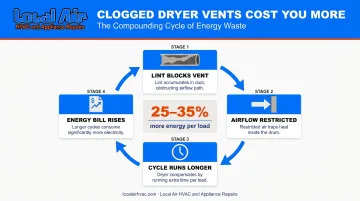
The dryer vent has one job: push hot, moisture-laden air out of the home so fresh, dry air can replace it. When lint builds up along that pathway, airflow slows. The dryer can no longer expel humidity efficiently, so it runs longer to achieve the same result.
That restriction creates a compounding effect:
- The heating element or gas burner works harder to maintain temperature
- Each drying cycle stretches significantly longer than it should
- Total energy consumed per load increases with every cycle
The DOE estimates a typical electric dryer uses around 782 kWh per year under normal conditions. Add a partially blocked vent and each load demands more run time, pushing annual energy costs higher. Industry estimates put the per-load energy penalty from a clogged vent at 25–35% — and while no single authoritative source pins down that exact figure, the math is simple: more run time, more energy, higher bill.
Florida's Humidity Multiplies the Problem
For homeowners in Palm Beach County and surrounding South Florida communities, the impact doesn't stop there. An empirical study on dryer energy efficiency found that both air velocity and ambient humidity directly affect how long drying takes — with a combination of increased airflow and reduced humidity shortening drying time by nearly 14%.
Florida's climate is the opposite scenario. The air is already humid, meaning dryers work harder to pull moisture from fabric even under normal conditions. A clogged vent on top of that compounds the efficiency loss more than it would in a dry climate like Arizona or Colorado.
What makes this easy to miss is how gradually it happens. Lint doesn't block a vent overnight — drying times creep up by a few minutes per cycle, then a few more, until a load that once took 45 minutes now takes over an hour. The waste accumulates quietly for months before most homeowners notice anything is wrong.
Warning Signs Your Dryer Vent Needs Cleaning
Dryer vent warning signs rarely announce themselves all at once. They tend to show up one at a time, which is exactly why most homeowners brush them off.
Primary indicators:
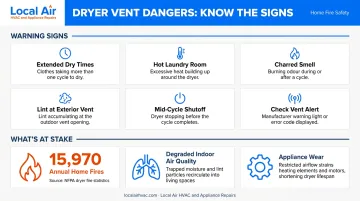
- Clothes taking noticeably longer to dry than they used to
- The dryer exterior or laundry room feeling unusually hot during a cycle
- A slight charred scent while the dryer runs (Maytag identifies this specifically as a clogged-vent symptom)
Secondary indicators that are easy to overlook:
- Lint visibly collecting around the exterior vent opening
- Increased humidity in the laundry area — moisture that should exit the home is staying inside instead
- The dryer shutting off mid-cycle due to thermal overload (GE Appliances Factory Service lists a blocked vent as a direct cause of this)
- A "Check Vent" alert appearing on dryers equipped with airflow sensors
No single symptom guarantees a blocked vent, but any combination of the above warrants an inspection. Waiting for all of them to appear at once means the vent has already been restricting airflow and draining energy for far longer than it should.
The Hidden Performance Costs of a Dirty Dryer Vent
Shortened Appliance Lifespan
Consumer Reports puts the average expected lifespan of a dryer at 13 years. That baseline assumes reasonably normal operating conditions. When a dryer runs extended cycles repeatedly due to poor ventilation, the motor, heating element, drum belt, and thermal fuses accumulate wear faster than they should.
The DOE's 2024 venting job aid confirms the connection directly, stating that proper dryer venting helps dryers operate more safely and last longer — the inverse of what a clogged vent delivers.
Replacement isn't cheap. Consumer Reports' 2025 buying guide puts electric dryers in the $430–$2,000 range and gas dryers at $530–$2,050. Extending appliance life through routine vent cleaning is one of the most reliable ways to defer that cost.
Clothing Damage from Extended Heat Exposure
This one rarely makes it into the utility-bill conversation, but it should. Longer drying cycles expose fabric to sustained heat well beyond what's necessary. Over time, that means:
- Elastic loses its stretch faster
- Colors fade prematurely
- Shrinkage becomes more frequent
- Fiber breakdown accelerates across all fabric types
The cost doesn't show up on a utility bill, but it shows up when gym clothes stop fitting and dark shirts look washed out after a year instead of three.
Indoor Air Quality and Fire Risk
A blocked vent doesn't just reduce efficiency — it redirects what should exit the home back into it. Lint particles, dust, and excess moisture back up into the laundry space and eventually circulate through the home's air. For anyone with asthma or respiratory sensitivities, that backflow can noticeably worsen symptoms.
The fire risk is the most serious concern. According to NFPA data, U.S. fire departments respond to an estimated 15,970 home fires involving clothes dryers annually, with failure to clean identified as the leading contributing factor at 33% of incidents.
Lint and fiber are the leading materials first ignited — and in a Florida home where dryers run year-round, that risk doesn't take a season off.
How Often Should You Clean Your Dryer Vent?
The general recommendation from LG is annual professional or deep cleaning of the dryer duct system. Whirlpool's guidance extends that to every one to two years, depending on usage and performance.
Annual cleaning covers most households. More frequent cleaning — every six months — makes sense if any of the following apply:
- Doing 8–10+ loads per week accumulates lint significantly faster than a typical 3–4 load household
- Running ducts longer than 35 feet or adding elbows — LG caps vent length at 65 feet and recommends deducting 6 feet per additional elbow
- Noticing consistently longer drying times — don't wait for the annual date; that's a signal to clean now
Cleaning the lint trap before every load (an ENERGY STAR recommendation) slows buildup, but it doesn't substitute for periodic duct cleaning. Lint that bypasses the trap accumulates inside the duct itself regardless of how consistently the trap gets cleaned.
Professional Dryer Vent Cleaning vs. DIY: What's Actually Worth It
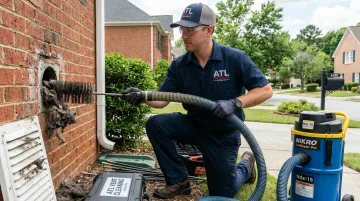
DIY cleaning kits — brush attachments, vacuum hoses, flexible rods — can address lint near the dryer connection point. For short, straight vent runs in good condition, they provide some benefit.
The limitations show up quickly with anything more complex:
- Consumer brush kits rarely reach the full length of the vent run
- They can't identify crushed ducts, damaged connections, or sections where the duct material has degraded
- The exterior termination point — where blockages from outside debris, animal nests, or accumulated lint commonly occur — often goes unaddressed
- Consumer Reports recommends consulting a professional when a duct-blockage indicator remains active after basic DIY cleaning, or when the dryer is consistently overheating
A professional service uses commercial-grade equipment capable of clearing the entire vent system from connection point to exterior cap, and can identify configuration issues that restrict airflow regardless of how clean the duct is. For Palm Beach County homeowners and businesses, Local Air HVAC and Appliance Repairs has handled this work for over 20 years — call 561-331-7633 to schedule service.
Professional cleaning typically runs between $100–$185 based on national cost guides from This Old House and Bob Vila, a modest cost compared to the higher utility bills, shortened appliance life, and fire risk that a blocked vent produces.
Frequently Asked Questions
Is it worth getting a dryer vent cleaned?
Yes — professional cleaning costs are typically offset by energy savings and reduced appliance wear within a few months. Factor in fire risk reduction and better drying performance, and it's one of the higher-return home maintenance tasks you can schedule.
Can dryer lint cause allergies?
Yes. Clogged vents push lint and dust back into your laundry space instead of exhausting it outside. Those particles circulate through indoor air and can trigger or worsen allergy and asthma symptoms.
How often should dryer vents be cleaned?
Annual cleaning covers most households. Homes with high load volume, long vent runs, or declining drying performance should consider cleaning every six months rather than waiting a full year.
How much energy does a dirty dryer vent waste?
Industry estimates put the per-load energy increase from a clogged vent at roughly 25–35%. Extended drying cycles consume more power with every load, which adds up noticeably on monthly utility bills.
What happens if you never clean your dryer vent?
Drying times get progressively longer, energy bills climb, appliance components wear out faster, and lint accumulation creates a real fire hazard. Indoor air quality degrades as lint and moisture back up into the home rather than exiting through the vent.