Beyond fire risk, clogged vents force dryers to run longer and work harder, driving up energy bills and shortening appliance life. The good news: professional cleaning is relatively affordable. The catch: pricing isn't uniform, and what you pay depends heavily on your home's specific setup.
This guide breaks down what dryer vent cleaning actually costs, what drives prices up or down, what professional service includes, and how to decide between DIY and hiring a pro.
Key Takeaways
- Professional dryer vent cleaning typically costs $75–$339, with a national average around $139–$145
- Roof-mounted vents, longer duct runs, and heavy debris buildup push costs toward the higher end
- DIY kits cost $15–$40 but only work well on short, straight, accessible vents
- Skipping cleaning costs far more long-term: higher energy bills, early appliance failure, and fire risk add up fast
How Much Does Dryer Vent Cleaning Cost?
Dryer vent cleaning doesn't have a single fixed price — and surprise charges are one of the most common complaints homeowners have after the job. Costs shift based on vent complexity, physical accessibility, and local labor rates. Knowing the realistic range upfront helps you compare quotes and spot red flags before committing.
Here's what credible national sources report:
| Source | National Average | Typical Range |
|---|---|---|
| Angi (2026) | $145 | $75 – $339 |
| Bob Vila (2024) | $139 | $102 – $179 |
| HomeGuide (2026) | — | $60 – $275 |
These ranges reflect standard professional residential cleaning. Where your job lands depends on the specifics of your setup.
Basic Cleaning ($75–$150)
This tier covers straightforward setups: first-floor vents with easy exterior access, minimal lint buildup, and short duct runs. If you've been cleaning annually and your vent exits through a ground-floor exterior wall, you'll likely fall here.
Standard Cleaning ($150–$250)
The most common bracket for residential homeowners. Expect this range if your dryer is on the second floor, your vent has one or two turns, or lint accumulation is moderate. Most homes that haven't been serviced in a year or two fall into this tier.
Complex or Extended Cleaning ($250+)
Costs increase when:
- Roof-mounted vents requiring ladders and specialty tools
- Long or winding duct runs beyond 25 feet
- Heavy debris, damp lint, or pest nests
- Vent damage requiring duct repair or replacement
- Bundled services (dryer vent + air duct cleaning)
Bird nest and pest removal alone can add $120–$550 to the final bill, depending on severity.
Key Factors That Affect Dryer Vent Cleaning Costs
Vent location, duct length, debris buildup, and local labor rates are the main variables that push your final cost above or below the national average.
Vent Location and Accessibility
Where your vent exits the home matters most. According to Angi's 2026 pricing data:
| Vent Exit Location | Typical Cost Range |
|---|---|
| Basement or first floor | $80 – $150 |
| Second floor | $110 – $185 |
| Roof | $150 – $250 |
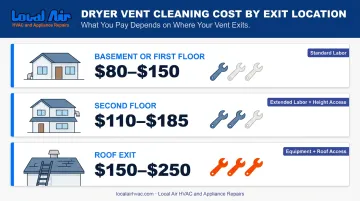
Roof vents require ladders, more time, and sometimes specialized equipment, each of which drives up the labor cost.
Vent Length and Number of Turns
Longer vents take more time to clean thoroughly. The Chimney Safety Institute of America (CSIA) notes that dryer ducts shouldn't exceed 25 feet in developed length, and each 90-degree turn adds 5 feet to that calculation. Some providers charge $6–$11 per linear foot for longer runs.
Vents located far from an exterior wall accumulate lint at every bend — and those bends are exactly where blockages start.
Severity of Debris Buildup
Infrequent cleaning leads to denser, compacted lint. In some cases, birds or rodents nest inside the vent, which requires additional labor and tools to clear. Pest nest removal can add:
- $90–$200 for basic pest remediation
- $195–$550 for dryer vent cleaning combined with bird nest removal
Add-On Services and Geographic Location
Common add-ons that affect your total:
- Bird/pest guard installation
- Vent cap or cover replacement
- Duct damage repair or full replacement
- Lint alert monitoring systems
- Disinfectant fogging
Where you live affects the base price just as much as what's inside the duct. Angi reports an average of $173 in Chicago and up to $385 for long vent runs in Houston. Urban markets and higher cost-of-living areas consistently run above the national average.
What Does a Professional Dryer Vent Cleaning Include?
A standard professional cleaning typically involves disconnecting the dryer, using rotary brush systems and high-powered vacuums to clear the full vent length, checking the exterior vent cover for blockages, and reconnecting everything. Most jobs take 30 minutes to 1 hour for straightforward setups.
What Sets Professional Cleaning Apart
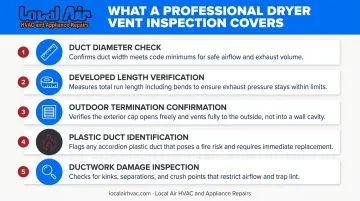
Professional technicians do more than push lint out of a duct. A thorough cleaning includes:
- Verifying duct diameter meets the 4-inch minimum standard
- Confirming developed length doesn't exceed the 25-foot limit
- Checking that the system terminates outdoors with a proper back-draft damper
- Identifying flammable plastic transition ducts that need metal replacement
- Spotting kinked, crushed, or improperly routed ductwork
The CSIA's Certified Dryer Exhaust Technician (CDET) credential is the only nationally recognized qualification for this work. CDET-certified professionals must pass an exam covering proper inspection, cleaning, and system verification. Ask about credentials before booking — it's a quick way to confirm you're getting a qualified technician, not just someone with a vacuum.
Local Air HVAC and Appliance Repairs has served South Palm Beach County and surrounding areas for over 20 years and is EPA Universal Certified. Their technicians assess the full vent system — not just the lint trap — catching duct routing problems and code issues that drive fire risk in Florida homes.
DIY vs. Hiring a Professional: True Cost Comparison
DIY Cleaning
Consumer-grade dryer vent cleaning kits are available at most home improvement stores:
- Lowe's Project Source basic kit: $14.98
- Home Depot Everbilt kit: $20.97
- LintEater 10-piece rotary system (Walmart): $38.81
For a short, straight, first-floor vent that you clean annually, DIY is a reasonable option. You'll need a brush kit, a vacuum, a screwdriver, and clear access to both ends of the vent.
Where DIY Falls Short
The limitations are real:
- Brush kits don't reach deep into long or multi-turn vent runs
- Pushing debris without proper suction can compact lint further into bends
- You can't visually inspect for duct damage, improper materials, or pest activity
- Accidental kinking of flexible duct creates new blockage points
- Clogged vents are a recognized fire hazard — when the vent run isn't easily accessible from both ends, professional cleaning is the safer call
When to Hire a Professional
For most homeowners — especially those with second-floor setups, roof vents, or vents not serviced in over a year — the $100–$200 cost of professional service is justified. You're paying for thorough cleaning, safety verification, and an expert eye that catches problems before they escalate. Certified, insured providers like Local Air HVAC (EPA Universal Certified, 20+ years serving Palm Beach County) also offer accountability if questions arise after service.
The Hidden Costs of Skipping Dryer Vent Cleaning
Longer Drying Times and Higher Energy Bills
A blocked vent forces the dryer to work against restricted airflow, running multiple cycles to finish what one cycle should handle. Maytag's product documentation confirms that drying times increase when vent static pressure exceeds acceptable levels. More cycles mean more electricity — and a dryer running hot and long every day costs noticeably more to operate than one with a clear vent.
Premature Dryer Failure
Dryers aren't cheap to replace. According to Consumer Reports (2025), electric dryers range from $430 to $2,000, gas dryers from $530 to $2,050. Consistently running a dryer against a clogged vent accelerates wear on heating elements, motors, and controls. Put another way: a $145 annual cleaning is a fraction of a $1,000+ replacement — and far less disruptive.
Fire Hazard
Lint is highly flammable. The NFPA reports that dryer-only fires produce serious consequences every year:
- 9 deaths and 420 injuries annually
- $222 million in property damage each year
- Failure to clean is the leading cause — responsible for 33% of dryer fires
- Lint or dust was the first item ignited in 27% of those incidents
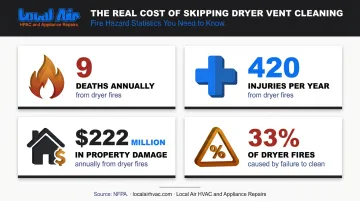
Skipping that annual cleaning isn't just an inconvenience — it's a measurable fire risk in your home.
Frequently Asked Questions
What is the average cost of dryer vent cleaning?
Most homeowners pay between $75 and $339, with national averages clustering around $139–$145 according to Angi and Bob Vila. Costs vary based on vent location, duct length, and how much debris has accumulated.
Is dryer vent cleaning worth the cost?
Yes. Regular cleaning prevents fires, reduces energy waste from extended drying cycles, and extends dryer lifespan. The annual cleaning cost is modest compared to a dryer replacement or fire-related damage.
How do I know if my dryer vent needs cleaning?
Watch for these warning signs:
- Clothes taking two or more cycles to dry fully
- The dryer exterior feeling unusually hot during operation
- A burning smell when the dryer runs
- Visible lint buildup around the exterior vent cover
How often should dryer vents be cleaned?
NFPA recommends once a year for most households, or more often if clothes take longer than normal to dry. Large families, heavy dryer users, and homes with longer vent runs may benefit from cleaning every six months.
How long does a professional dryer vent cleaning take?
Most standard cleanings take 30 minutes to 1 hour. Heavy debris buildup, longer duct runs, or difficult access points (roof vents, tight crawl spaces) can extend the job.
Can I clean my dryer vent myself?
Basic DIY cleaning works for short, straight, easily accessible vents using a brush kit costing $15–$40. For longer systems, roof-mounted vents, or vents not serviced in over a year, professional cleaning is the safer and more thorough option.