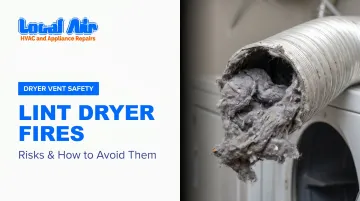
According to the U.S. Fire Administration, residential dryer fires cause an estimated 2,900 fires, 5 deaths, 100 injuries, and $35 million in property damage every year. The leading cause isn't a mechanical defect or electrical fault — it's simply failing to clean the dryer.
This article breaks down why lint fires start, what warning signs to watch for, and the specific steps you can take to keep your home safe.
Key Takeaways
- Dryer lint is highly flammable — buildup in the lint trap or vent duct is the #1 cause of dryer fires
- Failure to clean accounts for 31% of dryer fire ignitions (USFA, 2018–2020 data)
- Warning signs include longer drying times, burning smells, and a hot dryer exterior
- Prevent fires by cleaning the lint trap after every load and flushing the vent duct regularly
- Schedule a professional vent cleaning at least once a year, especially for longer or multi-bend duct runs
What Causes Dryer Lint Fires?
Dryer lint is made of tiny textile fibers shed from clothing during drying cycles. Because of its high surface-to-mass ratio, lint ignites far more easily than a solid piece of fabric — the same reason it's used as tinder when starting campfires. Under the right conditions inside a dryer, that same property makes it genuinely dangerous.
Most dryer fires trace back to one or more of these four root causes.
Cause 1: Neglected Lint Trap
The lint trap catches debris during each cycle, but it only works if you clear it. When lint accumulates load after load, it restricts airflow through the drum. That restriction forces heat to build up, and concentrated heat plus accumulated lint is exactly the combination that starts fires.
USFA data from 2018–2020 confirms that failure to clean was the leading contributing factor in 31% of residential dryer fires. Cleaning the trap takes seconds — it's just easy to forget.
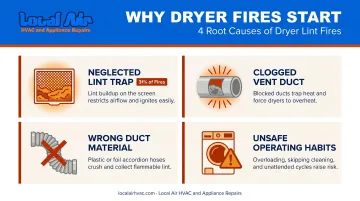
Cause 2: Clogged Vent Duct
Even with a clean lint trap, fine particles slip past the screen and accumulate inside the vent duct over time. As that buildup thickens, it restricts the exhaust airflow that carries heat and moisture out of the home.
The result: trapped heat and combustible material in the same confined space.
Real-world blockages happen in several ways:
- Kinked or crushed flexible hose sections
- Long duct runs with multiple bends that slow airflow and catch lint
- Exterior vent openings blocked by lint buildup, bird nests, or debris — especially relevant in South Florida, where small animals are active year-round
Cause 3: Wrong Vent Duct Material
Plastic and foil accordion-style vent hoses are cheap and easy to install, which is why they show up in a lot of homes. They're also a fire risk. The ridged interior traps lint instead of letting it pass through, and plastic can melt under high heat.
Both Whirlpool's installation guidance and the 2021 International Residential Code (Section M1502.4.1) require dryer exhaust ducts to have a smooth metal interior. Plastic and corrugated ducts are not permitted for the main duct run. Rigid aluminum duct — or listed semi-rigid metal — is the correct material.
Cause 4: Unsafe Operating Habits
How you use the dryer matters as much as how you maintain it:
- Overloading restricts airflow and forces longer, hotter cycles
- Drying oil-contaminated items (cooking oil, gasoline residue) is a serious hazard — the CPSC has documented ignition cases where normal laundering failed to remove enough residual oil
- Running the dryer unattended or overnight means a fire could go undetected for critical minutes before anyone smells smoke or hears an alarm
What Happens When Lint Buildup Is Ignored
A clogged vent raises fire risk, but the damage doesn't stop there. Restricted airflow creates a cascade of problems:
- Longer drying times as restricted airflow fails to remove moisture efficiently
- Higher energy bills from extended run times on every cycle
- Premature wear on heating elements and thermostats that work harder than they should
- Shorter appliance lifespan overall
- Gas dryer hazard: a blocked vent traps combustion exhaust inside the home instead of venting it outdoors
Warning Signs Your Dryer Is a Fire Risk
These signs mean the issue is already developing — act on them now:
- Clothes take more than one cycle to fully dry — the clearest sign of restricted airflow
- Burning smell during or after a cycle — lint may already be scorching on heating elements
- The dryer, wall, or vent hose feels unusually hot to the touch after a load
- The lint trap fills faster than normal, suggesting lint is backing up into the system
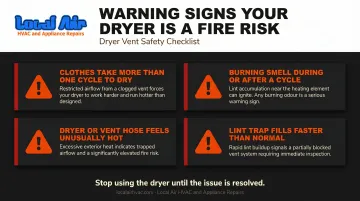
If you notice any of these, stop using the dryer until the issue is resolved.
How to Prevent Dryer Lint Fires
Most dryer fires are entirely preventable. Prevention isn't complicated — it's about consistency across a few specific habits and maintenance tasks.
Clean the Lint Trap After Every Single Load
Remove and clear the lint screen before or after each cycle, every time — not just when it looks full. Also wash the screen with warm soapy water monthly to remove invisible residue from dryer sheets, which coats the mesh and reduces airflow even when the screen looks clean.
Check the screen for tears or damage periodically. A damaged screen lets lint bypass directly into the duct, where it's much harder to remove.
Clean the Dryer Vent Duct Regularly
Every three months, disconnect the vent hose and vacuum it out. Check the exterior vent opening at the same time — clear any visible lint, debris, or obstructions from the flap and surrounding area.
For the full duct run — particularly in homes with long or complex vent paths — a thorough cleaning requires professional equipment to reach the entire system. Local Air HVAC and Appliance Repairs offers professional dryer vent cleaning throughout South Palm Beach County — the kind of deep cleaning that DIY vacuuming can't fully reach. Named The Best Appliance Repair in Royal Palm Beach, Florida for 2024, they've been serving the Palm Beach area for over 20 years.
Use the Right Vent Duct Material
If your dryer is connected with a plastic or foil accordion hose, replace it. Rigid or semi-rigid aluminum duct has a smooth interior that doesn't trap lint, handles heat without deforming, and won't melt or collapse.
Keep the duct run as short and straight as possible. Per the 2021 IRC, the maximum allowable duct length is 35 feet from the dryer connection to the exterior outlet, with each 90-degree bend reducing that by 5 feet. Every additional bend adds resistance and increases lint accumulation.
Practice Safe Dryer Operating Habits
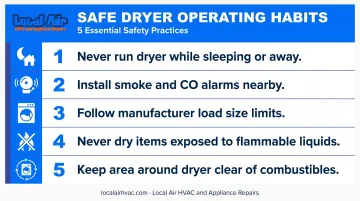
Basic rules that matter:
- Never run the dryer while sleeping or away from home
- Install a smoke alarm in or near the laundry room; add a carbon monoxide detector for gas dryers
- Follow the manufacturer's load size guidelines — don't overstuff
- Never dry anything that's been in contact with flammable liquids; air-dry those items outdoors first, then wash before machine-drying
- Keep the area around the dryer clear of stored combustibles
Tips for Long-Term Dryer Fire Prevention
Staying fire-safe over the long term means building these checks into your regular home maintenance routine:
- Check the exterior vent cap seasonally for lint buildup, bird nests, and debris. In Palm Beach County, pest activity is year-round — nests and blockages can form faster than in cooler climates
- Keep a simple maintenance log noting the last time you cleaned the lint trap housing, vent hose, and exterior vent opening; set calendar reminders for each task
- Don't delay on warning signs — if drying times are increasing, the dryer body feels excessively hot, or you hear unusual sounds, schedule a professional inspection before continuing to use the appliance
Ready for a professional dryer vent cleaning? Local Air HVAC and Appliance Repairs inspects and clears dryer vents for homeowners across Boca Raton and South Palm Beach County. Call 561-331-7633 to schedule an appointment.
Conclusion
Dryer lint fires are among the most common and most avoidable home fire hazards. They stem from predictable, correctable causes: a neglected lint trap, a clogged vent duct, the wrong hose material, or a few unsafe habits. None of these require major effort to fix.
Clearing the lint trap after every load takes ten seconds. Scheduling a professional vent cleaning once a year — through a local service like Local Air HVAC and Appliance Repairs — takes a single phone call. Together, those two habits eliminate the conditions behind the overwhelming majority of dryer fires. Your home stays safer, your energy bills stay lower, and your dryer lasts longer.
Frequently Asked Questions
What is the number one cause of dryer fires?
Failure to clean is the leading cause, accounting for 31% of dryer fire ignitions according to USFA data from 2018–2020. Lint buildup in the trap and vent duct is the primary fuel source in most of these fires.
What happens if you never clean the lint trap?
Lint bypasses the screen and packs into the duct, restricting airflow and trapping heat. This raises fire risk while also extending drying times, driving up energy costs, and shortening the appliance's lifespan.
What appliance is most commonly involved in home laundry fires?
Clothes dryers account for 92% of home fires involving laundry appliances, according to NFPA research covering 2010–2014.
How often should I clean my dryer vent?
Clean the lint trap after every load and vacuum the vent hose every three months. Schedule a professional cleaning once a year — sooner if drying times start creeping up.
What are the warning signs of a clogged dryer vent?
Watch for clothes taking more than one cycle to dry, a burning smell during operation, an unusually hot dryer or laundry room, and an exterior vent flap that stays closed while the dryer runs.
Can I clean my dryer vent myself, or do I need a professional?
Basic maintenance — clearing the lint trap and vacuuming the accessible vent hose — is easy to handle yourself. For long duct runs or complex routing, a professional service ensures the entire system is clear, not just the section you can reach.