The honest answer is more nuanced. Duct cleaning can restore airflow when physical blockages or debris are the actual problem. But if your airflow issues stem from leaky ducts, poor duct design, or an undersized system, cleaning alone won't help. Knowing the difference saves you from spending money on the wrong fix.
Key Takeaways
- Duct cleaning removes dust, debris, mold spores, and contaminants from your HVAC ductwork and related components
- It can meaningfully improve airflow when a physical blockage or heavy buildup is the root cause
- It will not fix airflow problems caused by duct leaks, bad design, or an undersized system
- The EPA recommends cleaning only under specific conditions — visible mold, vermin infestation, or ducts clogged with excessive debris
- Beyond airflow, a thorough cleaning can improve indoor air quality, reduce strain on your HVAC system, and clear out lingering odors
What Duct Cleaning Actually Does (And Doesn't Do)
Duct cleaning is the professional process of removing accumulated dust, debris, mold spores, pet dander, and other contaminants from your HVAC system's supply and return ducts, registers, grilles, and related components.
Done properly, it covers the entire system: coils, drain pans, blower motor housing, and air handler. Cleaning ducts alone while leaving contaminated components behind just recontaminates everything.
What duct cleaning is not:
- It does not seal leaks or close gaps in duct joints
- It does not resize or redesign undersized duct runs
- It does not rebalance airflow distribution across rooms
- It does not replace damaged or degraded components
These are separate problems that require separate solutions.
That said, even a proper cleaning can go wrong if the technician doesn't account for one critical variable: what your ducts are made of.
Duct Material Matters
Not all ductwork is cleaned the same way. Rigid sheet metal ducts, flexible ducts, and fiberglass-lined ducts each require different approaches. Flexible ducts — common in South Florida attics — are particularly vulnerable to damage if cleaned aggressively. According to NADCA's ACR Standard, mechanical cleaning of fiberglass duct liner must not create abrasions, breaks, or tears. A professional assessment before any cleaning begins is a necessary first step.
How Dirty Ducts Restrict Airflow
Debris doesn't build up overnight. It accumulates gradually, and most homeowners don't notice the effect until airflow has already been noticeably compromised.
How Buildup Starts
Every time your HVAC system runs, it pulls in air carrying fine particles — dust, pet dander, pollen, skin cells, and in Florida's humid climate, mold spores. These particles settle on duct walls, around register openings, and near the air handler. Over months and years, the layers thicken.
Certain conditions speed this up considerably:
- Recent home renovations generating construction dust
- Rodent or insect activity inside ductwork
- Improperly sealed duct joints pulling in unconditioned attic air
- Infrequent filter changes allowing particles to bypass filtration
How Debris Reduces Airflow
As debris accumulates on interior duct surfaces, the usable cross-section narrows. Air must push through a smaller opening, which increases resistance and reduces the volume reaching each room.
Blockages are worst at bends, joints, and register openings — exactly where debris naturally concentrates. Even a partial blockage at a single register can create a noticeable hot spot in that room.
What Your HVAC System and Home Experience
When ducts are restricted, the blower motor works harder to maintain the same airflow. This raises energy consumption, adds mechanical wear, and can trigger longer run cycles or safety shutoffs.
At the homeowner level, the symptoms are recognizable:
- Weak airflow from specific vents while others seem fine
- Uneven temperatures between rooms
- Higher-than-normal energy bills with no obvious explanation
- Musty odors when the system first kicks on
- Visible dust puffing from supply registers
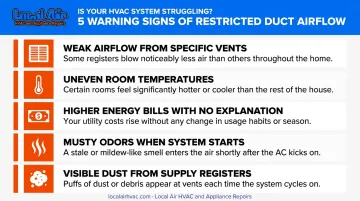
In South Florida's climate, where AC runs year-round, these symptoms tend to worsen faster — making a duct inspection worth scheduling sooner rather than later.
When Duct Cleaning Does Improve Airflow
Cleaning genuinely restores airflow when the duct system is structurally sound and properly designed — but physically obstructed. Fix the obstruction, and flow returns to what it was designed to deliver.
Scenarios Where Cleaning Makes Sense
- Construction dust from major renovations is dense and settles inside ducts, creating real blockages in the airstream
- Confirmed pest infestations leave behind nesting material, droppings, and insect debris that accumulates throughout ductwork
- Substantial visible mold on duct surfaces or HVAC components — the EPA specifically identifies this as a valid reason to clean
- Dust actively blowing from supply registers into living spaces — that's the EPA's own threshold for recommending cleaning
What Proper Cleaning Involves
Professional duct cleaning should include inspection, HEPA-vacuum extraction, rotary brush agitation working from the farthest duct runs inward, and cleaning of related components including coils, drain pans, and registers. Skipping any one component risks recontaminating the rest of the system — which is why who performs the cleaning matters as much as whether it gets done.
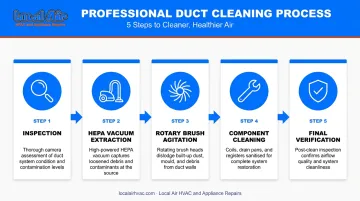
Local Air HVAC and Appliance Repairs is EPA Universal Certified, serving Palm Beach and surrounding South Palm Beach County. That certification ensures cleaning is performed correctly and safely, without damaging ductwork or leaving contamination behind.
Setting Realistic Expectations
Cleaning restores the duct to its original flow capacity. It does not increase airflow beyond what the system was designed to deliver. If your system was undersized for your home from day one, cleaning won't fix that.
When Duct Cleaning Won't Solve the Problem
This is where a lot of homeowners get frustrated — they pay for a duct cleaning, and the airflow problem is still there. Almost always, that happens because the actual cause wasn't blockage.
Duct Design and Sizing
If your duct runs are too small, too long, or laid out poorly for your home's square footage and layout, cleaning won't correct that imbalance. The restriction is the duct geometry itself. Solutions here involve:
- A flow hood test to measure actual airflow
- Duct system redesign or resizing
- Airflow balancing dampers to redistribute supply
Duct Leakage
Leaking ducts lose conditioned air into unconditioned spaces — attics, wall cavities — before it ever reaches the room. ENERGY STAR data shows that in a typical house, 20% to 30% of air moving through the duct system is lost to leaks. In a Palm Beach County home where that escaping air is being replaced by hot, humid outdoor air infiltrating through the same gaps, the impact on both comfort and energy bills is significant. Sealing those leaks — not cleaning the ducts — is the right fix.
When the Root Cause Goes Unfixed
If what caused the contamination in the first place isn't corrected, cleaning is temporary at best. Moisture intrusion will bring mold back. Pest entry points left open invite re-infestation.
An experienced HVAC technician can diagnose the actual source and recommend whether duct sealing, duct replacement, or system repairs are the right call.
Flexible Duct Degradation
One Florida-specific risk worth knowing: older flexible ductwork in attics where heat accelerates plastic degradation can be damaged by aggressive cleaning. A torn inner liner creates new leaks and makes airflow worse than before cleaning started. Always have duct material assessed before proceeding.
Other Benefits Beyond Airflow
Even when airflow isn't the primary concern, duct cleaning still has a lot to offer Florida homeowners.
The three most common benefits beyond airflow:
- Improved indoor air quality — According to NADCA, contaminants like dust, dander, and chemicals recirculate through a home's HVAC system 5 to 7 times per day. Cleaning reduces allergens, mold spores, and particulates in the air — especially important for households with allergy or asthma sufferers, children, or elderly residents.
- Less wear on HVAC components — When the blower motor, cooling coils, and heat exchanger run without debris-added resistance, they experience less mechanical strain. That means fewer repair calls over time, which matters when air conditioning runs nearly year-round.
- Odor removal — Musty or stale smells when the system kicks on are often traced to mold, dust, or pest residue inside ductwork. Cleaning removes the source, though odors from active mold growth will return unless the underlying moisture problem is addressed at the same time.
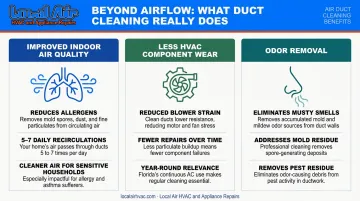
In Florida's humid climate, mold and bacteria tend to take hold at the coil and air handler level even after duct cleaning. UV light installation targets those biological contaminants directly — Local Air offers this service as a follow-up step for Palm Beach County homeowners dealing with persistent odor or air quality issues.
Frequently Asked Questions
Does duct cleaning improve airflow?
Yes — when restricted airflow is caused by accumulated debris or a physical blockage, cleaning can meaningfully restore it. It won't fix airflow problems caused by duct leaks, poor design, or an undersized system. A professional inspection is the best way to identify the actual cause before spending money on a solution.
How do I know if my air ducts are causing my airflow problem?
Common signs include weak or uneven airflow from specific vents, dust releasing from registers, uneven room temperatures, and rising energy bills. A professional inspection can determine whether the cause is debris buildup or a structural issue like leaks or improper sizing.
How often should air ducts be cleaned?
The EPA does not recommend routine cleaning on a set schedule. Cleaning is warranted when you have visible mold growth, a vermin infestation, or ducts so clogged they're releasing debris into your living space. Routine inspections (not necessarily cleaning) every couple of years help catch problems early.
What is the difference between duct cleaning and duct sealing?
Duct cleaning removes contaminants from inside the ductwork. Duct sealing closes gaps and leaks in duct joints to prevent conditioned air from escaping into unconditioned spaces. They address different problems — and in some homes, both are needed.
Can dirty air ducts cause eczema?
Dirty ducts can recirculate dust mites, mold spores, and allergens that may aggravate skin conditions like eczema in sensitive individuals. Ducts aren't the direct cause, but reducing indoor allergen levels through duct cleaning may reduce flare-ups in sensitive individuals.
Can I clean my air ducts myself?
DIY cleaning — vacuuming registers, wiping vent covers — addresses surface dust only. A full duct cleaning requires professional HEPA vacuums and rotary brush equipment, and improper attempts can damage flexible ductwork and create new leaks.