Improving indoor air quality (IAQ) through your HVAC isn't as simple as buying an air purifier and calling it done. Filter quality, humidity control, ventilation, and maintenance all interact — and getting one element wrong can undermine the others.
This guide covers the exact steps to take, the factors that matter most, and the mistakes that quietly work against you.
Key Takeaways
- Your HVAC system is the most powerful tool for IAQ — but only when correctly configured and maintained
- Upgrading to a MERV 11–13 filter is the highest-impact DIY step for most households
- Humidity control is critical in South Florida — excess moisture fuels mold and dust mites regardless of filter quality
- Whole-home UV systems and air purifiers address pathogens that standard filters miss
- Annual professional maintenance, including coil cleaning and duct inspection, sustains every other improvement you make
How to Improve Indoor Air Quality With Your HVAC System
Step 1: Upgrade Your Air Filter to a Higher-Efficiency Option
Most homes ship with basic fiberglass filters rated MERV 4 or lower. These protect the equipment — they do almost nothing for your air.
According to EPA MERV rating data, here's what higher ratings actually capture:
| MERV Rating | Particles 0.3–1.0 µm | Particles 1.0–3.0 µm | Particles 3.0–10.0 µm |
|---|---|---|---|
| MERV 8 | <20% | ≥20% | ≥70% |
| MERV 11 | ≥20% | ≥65% | ≥85% |
| MERV 13 | ≥50% | ≥85% | ≥90% |
| HEPA | ≥99.97% at 0.3 µm | — | Not MERV-rated; requires system designed for added resistance |
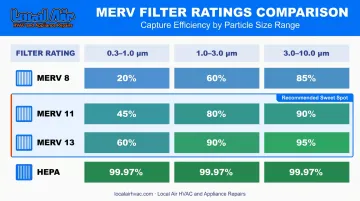
MERV 11–13 is the practical sweet spot for most residential systems — effective against fine dust, pollen, pet dander, and mold spores without strangling airflow. HEPA filters capture far more, but they require a system specifically designed to handle the added resistance.
A filter that's too restrictive for your system reduces airflow, stresses the blower, and can damage equipment over time. Check your system's manual or ask a technician before jumping to a higher MERV.
Replacement frequency matters as much as the rating. ENERGY STAR recommends checking filters monthly during heavy-use seasons and changing them at minimum every three months. In a South Florida home running AC nearly year-round — especially with pets or multiple occupants — monthly checks are a smart routine. A clogged filter doesn't just fail to clean the air; it actively restricts airflow and increases system strain.
Step 2: Gain Control Over Indoor Humidity
Humidity is the variable most homeowners underestimate, and in South Florida it's often more impactful than filtration.
The EPA recommends keeping indoor relative humidity between 30%–50%, and below 60% where possible. Here's why that range matters:
- Mold needs moisture to grow — keeping surfaces dry by controlling RH is the primary prevention method
- Dust mites thrive at 65% RH or higher; their survival and reproduction drop significantly below 50% RH, according to published allergen research
- Respiratory irritation worsens in both extremes — too dry and too humid both cause problems
West Palm Beach daily humidity readings regularly hit averages around 77%, with highs near 97%. Your AC system does remove some moisture as it runs, but there's a catch: an oversized system short-cycles — running in brief bursts that cool the air without running long enough to condense adequate moisture off the coil. The result is a house that feels cool but stays humid.
A whole-home dehumidifier integrated into the HVAC system solves this at scale. Unlike portable units that treat a single room, a whole-home unit conditions all circulating air and maintains consistent RH levels throughout the house. For homes where the AC runs constantly but humidity remains stubbornly high, this is often the single most impactful upgrade available.
Step 3: Optimize Ventilation Through the HVAC System
Most residential HVAC systems recirculate indoor air. Without adequate fresh-air exchange, pollutant concentrations accumulate — cooking byproducts, VOCs off-gassed from furniture, pet dander, CO₂ from occupants. The EPA notes that inadequate ventilation is one of the primary drivers of elevated indoor pollutant levels.
ASHRAE Standard 62.2 benchmarks residential ventilation at 0.35 air changes per hour (ACH) and at least 15 cfm per person. Homes with pets, recent renovations, or high occupancy may need more.
Options for improving ventilation:
- Open fresh-air dampers if your system has them — the simplest mechanical adjustment
- Energy Recovery Ventilators (ERVs) introduce outdoor air while transferring heat and moisture from the outgoing stream — recovering energy and controlling humidity (the DOE specifically recommends them for humid climates)
- Strategic window ventilation during mild weather (fall and spring evenings in South Florida) supplements mechanical systems
In Florida's climate, aggressive ventilation without humidity management just imports hot, moist outdoor air. Ventilation upgrades work best alongside the humidity controls described in Step 2.
Step 4: Install a Whole-Home Air Purification System
Portable air purifiers treat the room they sit in. If you have central HVAC, a whole-home system connected directly to your ductwork treats all the air circulating through the house.
Key technology options:
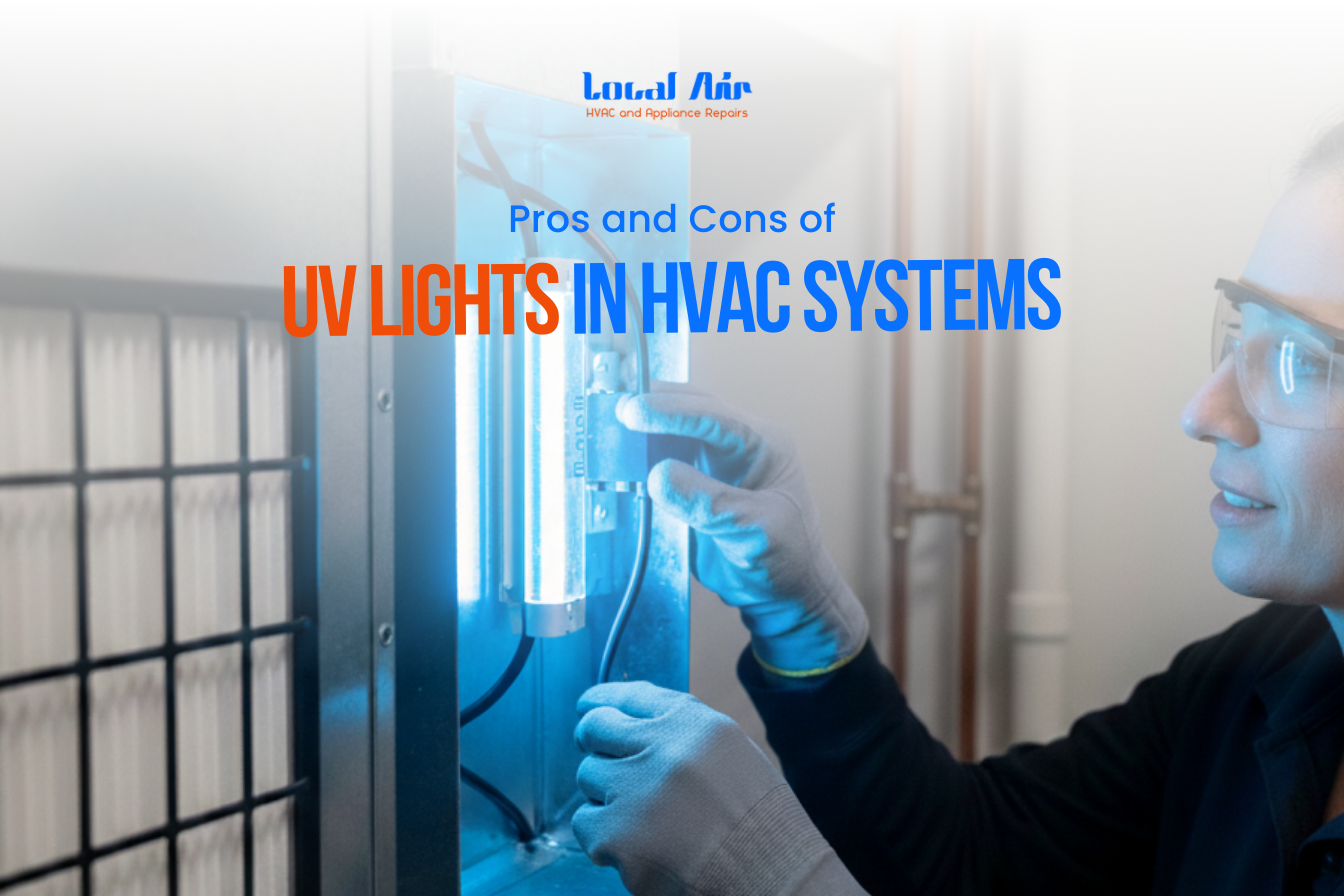
- UV-C germicidal lights (254 nm) — installed at the coil or air handler, these inactivate bacteria, viruses, and fungi by disrupting replication. The CDC classifies germicidal UV as a supplemental tool that complements filtration and ventilation; peer-reviewed research found measurable reductions in fungal contamination within four months
- Electrostatic/electronic air cleaners — charge incoming particles and collect them on oppositely charged plates, capturing 60% or more of particles in a single pass at normal airflow. Avoid models that intentionally generate ozone (the EPA recommends against them)
- Activated carbon filtration — adsorbent media that captures VOCs, odors, and hydrocarbons that standard particulate filters cannot address. Less effective against low-molecular-weight gases like formaldehyde
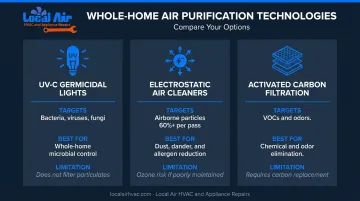
Local Air HVAC and Appliance Repairs installs UV germicidal light systems for homes throughout South Palm Beach County — targeting the coil and air handler where Florida's heat and humidity make biological buildup especially common.
Step 5: Schedule Regular HVAC Maintenance and Duct Cleaning
Every upgrade above loses effectiveness without maintenance. Here's why:
Dirty evaporator coils are the highest IAQ risk in South Florida homes. The coil stays cold and wet during operation — ideal conditions for mold and bacteria growth. Once contaminated, the system distributes those organisms through the house every time it runs. UV lights address this directly, but coil cleaning during maintenance is still essential.
Duct systems accumulate debris over time. The EPA notes that while routine duct cleaning hasn't been proven to prevent health problems by itself, cleaning coils, fans, and heat exchangers can improve operating life and efficiency. NADCA recommends inspecting residential HVAC systems yearly, with complete cleaning every 4–5 years depending on conditions.
In South Florida's climate, where systems run nearly year-round, annual professional maintenance is a reasonable minimum. A well-maintained system improves over time; a neglected one degrades regardless of what filters or purifiers you add.
Local Air HVAC and Appliance Repairs — EPA Universal Certified with over 20 years serving South Palm Beach County — provides comprehensive maintenance visits including coil cleaning, condensate drain line service, refrigerant and electrical checks, and full system inspection.
Signs Your Indoor Air Quality Needs Attention
Poor indoor air quality rarely announces itself clearly. More often, it shows up as nagging physical symptoms, unusual odors, or subtle changes in how your HVAC system performs.
Physical Symptoms
These are often the first signal something is wrong:
- Persistent nasal congestion, sneezing, or runny nose at home
- Worsening allergy or asthma symptoms indoors
- Headaches, fatigue, or difficulty concentrating
- Eye, throat, or skin irritation
- Symptoms that clear up when you leave the house — a reliable sign the building itself is the source
Visible and Olfactory Warning Signs
- Musty or stale odors near vents, which often point to mold growth or stagnant airflow
- Rapid dust accumulation on surfaces shortly after cleaning
- Visible mold or discoloration near vents, walls, or ceilings
- Condensation on windows or walls, a sign of excess indoor humidity
If the odors and symptoms seem tied to when your system runs, the HVAC itself may be part of the problem.
System-Related Clues
- Allergic reactions that intensify during peak HVAC use
- Uneven airflow or temperature distribution between rooms
- A system that hasn't been serviced in over a year, which may now be circulating contaminants rather than filtering them
Key Factors That Affect Your HVAC's Air Quality Performance
Two homes with identical equipment can have very different air quality outcomes. These variables explain why.
Filter MERV Rating
MERV determines which particle sizes a filter captures. A MERV 8 lets through particles that a MERV 13 blocks. Too low a rating and pollutants recirculate freely. Too high a rating for the system and airflow drops, efficiency falls, and equipment wears prematurely. Matching the filter to the system is foundational.
Humidity Level Management
When indoor RH (relative humidity) climbs past 60%, mold risk rises sharply and dust mites thrive. No filter eliminates the allergen load that active mold and dust mite populations produce. Only controlling moisture at the source accomplishes that. An oversized HVAC unit short-cycles and fails to remove adequate moisture from the air, making proper system sizing an IAQ issue, not just a comfort one.
Ventilation Rate and Air Exchange
Pollutant concentrations build in homes where air recirculates without fresh-air exchange. High-occupancy homes, homes with pets, and recently renovated spaces face accelerated buildup. ERVs (energy recovery ventilators) address this without the energy penalty of simply opening windows in South Florida's climate.
HVAC Maintenance Frequency
A well-maintained system's IAQ performance compounds positively over time. A neglected system degrades in the same compounding fashion:
- Dirty coils breed microbial contamination
- Clogged filters restrict airflow and strain the blower
- Debris in ducts recirculates with every cycle
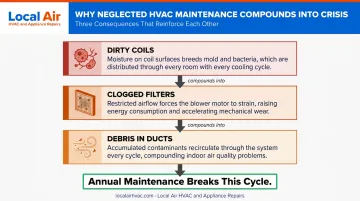
Maintenance frequency determines whether everything else you invest in actually delivers results.
Common Mistakes That Undermine Indoor Air Quality Efforts
Even well-intentioned homeowners make these errors — and in South Florida's climate, each one has real consequences for air quality and system performance.
- Using cheap filters and skipping changes — fiberglass filters protect equipment, not air quality. A clogged low-MERV filter fails on both counts
- Focusing on filtration while ignoring humidity — premium filters cannot prevent mold caused by excess moisture. In South Florida's climate, humidity control is not optional
- Closing supply or return vents to "redirect" airflow — this disrupts pressure balance, reduces filtration efficiency, and can push unconditioned air into wall cavities (ACCA advises against blocking vents without accounting for the downstream effects)
- Substituting air fresheners or portable purifiers for maintenance — fresheners mask odors while adding VOCs, and portable purifiers cover limited square footage. Neither fixes a mold-contaminated coil, clogged filter, or debris-filled duct system
Frequently Asked Questions
Can HVAC improve air quality?
Yes — a properly maintained HVAC system improves indoor air quality by filtering particles, controlling humidity, and circulating treated air. The key qualifiers are the right filter, active humidity management, and regular maintenance. Without those, the system recirculates contaminants instead of removing them.
Can poor air quality cause nasal congestion?
Poor indoor air quality is a common cause of persistent nasal congestion. Dust, mold spores, pet dander, and VOCs irritate nasal passages and sinuses. If symptoms consistently worsen at home but ease outdoors, the indoor environment is likely the source.
How often should I change my HVAC filter for better air quality?
Most higher-efficiency filters should be replaced every 1–3 months depending on household conditions. Pets, more occupants, and heavy system use all accelerate clogging. Checking the filter monthly and changing it when visibly dirty is the most reliable approach.
What MERV rating is best for indoor air quality?
MERV 11–13 is the practical sweet spot for most homes — effective against fine particles without restricting airflow in standard residential systems. HEPA filtration captures far more but requires a system capable of handling the added resistance; confirm compatibility before upgrading.
Does humidity affect indoor air quality?
Humidity is one of the most impactful IAQ variables — particularly in Florida's climate, where elevated indoor moisture fuels mold growth, activates dust mite populations, and concentrates allergens in ways no filter can fully counter. Maintaining indoor RH between 30%–50% significantly reduces these risks.
How do I know if my indoor air quality is poor?
Watch for persistent respiratory or allergy symptoms that ease when you leave the house, musty or stale odors, rapid dust buildup, and visible condensation or mold near vents. A professional HVAC inspection is the most direct next step.