Introduction
Most Boca Raton homeowners don't think much about the air inside their homes — until someone in the family starts waking up congested every morning, or the musty smell after the AC kicks on becomes impossible to ignore.
EPA indoor air quality data shows Americans spend about 90% of their time indoors, where pollutant concentrations are often 2 to 5 times higher than outdoors. In Boca Raton, that number stings a little more than it might elsewhere.
Subtropical humidity, year-round air conditioning use, and tightly sealed homes create conditions where moisture, allergens, mold spores, and VOCs build up fast.
Generic indoor air quality advice — change your filter, open a window — doesn't account for what South Florida homes actually deal with. This guide covers the specific IAQ challenges Boca Raton residents face, the DIY steps that actually make a difference, and the professional solutions worth considering when the problem runs deeper.
Key Takeaways
- Indoor air in Boca Raton can carry pollutant concentrations 2–5x higher than outdoors, made worse by sealed homes and year-round AC use
- The biggest local IAQ threats are mold, dust mites, VOCs, and insufficient fresh air exchange
- Upgrading to MERV 11–13 filters and keeping indoor humidity between 30–50% delivers the most impact
- Schedule UV germicidal light installation, professional duct cleaning, and routine HVAC maintenance to address problems DIY steps can't reach
Why Boca Raton Homes Face Unique IAQ Challenges
South Florida's climate works against indoor air quality in ways that catch most homeowners off guard.
Humidity Is Relentless Here
Palm Beach County sees average morning relative humidity of 82%, with summer mornings climbing to 86%, according to Florida Climate Center normals. Even afternoon readings average 61%. That persistent moisture load finds its way inside through gaps around windows, doors, and HVAC fresh air intakes — creating year-round conditions where mold colonies and dust mites can establish themselves even in well-maintained homes.
Sealed Homes Concentrate Pollutants
Boca Raton's newer and renovated homes are built tightly for energy efficiency, which helps with utility bills but creates a ventilation problem. The EPA notes that common organic pollutants run 2 to 5 times higher inside homes than outside — and air-tightening without adequate ventilation makes that worse. Off-gassing from furniture, paint, flooring, and cleaning products simply has nowhere to escape.
The AC Runs All Year — So the Same Air Keeps Circulating
In most climates, open windows provide natural air exchange for months at a time. In Boca Raton, that's rarely practical. The result: pet dander, dust, VOCs, and biological contaminants cycle through the same air repeatedly, building concentration over time.
Pollen Season Has No Off-Switch
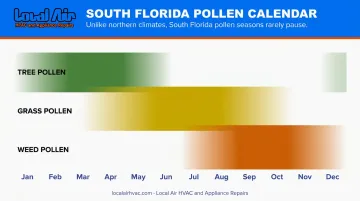
That recirculation problem is compounded by what's coming in from outside. The AAAAI notes that in warmer climates, pollination can effectively be year-round — tree pollen in early spring, grass through late spring and summer, weeds in late summer and fall. In South Florida, these seasons overlap more than they separate. Outdoor allergens enter constantly through doors, windows, and HVAC intakes, layering on top of what's already building up inside.
Common Signs Your Indoor Air Quality Needs Attention
Physical Symptoms to Watch For
Poor IAQ tends to announce itself through the body before homeowners notice anything in the home itself:
- Persistent coughing, sneezing, or runny nose with no clear illness cause
- Itchy or watery eyes, particularly indoors
- Recurring headaches or unusual fatigue at home
- Dizziness — which can result from elevated carbon dioxide levels or VOC exposure in poorly ventilated spaces
- Allergy or asthma symptoms that consistently improve when family members leave the house
If symptoms consistently clear up at work or on vacation, the home environment is the likely culprit — which brings us to the physical warning signs worth checking.
Household Warning Signs
These clues are visible, concrete, and usually point directly to an actionable fix:
- Musty or stale odors, especially when the AC first kicks on
- Visible mold near vents, in bathrooms, or around window frames
- Dust that settles quickly — within days of cleaning
- Condensation on windows or cold surfaces
- Unexplained spikes in allergy or asthma episodes among residents
When to Watch Outdoor AQI
Outdoor air quality directly affects what enters your home through ventilation and open windows, so it's worth knowing when to keep things closed. Palm Beach County's outdoor air is generally excellent — EPA data shows zero days above AQI 100 in 2021, 2022, and 2023 combined. On the occasional bad-air day, these thresholds guide what action to take:
| AQI Range | Category | What to Do |
|---|---|---|
| 0–100 | Good / Moderate | Normal activity |
| 101–150 | Unhealthy for Sensitive Groups | Asthma/allergy sufferers should keep windows closed |
| 151–200 | Unhealthy | All residents should limit outdoor exposure and rely on indoor filtration |
Source: AirNow AQI Basics
Practical DIY Steps to Improve Indoor Air Quality
Upgrade Your AC Filter First
Most homes ship with basic fiberglass filters rated MERV 1–4. These protect equipment more than they protect your lungs — they're designed to catch large debris, not fine particles. Upgrading to a MERV 11–13 pleated filter captures allergens, mold spores, and fine dust that lower-rated filters miss entirely.
EPA recommends at least MERV 13, or the highest rating your system's blower and filter slot can handle. EPA recommends at least MERV 13, or the highest rating your system's blower and filter slot can handle — check compatibility with your blower before buying. In Boca Raton homes with year-round AC use, plan to change filters every 30–60 days, not the 90 days listed on the packaging for average use.
Clean Smarter, Not Just More Often
How you clean matters as much as how frequently:
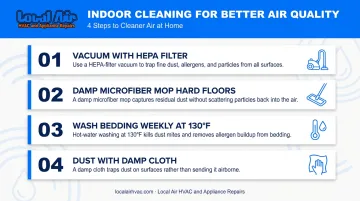
- Vacuum carpets and upholstery weekly using a HEPA-filter vacuum — standard vacuums often redistribute fine particles back into the air
- Mop hard floors with a damp microfiber mop rather than a dry mop or broom, which resuspends dust
- Wash bedding weekly in hot water at 130°F or higher — this temperature kills dust mites, which thrive in South Florida's warm, humid conditions
- Dust with a damp cloth, not a feather duster
Control VOC Sources
New furniture, paint, synthetic air fresheners, scented candles, and many cleaning products off-gas VOCs that accumulate quickly in a sealed Florida home. Practical steps:
- Choose low-VOC or zero-VOC paints for any renovation work
- Store harsh chemicals and solvents in the garage, not under the sink
- Replace plug-in air fresheners with unscented alternatives or a small essential oil diffuser
- Air out new furniture outdoors for a day or two before moving it inside
Use Natural Ventilation Strategically
Opening windows at the wrong time makes humidity problems worse. The window for safe natural ventilation in Boca Raton is narrow but real: before 9–10 AM, when outdoor humidity hasn't peaked and temperatures are lower. Even 20–30 minutes of cross-ventilation in the morning flushes stale air without soaking the house.
Exhaust fans in bathrooms and kitchens do more work than most homeowners realize. Run them during cooking and showering, and leave them running for 30 minutes afterward to clear moisture and odors before they spread through the home.
A Note on Indoor Plants
Snake plants, spider plants, and peace lilies can reduce some airborne compounds, but the effect is modest at the scale of a typical home. A bigger concern: overwatering any plant adds moisture to the air and increases mold risk. Keep plants as a small complement to proper ventilation and filtration, and water them sparingly.
Controlling Humidity: The Biggest IAQ Factor in Boca Raton
Humidity control isn't just a comfort issue in South Florida — it's the single most important factor in preventing mold growth and dust mite proliferation.
EPA recommends keeping indoor relative humidity between 30–50%. CDC takes it a step further, advising no higher than 50% at any point during the day. At humidity levels above 60%, mold and dust mites take hold quickly. In Boca Raton's warm climate, those conditions can exist year-round without active management.
Measuring and Monitoring
Start with a hygrometer — a small, inexpensive device that reads indoor humidity accurately. A typical Boca Raton home can sit at 65–70% RH on a summer afternoon, even with the AC running. Knowing your baseline before spending money on equipment is the most practical first step.
Portable vs. Whole-Home Dehumidification
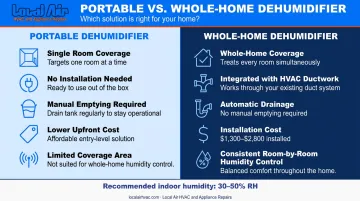
Portable dehumidifiers work well for targeted problem areas: a single bedroom, a closet with recurring mildew, or a bathroom without good exhaust ventilation. They're affordable and require no installation, but they need regular emptying and only address one space at a time.
Whole-home dehumidifiers installed within the HVAC ductwork are the more effective solution for larger homes or persistent humidity issues throughout the house. These units work alongside the AC system to maintain consistent humidity control in every room simultaneously. Installation costs typically run $1,300–$2,800, though South Florida pricing varies by home size and ductwork configuration.
Daily Habits That Compound Over Time
- Run bathroom exhaust fans during and 30 minutes after every shower
- Use the kitchen exhaust fan while cooking, especially when boiling water
- Fix plumbing leaks immediately — even a slow drip under a sink keeps a cabinet permanently damp
- Avoid air-drying laundry indoors
- Check the AC condensate drain line periodically — a clogged drain line is one of the most common sources of excess moisture in Florida HVAC systems
HVAC Maintenance and Professional IAQ Solutions
Why HVAC Condition Directly Affects Air Quality
A well-maintained AC system controls temperature, filters air, manages humidity, and moves air through every room in the house. When it's neglected, it does the opposite — a dirty evaporator coil, clogged drain line, or contaminated air handler spreads mold, bacteria, and accumulated debris with every cooling cycle.
For Boca Raton homeowners running their systems year-round, professional maintenance isn't optional. It's the foundation everything else builds on.
Local Air HVAC and Appliance Repairs, EPA Universal Certified and serving the Palm Beach area for over 20 years, provides HVAC maintenance for residential and commercial customers in Boca Raton and throughout South Palm Beach County. Their tune-up service covers evaporator coil cleaning, condensate drain line flushing, refrigerant checks, and full system inspection — the tasks that directly affect IAQ, not just equipment longevity.
UV Germicidal Lights
UV germicidal lights installed inside the air handler use short-wave UVC energy to inactivate mold spores, bacteria, and other microorganisms on the evaporator coil and in the airstream. ASHRAE notes that effectiveness depends on UV dose (irradiance × exposure time) and proper system design.
In practice, UV lights serve two purposes in Florida HVAC systems:
- Coil protection — preventing mold and biological buildup on a surface that stays cold and damp
- Air treatment — reducing the concentration of airborne microorganisms passing through the air handler
Local Air installs UV lights as a standalone IAQ service for homes and businesses throughout the area. Given South Florida's heat and humidity, biological buildup on evaporator coils is common — UV installation prevents biological growth before it re-enters the airstream.
Professional Duct Cleaning
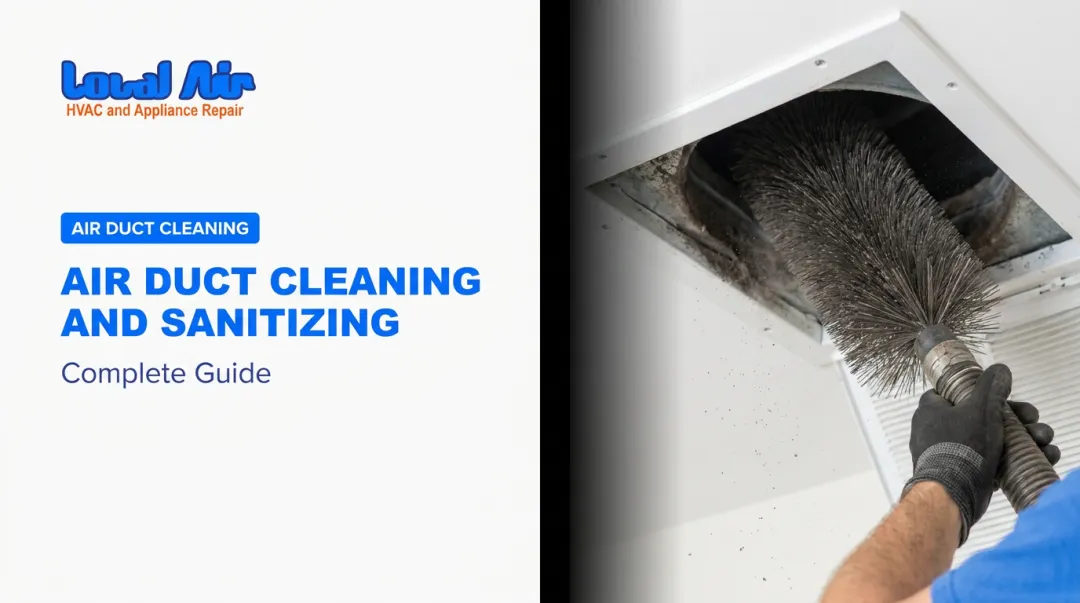
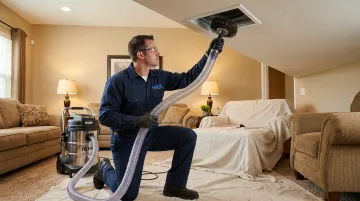
Over time, Boca Raton's humidity and continuous AC use cause dust, debris, and mold spores to accumulate inside ductwork. EPA takes a cautious stance on duct cleaning: routine annual cleaning isn't necessary, but cleaning is warranted when there's visible mold in hard-surface ducts, vermin activity, or ducts so clogged with debris they're releasing particles into living spaces.
Post-flooding and post-renovation are also strong trigger conditions — construction dust and water intrusion both create contamination that circulates until the ducts are professionally cleaned. Local Air's duct cleaning service removes accumulated buildup, restores airflow, and supports cleaner air distribution — particularly relevant in Florida homes where humidity accelerates accumulation.
The Value of a Professional Assessment
Rather than guessing which product to buy or which problem to tackle first, a qualified HVAC technician can evaluate actual pollutant conditions, inspect ductwork for leaks, and assess whether the system's ventilation is adequate. That diagnosis also means skipping the guesswork — a technician can tell you whether a UV light, duct cleaning, or a simple coil cleaning will move the needle most for your home.
Frequently Asked Questions
How can I improve indoor air quality in Boca Raton?
Start with MERV 11–13 AC filters, a dehumidifier set to 30–50% humidity, weekly HEPA vacuuming, and annual professional HVAC maintenance. In Boca Raton's climate, humidity control and regular coil cleaning tend to deliver the most noticeable results.
Can poor air quality cause dizziness?
Yes. Elevated VOC concentrations, carbon dioxide buildup from inadequate ventilation, and airborne mold spores can all cause dizziness, headaches, and fatigue. These symptoms often resolve quickly once the source is identified and ventilation or filtration is improved.
At what AQI should I stay indoors?
When outdoor AQI reaches 101 or above (Unhealthy for Sensitive Groups), people with asthma or allergies should keep windows closed and rely on indoor filtration. At AQI 151 or above (Unhealthy), all residents should limit outdoor exposure and ensure their home's filtration system is working properly.
Do air purifiers dry out indoor air?
No. HEPA, UV, and ionizing purifiers remove particles or neutralize microorganisms but don't extract moisture — only dehumidifiers and AC cooling do that. If you're managing both air quality and humidity, you need both solutions.
How often should I have my HVAC system serviced in Boca Raton?
Annual professional maintenance is the minimum, but many Boca Raton homeowners benefit from twice-yearly service — once before summer and once in fall. Year-round operation accelerates coil buildup, drain line clogging, and filter loading compared to cooler climates.