Introduction
Florida homeowners have a different relationship with their HVAC systems than most. While much of the country shuts down air conditioning from October through April, homes in Boca Raton, Delray Beach, and across South Palm Beach County run their systems for 10 to 12 months straight. That kind of continuous demand takes a real toll.
The consequences of skipping maintenance are predictable: energy bills creep upward, efficiency drops, and systems that should last 15 to 20 years start failing at 10. Worse, the breakdown usually happens in August — not in March.
This guide covers why preventative maintenance matters financially and for safety, what types of maintenance homeowners should understand, the warning signs that demand attention, and a practical maintenance schedule built for South Florida's climate.
Key Takeaways
- Regular maintenance keeps HVAC systems running efficiently and extends their working life toward the 15–20 year range
- Homeowners can handle filter changes, vent cleaning, and outdoor unit clearing monthly or quarterly
- Professional tune-ups — ideally each spring before peak heat — catch refrigerant, electrical, and coil issues early
- Florida's near-year-round cooling season makes frequent maintenance the rule, not the exception
- Spotting warning signs early keeps small problems from turning into costly emergency repairs
Why HVAC Preventative Maintenance Matters
Energy Costs Add Up Fast
A dirty or poorly maintained HVAC system works harder to reach the same temperatures — and that extra effort shows up on your electric bill. According to the U.S. Department of Energy, replacing a clogged filter with a clean one can lower AC energy consumption by 5% to 15% — and that's just one maintenance task.
Florida Power & Light reports that air conditioning can account for more than 50% of a home's electric bill during peak cooling months. For a household running the AC nearly year-round, even modest efficiency losses compound quickly.
Lifespan and Replacement Costs
Properly maintained HVAC systems generally last 15 to 20 years, according to manufacturers including Carrier, Trane, and Lennox. Skipping routine upkeep — dirty filters, neglected coils, missed electrical checks — shortens that window and moves you toward replacement sooner.
The cost difference matters:
| Service Type | Typical Cost |
|---|---|
| Annual professional tune-up | $175–$350 |
| HVAC repair (average) | $350, up to $2,000 |
| Full system replacement | $5,000–$12,500+ |
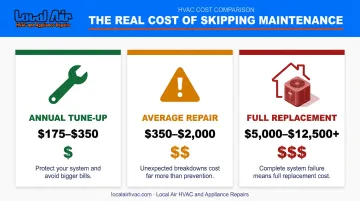
A tune-up that costs $200 today can prevent a $1,500 repair next summer — or delay a $10,000 system replacement by several years.
Safety Risks You Can't Ignore
Neglected systems don't just underperform — they create hazards:
- Electrical faults from loose connections increase fire risk. The NFPA reports that HVAC equipment is involved in roughly 9% of home electrical structure fires
- Cracked heat exchangers allow combustion gases — including carbon monoxide — to enter living spaces. The CDC identifies CO from gas- and oil-burning furnaces as an invisible, potentially fatal hazard
- Clogged condensate drains cause water to back up and overflow, leading to water damage and mold growth — a particularly serious concern in South Florida's humidity
Indoor Air Quality in a Humid Climate
South Florida's outdoor humidity doesn't stay outside. The EPA recommends keeping indoor relative humidity between 30% and 50%; the University of Florida IFAS notes that humidity above 70% for extended periods creates conditions for mold growth inside ductwork and air handlers.
A well-maintained HVAC system actively controls that humidity — and does more besides:
- Removes airborne dust, allergens, and mold spores through clean filters
- Keeps drain lines clear so moisture exits the system instead of pooling
- Maintains clean coils so the system dehumidifies efficiently
In a climate where AC runs almost constantly, the difference between a maintained and a neglected system is the difference between healthy indoor air and one that actively spreads contaminants.
Types of HVAC Maintenance Every Homeowner Should Know
HVAC maintenance isn't a single annual task. It's layered: some tasks you handle yourself on a regular basis; others require a certified technician and specialized equipment.
Routine Preventive Maintenance (DIY)
These are the tasks homeowners can and should do on their own:
- Check and replace air filters every 30–90 days. In Florida, with pets, allergies, or heavy use, check monthly — the filter may need replacement before the 90-day mark
- Clear the outdoor condenser unit of leaves, overgrowth, and debris. FPL recommends maintaining at least 18 inches of clearance around the unit
- Keep indoor vents unobstructed — furniture, rugs, and curtains blocking registers force the system to work harder
- Flush the condensate drain line quarterly with water and diluted bleach to prevent algae buildup (more on this in the schedule section)
These steps are low-cost and take minutes. Skipping them consistently is how most systems end up failing before their time.
Seasonal Professional Tune-Up
Once a year — ideally in spring before South Florida's peak cooling demand — a licensed HVAC technician should perform a full inspection. Tasks that require professional tools and EPA Section 608 certification include:
- Refrigerant level check and leak testing (only certified technicians can legally handle refrigerants)
- Electrical connection tightening and component inspection
- Thermostat calibration
- Evaporator and condenser coil cleaning
- Condensate drain flushing and pan inspection
- Blower motor assessment and lubrication of moving parts
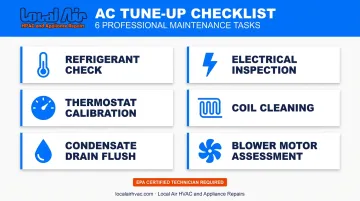
Local Air HVAC and Appliance Repairs — EPA Universal Certified with over 20 years serving Palm Beach County homeowners — performs this type of comprehensive seasonal maintenance, including drain line flush/extractions, coil cleaning, refrigerant checks, and full performance inspection.
Corrective (Reactive) Maintenance
A reactive repair call is almost always more expensive and more disruptive than planned maintenance. In Florida, a system failure in summer is a health issue, not just an inconvenience.
Repeated reactive repairs also signal a deteriorating system. If you're calling for emergency service every season, the cumulative cost has likely exceeded what a structured maintenance plan would have cost.
Major Overhaul and Repair-vs-Replace Decisions
At some point, routine maintenance isn't enough and a compressor, evaporator coil, or blower motor needs replacement. When that point arrives, you need a framework for deciding whether to repair or replace the whole system.
Two guidelines industry professionals commonly use:
- The $5,000 Rule (per Angi): Multiply the system's age by the repair cost. If the result exceeds $5,000, replacement is usually the better investment
- The 50% Threshold (per HomeAdvisor): If repair costs reach 50% or more of a new system's price, replace the system
ENERGY STAR also recommends considering replacement if a central air conditioner or heat pump is more than 10 years old. A technician who knows the system's full history can help you weigh these factors against your specific unit's condition.
Warning Signs Your HVAC System Needs Attention
Catching problems early prevents emergencies. In Florida, a failed AC in summer isn't just uncomfortable — for elderly residents and young children, it can be dangerous. These three categories cover the most common indicators that something's wrong.
Performance and Output Changes
Your system's behavior often reveals problems before anything breaks down:
- Rooms take longer than usual to reach the set temperature
- Cooling is uneven — some rooms are comfortable while others stay warm
- The system runs continuously without cycling off
- Unexplained spikes in energy bills — often the first indicator of dirty coils, low refrigerant, or a failing component
Unusual Sounds, Smells, or Behaviors
Sound and smell are early-warning systems. Don't ignore them:
- Grinding or banging — worn or loose mechanical components
- Squealing — belt or motor bearing issues
- Rattling — debris in the system or loose panels
- Musty odor — mold in ductwork, the drain pan, or on the coil
- Burning smell — electrical issue requiring immediate attention
- Rotten egg smell near a gas furnace — potential gas leak; evacuate and call your gas provider
Visible and Physical Indicators
These issues are visible during a quick walkthrough of your home:
- Ice forming on the evaporator coil (restricted airflow or refrigerant issue)
- Water pooling near the indoor unit (clogged condensate drain)
- Excessive dust accumulation near vents
- Yellow or orange furnace flame instead of blue (combustion issue)
- Error codes or indicator lights on your thermostat or unit — treat these as actionable signals, not background noise
HVAC Preventative Maintenance Schedule
Florida households running AC 10+ months per year wear components faster than homes in moderate climates — use the more frequent end of any recommended interval as your default.
| Frequency | Tasks |
|---|---|
| Monthly | Inspect filter — replace if visibly dirty; clear debris from outdoor unit; verify thermostat operation; confirm vents are unobstructed |
| Quarterly | Replace filters on schedule (sooner with pets or allergies); flush condensate drain with diluted bleach; wipe down vents and registers |
| Spring + Fall | Schedule professional inspection — coil cleaning, refrigerant check, electrical inspection, blower assessment, lubrication; test thermostat accuracy; check ductwork for visible leaks |
| Annual / As Needed | Full system assessment by a certified technician; evaluate system age and performance for repair-vs-replace decisions; test carbon monoxide detectors and replace batteries |
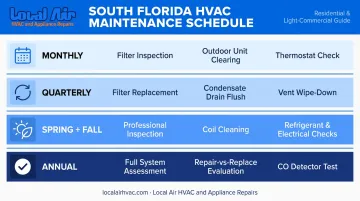
The spring tune-up deserves special attention in South Florida. Getting a technician in before Memorial Day means catching refrigerant leaks, electrical faults, and dirty coils before you're depending on the system 24/7 through a Florida summer.
Conclusion
Preventative HVAC maintenance isn't optional for Florida homeowners. The combination of year-round heat, high humidity, and continuous system use creates conditions where skipping maintenance leads directly to higher bills, earlier failures, and avoidable safety risks.
The right approach balances what you can do yourself — filter changes, vent clearing, quarterly drain flushes — with professional servicing for the tasks that require certification and equipment. Neither alone is sufficient; together, they keep your system running efficiently toward the full 15–20 year lifespan.
A spring professional inspection is the natural starting point — it catches whatever the off-season left behind before peak cooling demand hits. From there, a simple quarterly routine keeps your system out of crisis mode and your energy bills in check. Schedule that first visit now rather than waiting for July to make the decision for you.
Frequently Asked Questions
What does preventative AC maintenance for homeowners include?
DIY maintenance covers filter changes every 30–90 days, clearing the outdoor unit, and quarterly condensate drain flushing. A professional tune-up adds refrigerant checks, coil cleaning, electrical inspection, thermostat calibration, and blower assessment — tasks that require certified technicians and specialized tools.
What are the common guidelines for deciding whether to repair or replace an HVAC system?
The $5,000 Rule says to multiply the system's age by the repair cost; results above $5,000 generally favor replacement. HomeAdvisor sets the threshold at 50% or more of a new unit's cost, and ENERGY STAR recommends evaluating replacement for AC units older than 10 years.
How often should HVAC maintenance be done in Florida's climate?
Check filters monthly and replace them before they become visibly clogged. Flush the condensate drain quarterly to prevent algae buildup in Florida's humidity. Schedule a professional inspection at least once a year, with spring being the priority before peak cooling season.
What are the most common signs that my HVAC system needs attention?
Look for reduced cooling performance, unexplained increases in energy bills, unusual sounds (grinding, banging, squealing), musty or burning odors, ice on the evaporator coil, or water pooling near the indoor unit. Any of these warrants a professional evaluation.
Which HVAC maintenance tasks can I do myself versus calling a professional?
Homeowners can handle filter replacement, wiping down vents, clearing the outdoor unit, and flushing the condensate drain. Refrigerant handling, electrical inspections, coil cleaning, and mechanical diagnostics require EPA-certified technicians with proper equipment.
How long does an HVAC system last with regular preventative maintenance?
Properly maintained systems generally last 15 to 20 years, according to Carrier, Trane, and Lennox. Consistent filter changes, quarterly drain care, and annual professional servicing are the primary factors that keep systems running toward the higher end of that range.