Left unchecked, short cycling strains the compressor, drives up energy bills, and can take years off your system's life. In Florida, where air conditioning accounts for 27% of home energy use and 86% of homes rely on central AC, that adds up fast.
This guide covers the most common causes, what happens when the problem goes ignored, and exactly what to do — whether that's a quick DIY fix or a call to a licensed technician.
Key Takeaways
- Short cycling = your AC turns on and off in under 10 minutes without finishing a full cooling cycle
- Most common causes: dirty air filter, oversized unit, refrigerant leak, thermostat issues
- Consequences include higher energy bills, poor humidity control, and faster compressor wear
- Some fixes take 5 minutes (filter swap); others require a certified HVAC technician
- Regular maintenance and correct system sizing are your best long-term prevention strategy
Common Causes of AC Short Cycling
A normal AC cycle runs roughly 10–20 minutes, according to Lennox. Short cycling is when the system shuts off in under 10 minutes — sometimes just 2–5 minutes — before the home reaches the set temperature, then immediately restarts. The compressor never gets a proper rest, and the home never fully cools or dehumidifies.
In Palm Beach County, the four causes below account for the vast majority of short-cycling calls Local Air sees.
Dirty or Clogged Air Filter
When a filter gets packed with dust, pet hair, and debris, airflow into the system drops. Heat builds up around the evaporator coil. The unit's built-in safety controls detect the overheating and shut things down early — triggering a short cycle.
In Palm Beach County, where systems run nearly year-round and homes often have pets or dusty interiors, filters clog faster than homeowners expect. Local Air recommends changing filters monthly in this climate. At minimum, check yours every 30 days and swap it when it looks gray.
Oversized AC Unit
An oversized unit cools the air near the thermostat so quickly that it satisfies the setpoint before the rest of the home — or the humidity — has been addressed. The system shuts off, the temperature near the thermostat ticks back up, and the cycle repeats every few minutes.
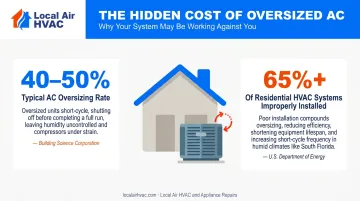
This is a design problem, not a mechanical one. According to Building Science Corporation, typical AC sizing results in oversizing by roughly 40–50%. The DOE adds that more than 65% of residential HVAC systems have been improperly installed and don't perform as intended.
Signs a unit may be oversized:
- Cycles that end in under 5 minutes even on mild days
- Humidity that never seems to drop despite the AC running
- Uneven cooling — some rooms comfortable, others still warm
Properly sizing a replacement requires a Manual J load calculation — the ANSI standard for residential AC sizing. Square-footage estimates routinely miss the mark; a licensed tech can run the calculation before recommending equipment.
Low or Leaking Refrigerant
Refrigerant absorbs heat from indoor air. When levels drop due to a leak, heat transfer breaks down, internal pressures fall, and the compressor can overheat — triggering a protective shutdown.
A few things to know:
- Refrigerant doesn't simply run out; low levels always mean a leak
- A technician must find and repair the leak before recharging the system
- Under EPA Section 608, only certified technicians can legally handle refrigerants — this is never a DIY job
Signs of a refrigerant leak include reduced cooling, ice buildup on the refrigerant lines, or a hissing sound near the unit.
Thermostat Problems
Two related issues cause thermostat-driven short cycling:
- Malfunctioning thermostat — dead batteries, faulty wiring, or aging hardware sending incorrect signals
- Poor placement — a thermostat near a sunny window, a lamp, or kitchen appliances reads higher than the actual room temperature, causing the system to shut off before the home is actually cool
Replacing batteries, recalibrating the thermostat, or relocating it to an interior wall away from heat sources often resolves the issue. A technician can test and recalibrate the unit or recommend a smart thermostat upgrade for more consistent control.
What Happens If AC Short Cycling Goes Unaddressed
Short cycling doesn't just make your home uncomfortable. Left unchecked, it wears down your equipment and drives up your costs.
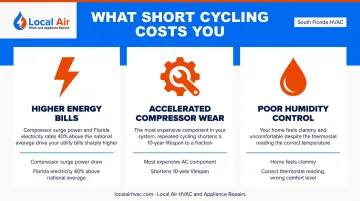
Higher electricity bills — The compressor draws a surge of power every time it starts. Dozens of short starts per day add up fast, especially in Florida, where electricity costs run about 40% above the national average.
Accelerated wear on the compressor and fan motor — These are the most expensive components in your system. As Trane notes, short cycling increases wear and raises repair costs over time. ENERGY STAR recommends considering replacement when a central AC or heat pump reaches 10 years — short cycling can push you to that threshold much sooner.
Poor humidity control — This matters most in South Florida. When cycles are too short, moisture that condenses on the cooling coil can evaporate back into the airstream during the off cycle, according to DOE research. The result: a home that reads 74°F on the thermostat but still feels clammy.
Warning Signs Your AC May Be Short Cycling
Before calling for service, watch for these indicators:
- The AC turns on and off more than 3 times in a 10-minute window
- You can hear the compressor cycling up and shutting down every few minutes
- Your home never reaches the thermostat's set temperature, or certain rooms stay noticeably warmer
- Indoor air feels muggy or sticky even though the AC appears to be running — a sign that dehumidification isn't completing
How to Fix AC Short Cycling
Some causes are straightforward enough to address yourself in minutes. Others need a licensed technician with proper tools and certifications. Knowing the difference saves time and prevents further damage.
DIY Steps to Try First
Work through these before calling anyone:
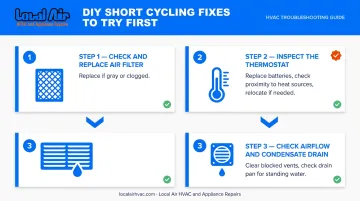
Check and replace the air filter — If it's gray or visibly clogged, swap it for the correct type and size. This alone resolves short cycling in many cases.
Inspect the thermostat — Replace batteries, confirm the settings are correct, and check whether it's near a heat source. If it's next to a sunny window or a lamp, move it to an interior wall and see if cycling normalizes.
Check airflow and the condensate drain — Make sure no furniture or closed doors are blocking return air vents. Also check the condensate drain pan near the air handler for standing water — an activated float switch can shut the system off and mimic short cycling.
When to Call a Licensed HVAC Professional
Stop running the unit and call a technician if you notice:
- Ice forming on the refrigerant lines
- Unusual noises from the compressor
- A burning smell near any part of the system
- DIY steps don't resolve the problem after a filter change and thermostat check
Refrigerant leaks must be handled by an EPA-certified technician: it's both illegal and unsafe for untrained individuals to handle refrigerants. Local Air HVAC and Appliance Repairs holds EPA Universal Certification and has served Palm Beach County homeowners for over 20 years, with technicians equipped to locate leaks, complete repairs, and properly recharge the system.
For oversized units that have been short cycling since installation, a technician should perform a Manual J load calculation to confirm the sizing issue and recommend next steps. No amount of maintenance corrects an oversized unit. It requires right-sizing.
Tips for Long-Term AC Short Cycling Prevention
In Palm Beach County's near-year-round cooling climate, these habits make a measurable difference:
- Change filters monthly — Florida's humidity and continuous system use demand more frequent changes than cooler climates require
- Schedule an annual tune-up — Spring, before peak demand, is ideal. A thorough service covers refrigerant checks, coil cleaning, condensate drain care, and thermostat calibration
- Keep the outdoor condenser clear — South Florida's environment means pollen, leaves, and organic growth coat condenser coils fast; clear debris and rinse the unit seasonally
- Insist on Manual J sizing for any new installation — If you're replacing an aging system, require a proper load calculation based on your home's square footage, insulation, and layout — not a rough estimate
Local Air's annual maintenance service covers all of the above, specifically designed for the demands of Florida's climate.
Conclusion
Short cycling has identifiable causes, and most are fixable with the right diagnosis. A dirty filter is often all it takes — and a $10 replacement can prevent hundreds of dollars in compressor wear. More serious issues like refrigerant leaks or oversized equipment require professional attention, but catching them early makes a real difference.
In a climate like South Florida's, your AC isn't a seasonal luxury — it runs almost constantly for most of the year. Protecting it through routine maintenance and acting on early warning signs is the most cost-effective thing a South Florida homeowner can do. Local Air HVAC has been diagnosing and repairing short cycling issues across Palm Beach and Broward County for over 20 years — if something feels off with your system, it's worth a call before a small problem becomes a compressor replacement.
Frequently Asked Questions
What should I do if my AC is short cycling?
Check and replace the air filter, inspect your thermostat placement, and clear any blocked return vents. If those steps don't help — or you notice ice on the lines, unusual noises, or a burning smell — stop running the unit and call a licensed HVAC technician.
What is the most common cause of short cycling?
A dirty or clogged air filter is frequently the leading cause — it restricts airflow, causes the evaporator coil to overheat, and trips the safety shut-off before a full cycle completes. It's also the easiest to fix. An oversized AC unit is another common culprit that often goes undiagnosed for years.
What is the $5,000 rule for AC?
This informal heuristic says: multiply the system's age by the estimated repair cost, and if the result exceeds $5,000, replacement may be the smarter choice — though it's not an official industry standard. ENERGY STAR recommends considering replacement for any system more than 10 years old. An honest technician can help you weigh your options.
Can a dirty air filter cause my AC to short cycle?
Yes — a clogged filter restricts airflow into the air handler, causes heat to build up around the evaporator coil, and triggers the system's thermal protection to shut it down early. Replacing the filter is often an immediate fix, and it costs almost nothing.
How long will a short cycling AC last if the issue is ignored?
There's no fixed timeline, but the wear adds up fast. An AC that should last a decade or more can fail years ahead of schedule when the compressor is starting and stopping dozens of times per day. Early intervention is always more cost-effective than emergency replacement.