In South Florida, this problem is especially common. West Palm Beach averages 82% relative humidity in the morning hours — conditions that keep HVAC systems running hard year-round and create near-constant condensation risk inside ductwork. That sustained moisture, combined with the organic debris that naturally accumulates inside ducts, gives mold exactly what it needs to establish and spread.
This guide covers how to identify mold in your air ducts, how to safely remove it depending on where it's located and what your ducts are made of, when a professional is the only appropriate option, and how to prevent it from returning.
Key Takeaways
- Musty odors when the HVAC runs, dark spots around vents, and worsening allergy symptoms are the top warning signs
- Sheet metal ducts can be cleaned professionally
- Fiberglass-lined or insulated ducts with mold must be replaced — not cleaned
- DIY is only appropriate for surface mold on removable vent covers — anything inside the ductwork requires a pro
- Bleach and vinegar are not appropriate for use inside air ducts and won't solve the problem
- Fixing the moisture source is mandatory — mold will return otherwise
Signs You Have Mold in Your Air Ducts
Mold inside ductwork is often invisible from outside the system. Most homeowners detect it through a combination of sensory and performance clues long before they ever see anything.
Sensory Warning Signs
- Musty or earthy smell each time the HVAC system turns on — this is the most reliable early indicator
- Visible dark streaks (black, green, or white) on or around vent covers and drip pans
- Worsening allergy or asthma symptoms indoors, particularly headaches, congestion, or fatigue that improve when you leave the building
Performance-Based Warning Signs
- Uneven airflow between rooms
- A spike in energy bills without an obvious cause
- Condensation forming on or near vent openings
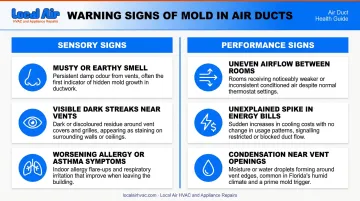
These symptoms point to a system working harder due to restricted or contaminated airflow. Left unaddressed, that strain drives up energy costs and accelerates wear on HVAC components.
Confirming It's Actually Mold
Mold and dust can look similar on a surface. According to the EPA, many sections of an HVAC system aren't accessible for visible inspection, and laboratory analysis of a surface sample may be needed for definitive confirmation. DIY mold test kits are generally unreliable and shouldn't be used as the sole basis for a remediation decision. A licensed HVAC technician can physically inspect accessible ductwork, collect samples if needed, and give you a clear answer before any remediation work begins.
Why Mold Grows in HVAC Systems
Every mold problem starts with moisture. Inside an HVAC system, there are several common sources:
- Cooling coils — designed to remove humidity from air, they create condensation and can become a significant moisture source if not maintained
- Drain pans — standing water in a clogged or improperly sloped drain pan provides a direct breeding ground
- Duct condensation — temperature differences between duct interior and exterior cause moisture to form, especially in poorly insulated ductwork
- Nearby leaks — plumbing or roof leaks that allow water to reach the system
Once moisture is present, organic debris already inside the ducts — dust, pet dander, skin cells — gives mold spores a food source. From there, the HVAC system becomes a distribution network — pushing spores into every room with each cycle.
Why Florida Homes Are Particularly Vulnerable
West Palm Beach logs over 4,100 cooling degree days per year based on 1991–2020 NOAA normals, meaning the AC runs in virtually every month. That sustained run time means more condensation buildup, more standing water in the drain pan, and more opportunities for moisture to accumulate inside the system.
The EPA identifies moisture control as the most effective way to prevent mold in air ducts — but that's harder to achieve when the system runs year-round without a break. In South Florida's climate, regular HVAC maintenance isn't a seasonal reminder; it's a year-round necessity.
How to Remove Mold from Air Ducts Step by Step
The right approach depends on two things: where the mold is located and what your ducts are made of. Clean the wrong material the wrong way, and the mold returns within weeks.
Step 1: Turn Off the HVAC System and Check Duct Material
Shut off the system immediately — running it while mold is present spreads spores to every room. Also cut power at the breaker if you'll be physically accessing any components.
Then identify what your ductwork is made of:
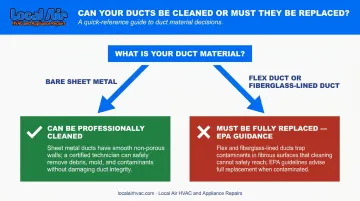
- Bare sheet metal — can be cleaned effectively
- Flex duct or fiberglass-lined duct — if contaminated with mold, these cannot be cleaned and must be replaced, per EPA guidance; there are no EPA-registered biocides approved for use on porous duct materials
Attempting to clean flex or fiberglass-lined duct wastes time and leaves the contamination intact — replacement is the only effective option.
Step 2: Gear Up and Contain the Work Area
Disturbing mold releases spores into the air. Before touching anything:
- Wear an N95 respirator (minimum), safety goggles, and disposable gloves — this is the CDC's minimum PPE standard for mold cleanup
- Seal off the work area with plastic sheeting where possible
- Open windows for ventilation
- Have a HEPA vacuum ready to capture dislodged spores
Step 3: Clean Surface Mold on Vent Covers (DIY-Appropriate)
This is the only stage genuinely appropriate for DIY:
- Remove vent covers and wash with warm water and mild detergent
- For persistent spots, use an EPA-registered mold cleaner approved for HVAC surfaces
- HEPA vacuum around the vent opening to capture loose mold and debris
- Wipe reachable non-porous surfaces with an EPA-registered disinfectant
- Allow covers to dry completely before reattaching
Do not use bleach or vinegar inside ducts. Bleach can't penetrate porous surfaces to kill mold at the root, and dead mold still triggers allergic reactions — the EPA does not recommend it for remediation. Vinegar is equally ineffective and can damage duct materials. Use only EPA-registered antimicrobial products labeled for HVAC use.
Cleaning vent covers handles what's visible. Step 4 addresses why the mold grew in the first place.
Step 4: Fix the Moisture Source
Removing visible mold without addressing why it grew guarantees it comes back. The most common moisture fixes:
- Clear and re-slope drain pans — Florida Building Code requires a minimum 1% slope toward the drain; standing water means this isn't happening
- Clear condensate line blockages — a clogged line backs water into the pan
- Seal duct gaps — unsealed joints allow humid outside air to enter and condense
- Check for nearby water leaks — plumbing and roof leaks near the air handler are frequently overlooked
For ongoing control, maintain indoor relative humidity between 30–50% — the range recommended by both the EPA and ASHRAE. In Florida homes, a dedicated dehumidifier is often necessary to hold this target consistently.
DIY vs. Professional Mold Removal: Which Do You Need?
DIY mold removal is only appropriate for minor surface mold on removable, non-porous vent covers. That covers very little of what most homeowners actually encounter.
When You Need a Professional
Call a certified technician if any of these apply:
- Musty odor is present in multiple rooms — indicates systemic spread through the ductwork
- Mold has returned after a previous cleaning
- Mold is discovered near coils, blower fans, or inside duct interiors
- Contamination covers more than 10 square feet (the EPA's threshold for professional intervention)
- Anyone in the home has asthma, respiratory conditions, or mold allergies
- The property has had prior flooding or significant water damage
What Professionals Do Differently
Certified technicians approach this differently than a homeowner can:
- Use containment barriers, HEPA filtration, and negative air pressure systems to prevent cross-contamination
- Apply EPA-registered disinfectants appropriate for HVAC surfaces
- Assess components homeowners can't safely reach — coils, blower fans, drain pans, and duct interiors
- Follow the ANSI/IICRC S520 Standard for Professional Mold Remediation, which governs how mold contamination in HVAC systems must be handled
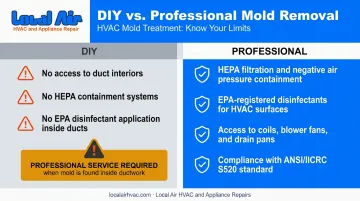
The S520 standard is clear: mold in inaccessible duct interiors requires trained professionals. Attempting to encapsulate or kill mold without physically removing it is not considered effective remediation.
If you're in the Royal Palm Beach area or surrounding South Florida communities, Local Air HVAC and Appliance Repairs — EPA Universal Certified with over 20 years of service experience — offers professional air duct cleaning and UV light installation to address mold and biological buildup at the source. A technician can assess your system and walk you through the right course of action for your home or business.
How to Prevent Mold from Returning in Your HVAC System
Mold returns when moisture, airflow problems, or neglected components go unaddressed. Staying ahead of it means consistent maintenance — not a one-time fix.
Ongoing Maintenance Checklist
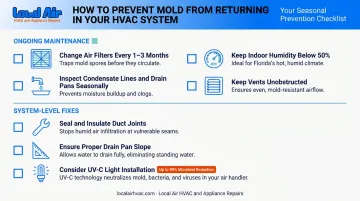
- Change air filters every 1–3 months — clogged filters restrict airflow and trap moisture; ENERGY STAR recommends checking monthly and changing at least every 3 months
- Keep indoor humidity below 50% — use a dehumidifier if needed, especially in Florida
- Check condensate lines and drain pans seasonally — clear blockages before they cause standing water
- Keep supply and return vents unobstructed — blocked vents disrupt airflow and create pressure imbalances
Structural and System-Level Fixes
- Seal duct joints and insulate ducts properly to prevent condensation points
- Ensure AC drain pans maintain the required slope toward the drain
- Consider UV light installation — ASHRAE notes that in-duct UV-C systems are effective at controlling microbial growth on cooling coils and drain pans, with research showing up to a 99% reduction in microbial concentrations on treated HVAC surfaces
Schedule Annual Professional Maintenance
In Florida's climate, where HVAC systems run nearly every month of the year, annual professional maintenance is the most practical way to catch early moisture issues before they become visible mold. Technicians can clean components that routine homeowner checks can't reach and confirm that drain lines and coils are draining correctly.
Local Air HVAC offers maintenance services that include condensate drain line care and system cleaning — the maintenance tasks most closely tied to mold prevention in South Florida's humid climate.
Frequently Asked Questions
Can mold be removed from air ducts?
Yes, but it depends on the duct material. Bare sheet metal ducts can be cleaned using EPA-registered antimicrobial products. Fiberglass-lined or internally insulated ducts cannot be effectively cleaned and must be replaced — the extent of contamination determines whether surface cleaning or full professional remediation is the right call.
Can mold in air ducts make you sick?
Yes. Mold spores distributed through the HVAC system can cause respiratory symptoms, allergy flare-ups, headaches, and fatigue. Effects are more severe in people with asthma, existing respiratory conditions, or mold allergies — and symptoms often improve noticeably when leaving the building.
Will mold in air ducts spread?
Yes. An active HVAC system will carry mold spores to every room it serves. Turning the system off immediately upon suspecting mold is the first and most important step to containing the spread before inspection or remediation begins.
How do I know if there is mold in my air ducts?
Look for a persistent musty smell when the HVAC runs, visible dark spots around vent covers or drip pans, and health symptoms that clear up when you leave the building. Professional inspection or lab analysis of a surface sample is the only way to confirm mold definitively.
Should I use bleach or vinegar to clean mold from air ducts?
Neither is recommended for internal duct use. Bleach cannot kill mold at its root in porous materials, and the EPA advises against it as a routine remediation approach. Vinegar is similarly ineffective for internal duct cleaning. Use only EPA-registered antimicrobial products specifically labeled for HVAC applications.
How do I stop mold from coming back after cleaning?
Start by fixing the moisture source — without that step, mold will return regardless of how thorough the cleaning was. Then maintain indoor humidity between 30–50%, change air filters regularly, keep drain pans and condensate lines clear, and schedule annual professional HVAC maintenance to catch problems early.