This problem is especially common in South Florida. West Palm Beach averages morning relative humidity of 82%, which creates ideal conditions for mold, mildew, and bacterial growth inside ductwork year-round. The CDC recommends keeping indoor humidity no higher than 50% — a target that's genuinely hard to maintain here without a well-functioning HVAC system.
This guide covers how to identify duct odors by smell, trace them to their root cause, apply the right DIY fixes, and recognize when a professional needs to step in.
Key Takeaways
- Musty, burning, rotten egg, and sour smells each point to a different root cause inside your HVAC system
- Basic DIY maintenance works for mild, surface-level odors — filter swaps, vent cleaning, and drain line flushing
- Mold, pest remains, and burning smells require professional service; don't just mask them
- Preventing recurrence means consistent filter changes, humidity control, and annual HVAC inspections
- Florida's humidity makes duct odor problems more frequent and faster-developing than in drier climates
How to Identify Air Duct Odors by Smell
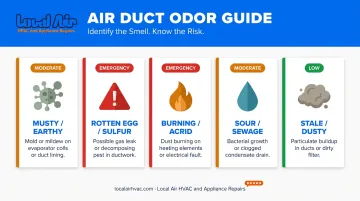
The scent coming from your vents is the most reliable first diagnostic clue. Each of the five odor types below points to a different root cause — and in Florida's humid climate, getting the diagnosis right determines whether you need a quick cleaning or an emergency call.
Musty or Earthy Smell
The most common duct odor in Florida homes. A musty or earthy smell coming from vents almost always points to mold or mildew growing on damp duct surfaces, evaporator coils, or insulation. The EPA warns that if you suspect mold in your HVAC system, you should not run it — doing so can spread contamination throughout the home.
Rotten Egg or Sulfur Smell
This one requires immediate action. A sulfur odor can mean either a natural gas leak (utilities add mercaptan to gas specifically so leaks smell like rotten eggs) or a decomposing animal inside the ductwork. If there's any chance it's gas: leave the building immediately and call 911 or your gas utility from outside. Do not run the HVAC until the source is confirmed.
Burning or Acrid Smell
A brief burning smell at the start of heating season — dust burning off heating elements — is usually harmless and clears within minutes.
A persistent burning or electrical smell is a different matter. The NFPA identifies a burning or rubbery odor from an appliance as an electrical fire warning sign. Shut off the system and call a technician before running it again.
Sour, Sewage, or Vinegar Smell
A vinegar or sour odor typically indicates bacterial growth in a clogged condensate drain line or stagnant water near the air handler. A sewage-like smell may point to a dry P-trap near the HVAC or a plumbing vent issue. In both cases, start by checking your drain line and the area around the air handler for standing water or visible buildup.
Stale or Dusty Smell
The least urgent of the five, but still a signal. A heavy, stale smell — often strongest when the system first kicks on — indicates significant particulate buildup inside the ducts, on registers, or inside the blower compartment. It usually means the system is overdue for cleaning.
What Causes Air Duct Odors?
Every air duct odor traces back to a physical source — contaminants that have built up inside ductwork, coils, and blower components. In South Florida's climate, several factors accelerate that buildup faster than homeowners expect.
Mold and Moisture
South Florida's humidity pushes this to the top of the list. NADCA notes that microbial growth becomes more likely when humidity exceeds 65% — a threshold Palm Beach homes can hit on a routine basis. Condensation on evaporator coils and clogged condensate drain lines create standing moisture that feeds mold colonies directly inside the system.
Dust, Debris, and Pet Dander
When a filter is dirty or inadequate, airborne particles (pet hair, dander, skin cells, pollen) bypass it and settle on duct walls, registers, and the blower fan. Once there, they decompose slowly and produce a stale or musty odor. The DOE confirms that dirty filters allow debris to settle on the evaporator coil, compounding the problem.
Pest Infestations
Rodents and small animals enter ductwork through gaps or damaged sections. Their droppings and urine are bad enough; a carcass inside a duct is significantly worse. Professional removal and sanitization is the only way to fully clear these contaminants.
Neglected Air Filters
An overloaded filter stops trapping particles and becomes a source of odor itself. Mold spores, pet dander, and pollen saturate the filter medium, and the system then pulls air through that contaminated material with every cycle.
Lifestyle and Environmental Factors
Some odors come from everyday household activity that accumulates over years:
- Cigarette smoke binds to duct lining and insulation
- Cooking fumes coat interior surfaces near return vents
- Fireplace residue works its way into the air handler
These compounds release back into the air with every cycle. Surface cleaning alone won't address them because the contamination is embedded in the material itself.
How to Remove Air Duct Odors: Step-by-Step
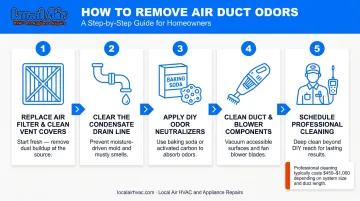
Air fresheners and sprays mask the symptom without addressing the source. Most odors return within days if the root cause isn't corrected. Work through these steps in order.
Step 1: Replace the Air Filter and Clean Vent Covers
Start here — it's free to diagnose and cheap to fix. Remove the existing filter and replace it with a high-quality pleated filter. The EPA recommends using the highest MERV-rated filter your system can handle (MERV-13 or higher for finer particle capture), though you should confirm compatibility with your unit before upgrading.
While the system is off, remove all vent covers and wash them with soap and warm water. Biological residue on register surfaces contributes more to odor than most homeowners realize.
Step 2: Clear the Condensate Drain Line
Locate the condensate drain line — typically a PVC pipe near the air handler. Carrier recommends pouring one cup of distilled white vinegar into the drain line periodically to break up algae and mold buildup. Lennox advises flushing with diluted vinegar for 30 minutes or longer, then following with clean water.
If the drain pan shows standing water or visible mold, or if the line is fully blocked, call a technician. Local Air's maintenance service includes condensate drain line care specifically because clogged drain lines are so common in Florida's climate.
Step 3: Apply DIY Odor Neutralizers for Mild Cases
These are short-term measures while you address the root cause:
- Place an open container of baking soda near return air vents to absorb airborne moisture and mild odors
- A few drops of essential oil on the outer filter frame can provide temporary masking — avoid saturating the filter media itself
- Activated carbon filters are the most effective odor-adsorbent option for ongoing filtration, per EPA guidance — though thin adsorbent layers can saturate and should be replaced regularly
Think of these as a bridge to Step 4, not a destination.
Step 4: Clean Accessible Duct and Blower Components
Turn off the HVAC at the breaker. Remove the air handler access panels and use a vacuum with a brush attachment to clear dust from the blower compartment and return air boot. This is the area where the heaviest dust and debris buildup typically occurs and the one most homeowners overlook.
For accessible metal duct sections, a damp cloth handles surface dust well. Avoid chemical sprays inside ductwork — most aren't rated for HVAC surfaces and can release fumes into living spaces.
Step 5: Schedule Professional Cleaning When DIY Isn't Enough
Steps 1–4 address what's accessible. If odors persist — or involve mold, pests, or burning — the contamination likely runs deeper than DIY can reach, and professional intervention is required. NADCA says that when cleaning only part of a system, recontamination is likely — the entire system, including ducts, coils, drain pan, registers, blower motor, and related components, needs to be addressed together.
Professional duct cleaning typically costs between $450 and $1,000 for an average-sized home, according to NADCA's Breathing Clean resource — a range driven by duct type, system size, contamination level, and home square footage.
DIY vs. Calling a Professional
| Situation | DIY Appropriate? | Call a Pro? |
|---|---|---|
| Stale smell, recently changed filter | Yes — start with filter replacement | Not yet |
| Sour smell, AC running well otherwise | Yes — flush condensate drain | If recurring |
| Musty smell that persists after filter change | Partial — clean vents and blower | Yes |
| Visible mold on ducts or coils | No | Immediately |
| Rotten egg smell | No — evacuate first | Yes (and gas company) |
| Burning or electrical smell | No — shut off system | Immediately |
| Odors return within weeks of DIY cleaning | No | Yes |
| No professional cleaning in 4–5+ years | No | Yes |
NADCA recommends annual HVAC inspections and a complete system cleaning every 4 to 5 years, with more frequent service for homes with pets, smokers, or allergy sufferers.
Local Air HVAC and Appliance Repairs has served Royal Palm Beach and the surrounding South Palm Beach County area for over 20 years. Their EPA Universal Certified technicians handle duct cleaning, coil cleaning, condensate drain service, and UV light installation — covering every component where odors commonly originate.
How to Prevent Air Duct Odors Long-Term
Prevention is straightforward. The habits that keep odors from returning are the same ones that extend system life and lower energy bills.
Core maintenance habits:
- Replace air filters every 1–3 months (more often with pets or during heavy-use seasons)
- Flush the condensate drain line with vinegar every few months
- Keep indoor humidity below 50% — a dehumidifier helps in South Florida homes where AC alone may not be enough
- Schedule annual professional HVAC inspections; in Palm Beach's climate, biannual checks are worth considering
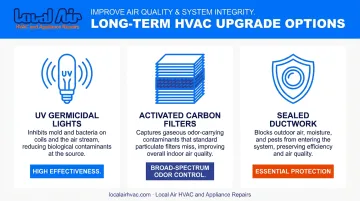
Long-term upgrades that make a measurable difference:
- UV germicidal lights installed inside the air handler inhibit mold and bacterial growth on coils and in the air stream — ASHRAE confirms UVGI effectively controls microbial growth on cooling coils and HVAC surfaces
- Activated carbon filters trap odor-carrying gaseous contaminants that standard pleated filters miss
- Sealed ductwork prevents outdoor air, moisture, and pests from entering the system between professional cleanings
Florida homes that run their AC nearly year-round accumulate wear faster than systems in drier climates — which is why a skipped filter change or neglected drain line here often leads to odors within weeks, not months.
Frequently Asked Questions
Why does my AC smell musty every time it turns on?
A musty smell at startup almost always indicates mold or mildew on the evaporator coil or inside the ductwork — both thrive in the moisture produced during normal cooling cycles. A dirty filter or clogged condensate drain typically contributes to conditions that allow this growth.
Can I remove air duct odors myself without professional help?
DIY methods — filter replacement, vent cleaning, baking soda, and drain line flushing — work well for mild, dust-related odors. Mold contamination, pest remains, or any burning smell requires a certified HVAC technician to resolve safely and completely.
What does a burning smell from air vents indicate?
A brief burning smell at the start of heating season is usually dust on heating elements burning off; it clears within minutes. A persistent or electrical burning odor points to overheating components — shut the system off and have it inspected before running it again.
How often should air ducts be cleaned to prevent odors?
NADCA recommends a full system cleaning every 4 to 5 years for most homes. Homes with pets, residents with allergies, or homes in high-humidity regions like South Florida may benefit from more frequent service.
Why do my vents smell like dirty socks?
This odor, sometimes called dirty sock syndrome, comes from bacteria and mold accumulating on the evaporator coil during cooling cycles. Cleaning the coil and applying an antimicrobial treatment resolves it.
Is it dangerous if my vents smell like rotten eggs?
Treat it as a potential gas leak until proven otherwise. Leave the building immediately and call your gas utility or 911 from outside before re-entering. If gas is ruled out, the smell likely points to a decomposing animal inside the ductwork, which requires professional removal.