Choosing the right coolant for your air conditioner can feel confusing. Homeowners and small business owners in Florida often hear terms like “Freon,” “R-410A,” or “low-GWP refrigerant,” but don’t always know the differences or why they matter. The wrong coolant choice can reduce cooling efficiency, increase energy bills, and even cause long-term system damage.
Selecting the correct coolant isn’t just a technical decision. It directly affects how often your AC needs maintenance, how much energy it consumes, and whether it meets U.S. Environmental Protection Agency (EPA) requirements. As regulations and industry standards continue to evolve, understanding coolant choices has become more important than ever.
Knowing the different types of coolants used in air conditioners helps you make informed decisions that protect system performance, extend equipment lifespan, and reduce operational risks. This blog breaks down the key coolant types used today, their properties, and what to consider when selecting or servicing air conditioning systems that rely on them.
Key Takeaways:
AC coolant (refrigerant) is essential for removing heat, helping your AC maintain consistent cooling in high-demand climates like South Florida, stay reliable, and keep indoor air safe.
Different types of coolants, R‑22, R‑410A, R‑32, R‑454B, R‑134a, R‑407C, R‑290, HFO blends, work differently in terms of safety, performance, and impact on the environment.
Choosing the right coolant depends on your system’s age, compatibility, energy use, safety, and U.S. regulatory requirements.
Proper handling, maintenance, and professional guidance help your AC last longer, avoid breakdowns, and keep it running well.
What is AC Coolant and Why It Matters?

AC coolant, also called refrigerant, is the chemical that absorbs heat from inside your space and moves it outside. In simple terms, it lets your air conditioner remove heat and produce cool air effectively.
Here’s why it matters:
Impacts System Reliability: The correct refrigerant reduces stress on compressors, lowering the risk of breakdowns and unplanned maintenance.
Influences Energy Use: Proper coolant supports stable operation, helping reduce electricity costs and optimizing cost per unit of cooling for homes, offices, and retail spaces.
Supports Equipment Longevity: Compatible refrigerants prevent corrosion and wear, extending the life of your air conditioning system.
Ensures Compliance: Modern refrigerants help meet U.S. EPA and AIM Act regulations on ozone depletion and global warming potential, avoiding compliance issues.
Affects Safety and Indoor Air Quality: Using the correct refrigerant maintains proper pressures and temperatures, preventing system failures, leaks, or unsafe operating conditions.
Key Properties of AC Coolant
The effectiveness of any AC coolant depends on its chemical and physical properties, which decide how well it transfers heat, how safe it is, and how it affects the environment.
Ozone Depletion Potential (ODP): A measure of a substance’s capacity to damage the ozone layer. High ODP coolants like CFCs and early HCFCs have been phased out in the United States.
Global Warming Potential (GWP): Measures climate impact compared to CO₂ over 100 years. Choosing low-GWP refrigerants can help reduce the environmental footprint and meet regulations.
Operating Pressure: Different refrigerants need different system pressures. Some require higher pressures, which affects the compressor and coil design.
Safety Classifications: These indicate toxicity and flammability (e.g., A1 = non-toxic, non-flammable; A2L = mildly flammable).
Compatibility: Not all refrigerants are compatible with older systems; some require new equipment, oils, or seals to avoid leaks or damage.
These factors collectively influence lifecycle costs, downtime risks, and the ease of future retrofits.
Common Types of Coolant Used in Air Conditioners Today
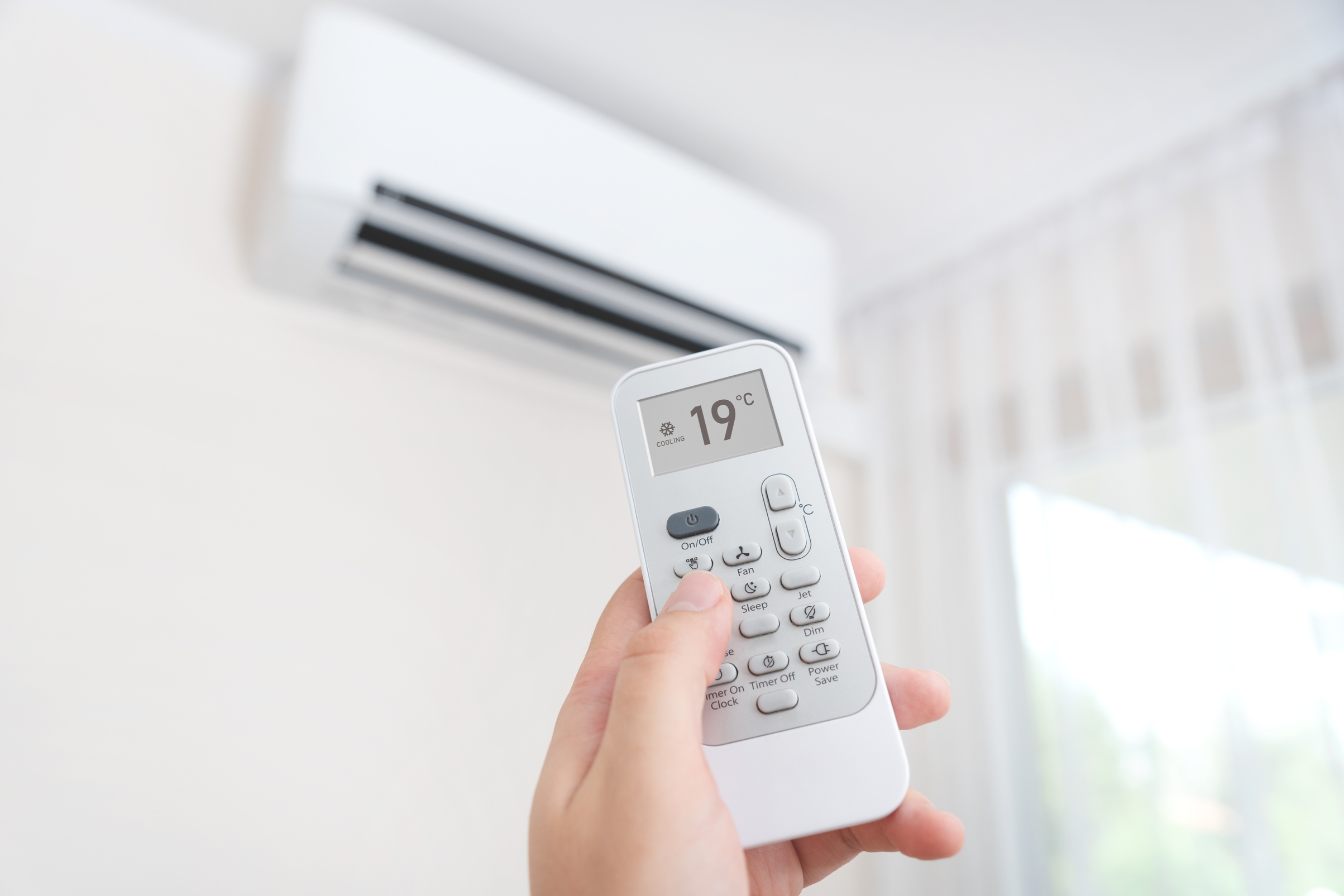
There are multiple types of AC coolant currently used or being phased in/out in U.S. residential and light commercial HVAC systems. Each has specific applications and regulatory considerations relevant to Florida property owners.
R‑22 (Freon®)
R‑22 used to be the most common coolant in residential and commercial air conditioners. It is a hydrochlorofluorocarbon (HCFC) that works reasonably well in hot climates and simple systems.
Key Characteristics:
Non-flammable, Moderate cooling efficiency
Ozone depletion potential present
Requires specific handling and recycling
Best For: Existing equipment built before the 2010 production ban.
Phase‑in/Phase‑out Status:
Production and import for new systems banned in the U.S. since 2020.
Servicing of existing units still possible using recovered R‑22, but the phase‑out continues as supply diminishes.
R‑410A (Puron®, Suva® 9100, Genetron® AZ‑20®)
R‑410A became the standard replacement for R‑22 in new HVAC equipment starting around 2010. It is an HFC blend of R‑32 and R‑125 with no ozone depletion potential.
Key Characteristics:
Higher operating pressure than R‑22.
Good cooling capacity with zero ozone depletion.
Requires equipment designed for higher pressures.
Best For: Newer residential and light commercial central AC systems installed in the last decade.
Phase‑in/Phase‑out Status:
Widely used today but will gradually be phased down due to high GWP (~2088).
U.S. regulations limit new R‑410A equipment production starting 2025, pushing the shift to lower‑GWP alternatives.
R‑134a
R‑134a is a hydrofluorocarbon (HFC) refrigerant with zero ozone depletion, historically used in automotive air conditioners and larger chillers.
Key Characteristics:
Non-toxic and non-flammable under normal conditions
Single-component refrigerant.
Lower pressure than R‑410A.
Best For: Small refrigeration or specialized cooling systems in commercial settings
Phase‑in/Phase‑out Status: Still used where specified, but many automotive systems are moving to lower‑GWP options.
R‑407C (Genetron® 407C, Suva® 407C)
R‑407C is a zeotropic HFC blend designed as a retrofit replacement for R‑22 systems with similar performance characteristics.
Key Characteristics:
Mix of R‑32, R‑125, and R‑134a.
Temperature “glide” requires careful system design adjustment.
Best For: Retrofit projects replacing R‑22 in moderate‑temperature applications.
Phase‑in/Phase‑out Status: Zero ozone depletion, but its use is declining due to relatively high GWP.
R‑32
R‑32 is a single‑component HFC refrigerant with lower GWP and good heat transfer properties, increasingly used in modern AC units, particularly mini‑splits.
Key Characteristics:
Lower GWP (~675) than R‑410A.
High energy efficiency
Mildly flammable (A2L classification) requiring proper safety practices.
Best For: New residential and commercial split systems targeting lower climate impact.
Phase‑in/Phase‑out Status: Growing in adoption globally, often replacing R‑410A in new equipment.
R‑454B
R‑454B is a next‑generation refrigerant blend combining R‑32 and R‑1234yf (an HFO) to reduce environmental impact.
Key Characteristics:
Significantly lower GWP (~466) than R‑410A.
Mild flammability (A2L) requiring design adjustments.
High cooling efficiency comparable to R-410A
Best For: New HVAC systems built to meet 2025 and beyond refrigerant regulations.
Phase‑in/Phase‑out Status: Emerging as a mainstream replacement for R‑410A in many markets.
R‑290 (Propane)
R‑290 is a natural hydrocarbon refrigerant with very low environmental impact. It performs efficiently with zero ozone depletion and low GWP.
Key Characteristics:
Excellent thermodynamic performance.
Classified A3 (flammable) requiring strict safety standards.
Best For: Smaller commercial systems and specialty applications where flammability is safely managed.
Phase‑in/Phase‑out Status: Restricted use in larger systems due to safety protocols, but its use is expanding where design allows.
CFCs (Chlorofluorocarbons, e.g., R‑12)
CFCs were widely used in the past but are now banned in new systems due to their ozone-depleting properties.
Key Characteristics:
Extremely high ODP and GWP.
Non-flammable
Moderate efficiency
Best For: No modern applications; legacy systems may still hold them, but replacement is necessary.
Phase‑in/Phase‑out Status: Phased out globally under the Montreal Protocol in the 1990s.
HCFCs (Beyond R‑22)
HCFCs were developed as a transitional refrigerant, with lower ozone depletion than CFCs but still not fully environmentally friendly.
Key Characteristics:
Mildly ozone-depleting
Non-flammable
Moderate efficiency
Best For: Systems built during the transitional era from CFCs to HFCs
Phase‑in/Phase‑out Status: Phased out by most countries by 2020 or earlier.
HFO Blends (e.g., future low‑GWP mixes)
Hydrofluoroolefins (HFOs) represent a new class of refrigerants with ultra‑low GWP and zero ozone depletion.
Key Characteristics:
Very low atmospheric lifetime and GWP.
Slight flammability; requires trained handling.
Often part of blends like R‑454B or others under development.
Best For: Next‑generation HVAC and automotive systems, wherever allowable by safety standards.
Phase‑in/Phase‑out Status: Growing adoption as regulations tighten on HFCs.
How Local Air HVAC Experts Help You Choose and Maintain the Right Coolant?
Local Air HVAC specializes in evaluating, maintaining, and retrofitting AC systems across Palm Beach County. Our technicians consider the specific needs of each residential or light commercial property before recommending the most suitable coolant.
Here’s how we can support you:
Comprehensive system diagnostics: Technicians assess airflow, pressure, and current refrigerant performance to identify issues that may affect uptime, energy usage, or cooling output.
Refrigerant compatibility assessment: They determine which coolants are suitable for your system based on age, compressor type, and service history, preventing mistakes that could reduce system lifespan.
Regulation‑aligned guidance: Local Air HVAC helps plan retrofits or replacements that comply with federal and state refrigerant regulations, including the phase-out of R-22.
Safety‑focused handling: Certified technicians handle all refrigerants, including mildly flammable or high-pressure options, following strict safety protocols.
Performance and downtime management: Recommendations focus on real operational impacts, such as reducing breakdowns, improving heat transfer, and protecting compressor life.
Integrated maintenance services: Coolant services are combined with coil cleaning, system tune-ups, and UV light installation to maximize overall efficiency and indoor air quality.
Transparent quoting: Services are provided on a quote-based model, explaining how coolant selection affects both system performance and operating costs.
Ongoing preventative care: Routine inspections and maintenance help extend equipment life, reduce emergency repairs, and support long-term reliability.
Partnering with certified professionals like Local Air HVAC reduces risk, supports consistent cooling, and helps maintain efficient, reliable operation in Florida’s hot, humid climate.
Conclusion
Understanding the types of coolant used in air conditioners is essential for consistent performance, safety, and compliance with environmental regulations. Older refrigerants like R-22 and CFCs are being phased out due to regulatory and environmental concerns, while newer options like R-32, R-454B, and HFO blends offer low GWP, safer handling, and optimized performance.
Working with certified professionals ensures that your AC system operates efficiently while meeting current and future regulatory standards. Local Air HVAC provides expert guidance, safe installation, and ongoing maintenance to help you select the right coolant for your property, minimize downtime, and maintain healthy indoor air quality.
Contact us today to consult with our team on choosing or servicing the right AC coolant for your home or business.
FAQs
How do I know if my air conditioner is low on coolant?
Signs include weak cooling, longer run times, ice on coils, or rising energy bills. Refrigerant does not get used up, so low levels usually mean a leak. A licensed HVAC technician should inspect and repair the issue rather than simply adding more coolant.
Can I replace R-22 with a newer coolant without replacing my AC unit?
Most R-22 systems cannot switch directly to modern refrigerants like R-410A due to pressure and oil differences. Some retrofit options may work, but older systems often make full replacement the more practical long-term solution.
Which coolants are recommended for high-temperature climates?
For Florida’s high-temperature and high-humidity conditions, R-410A, R-32, and emerging R-454B systems are commonly used because they maintain stable cooling performance under heavy demand.
Is it worth upgrading to a low-GWP refrigerant system?
If your system is aging or frequently repaired, upgrading may reduce long-term service costs and compliance risks. Low-GWP systems also align with current environmental regulations.
Are newer refrigerants safe for homes and small businesses?
Only licensed HVAC professionals should manage refrigerant selection and charging. Local Air HVAC evaluates system compatibility and climate demand before recommending the right coolant for air conditioner systems.